How to Choose Foam Materials for Die Cut Gaskets and Seals?
Summary
Choosing the right foam material is essential for die cut foam gaskets and seals used in smart door locks, consumer electronics, robots, drones, security cameras and smart home devices. A foam gasket may look simple, but it often needs to provide sealing, dustproofing, waterproofing, cushioning, vibration damping, gap filling and assembly support at the same time.
For successful custom foam die cutting, engineers should evaluate foam structure, compression force, thickness, density, rebound, adhesive backing, environmental resistance and assembly conditions before production. The right foam choice helps improve product reliability, reduce assembly problems and support stable mass production.
Why Foam Material Selection Matters for Die Cut Gaskets and Seals?
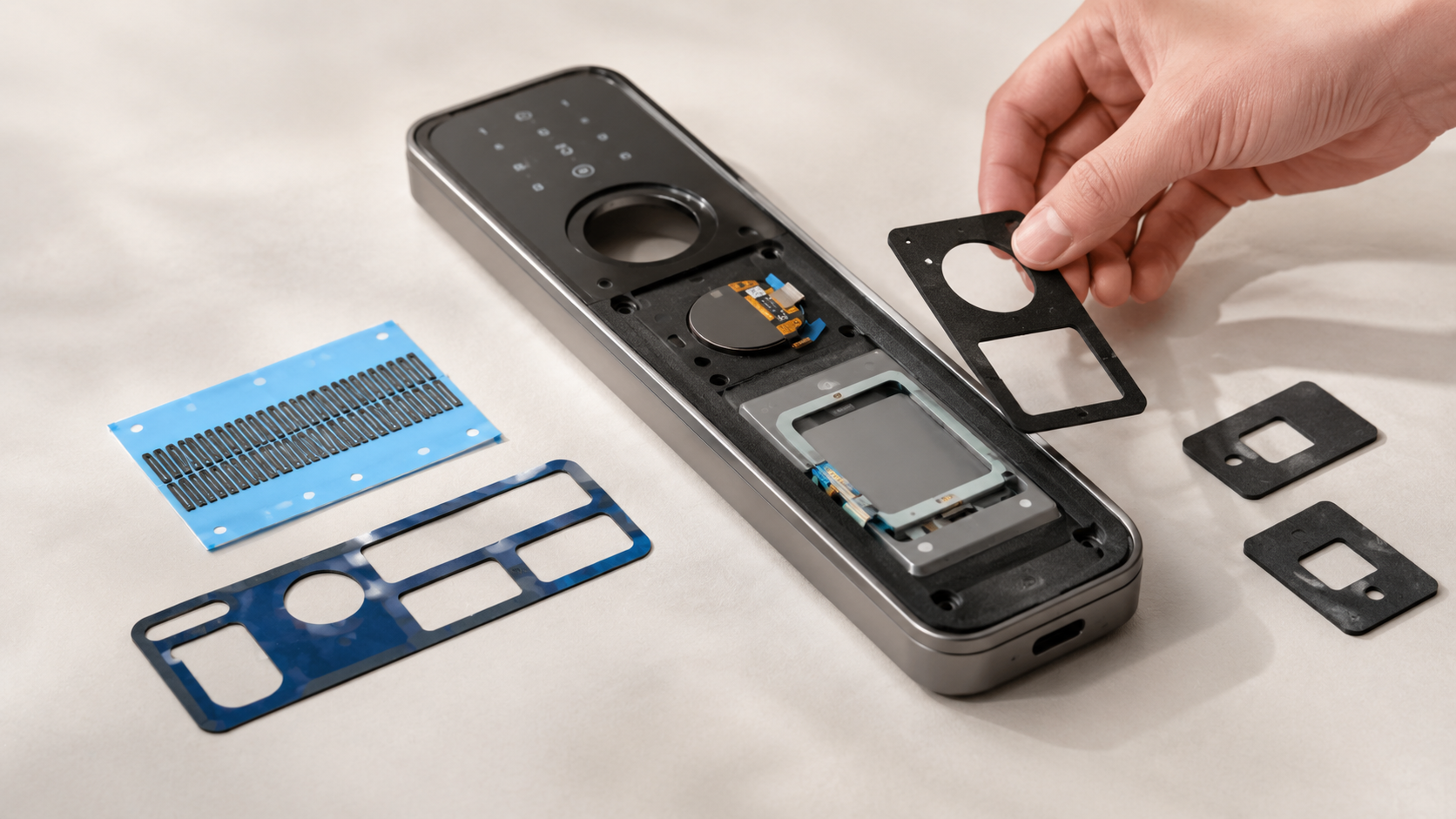
Foam gaskets are widely used where two surfaces need to be joined, sealed, cushioned or protected. In electronic assemblies, die cut foam gaskets can fill small gaps, prevent dust entry, reduce vibration, absorb impact and improve the fit between plastic, metal, glass or coated parts.
In smart door locks and security devices, foam seals help protect internal modules such as fingerprint sensors, cameras, microphones, speakers, buttons, PCB areas and battery compartments. In robots and drones, foam parts support lightweight sealing, shock absorption, joint damping and sensor protection. In consumer electronics, they are often used around screens, covers, speakers, lenses, housings and connectors.
What Problems Should Foam Gaskets Solve?
A good foam gasket should be selected based on the problem it needs to solve, not only by material name. In most projects, the key question is whether the part should seal, cushion, absorb shock, block dust, reduce noise or support waterproofing.
Function | Typical Requirement | Foam Selection Focus |
Sealing | Fill uneven gaps between parts | Compression and recovery |
Dustproofing | Block dust around openings | Cell structure and surface contact |
Waterproofing | Reduce water entry risk | Closed-cell foam and adhesive design |
Cushioning | Protect modules from impact | Softness, density and thickness |
Vibration damping | Reduce noise or movement | Compression set and resilience |
Assembly support | Improve fit and positioning | Tolerance, liner and release design |
For smart devices with compact structures, foam gasket die cutting must balance sealing performance, part accuracy and easy assembly.
Open-Cell vs Closed-Cell Foam: Which Is Better for Sealing?
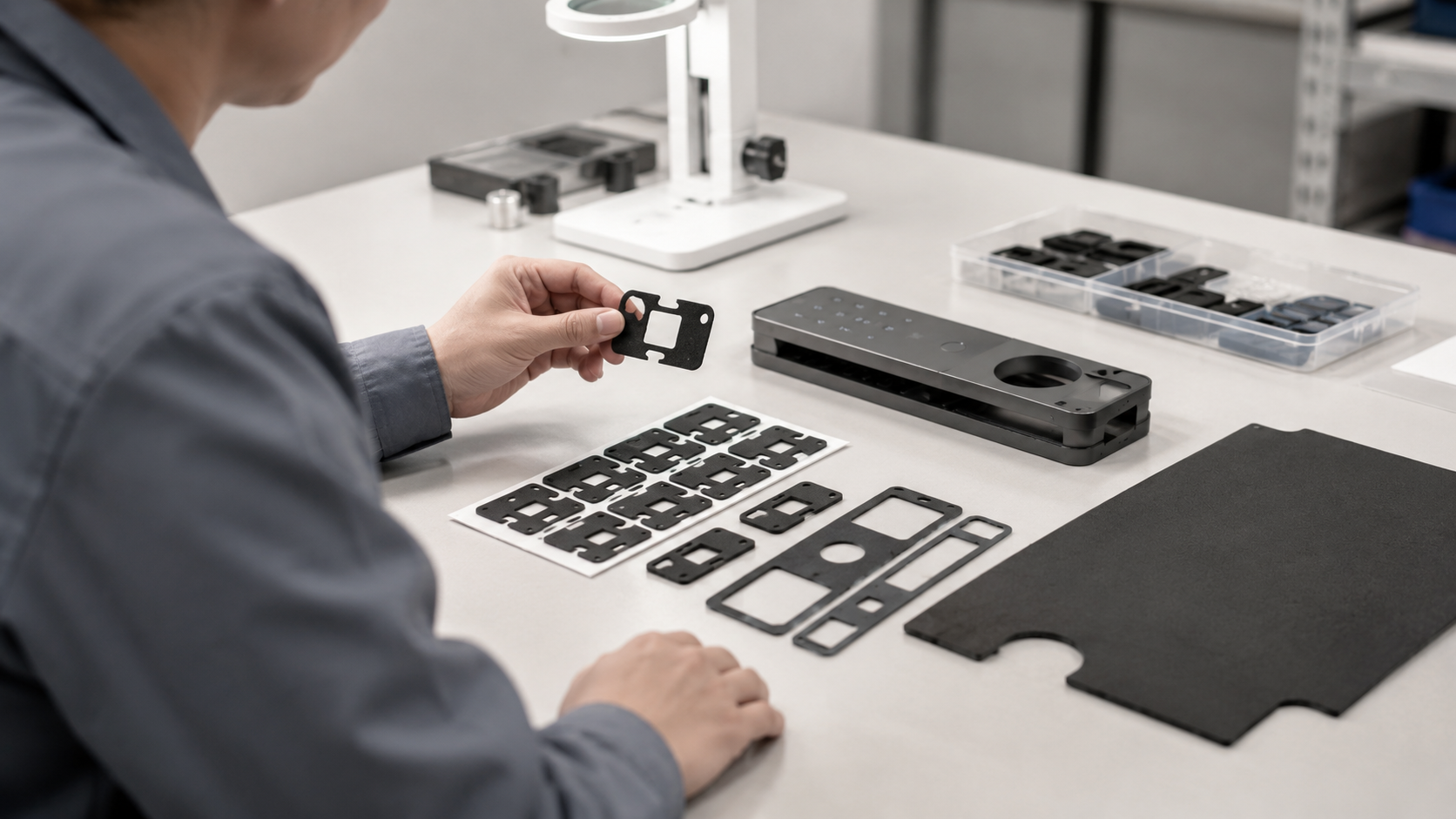
A key decision in custom foam die cutting is whether to use open-cell foam or closed-cell foam. These two structures behave differently in sealing, cushioning and waterproofing applications.
Open-cell foam has interconnected cells. It is usually softer and more compressible, making it suitable for cushioning, acoustic control and light dust sealing. Closed-cell foam has sealed cells that help reduce air and water penetration, making it more suitable for sealing and waterproofing applications.
When to Use Open-Cell Foam?
Open-cell foam is generally suitable when the gasket needs to absorb shock, reduce vibration, control sound or conform to irregular surfaces with low closing force. It may be used inside consumer electronics housings, around speaker areas, camera modules, internal brackets or non-critical dustproof structures.
However, open-cell foam is usually not the first choice for a waterproof foam gasket, because its cell structure may allow moisture or air to pass through if the gasket is not properly compressed or protected.
When to Use Closed-Cell Foam?
Closed-cell foam is more suitable for waterproof gasket applications because its structure helps resist fluid penetration. It is commonly used in outdoor device housings, battery compartments, smart door locks, security cameras and electronic enclosures.
Closed-cell EVA, PE, EPDM, silicone foam and PVC foam can each be considered depending on temperature resistance, compression force, weather resistance, flame-retardant requirements and cost. For products exposed to outdoor humidity, rain splash or long-term compression, closed-cell foam is often the safer choice.
Key Foam Properties to Check Before Die Cutting
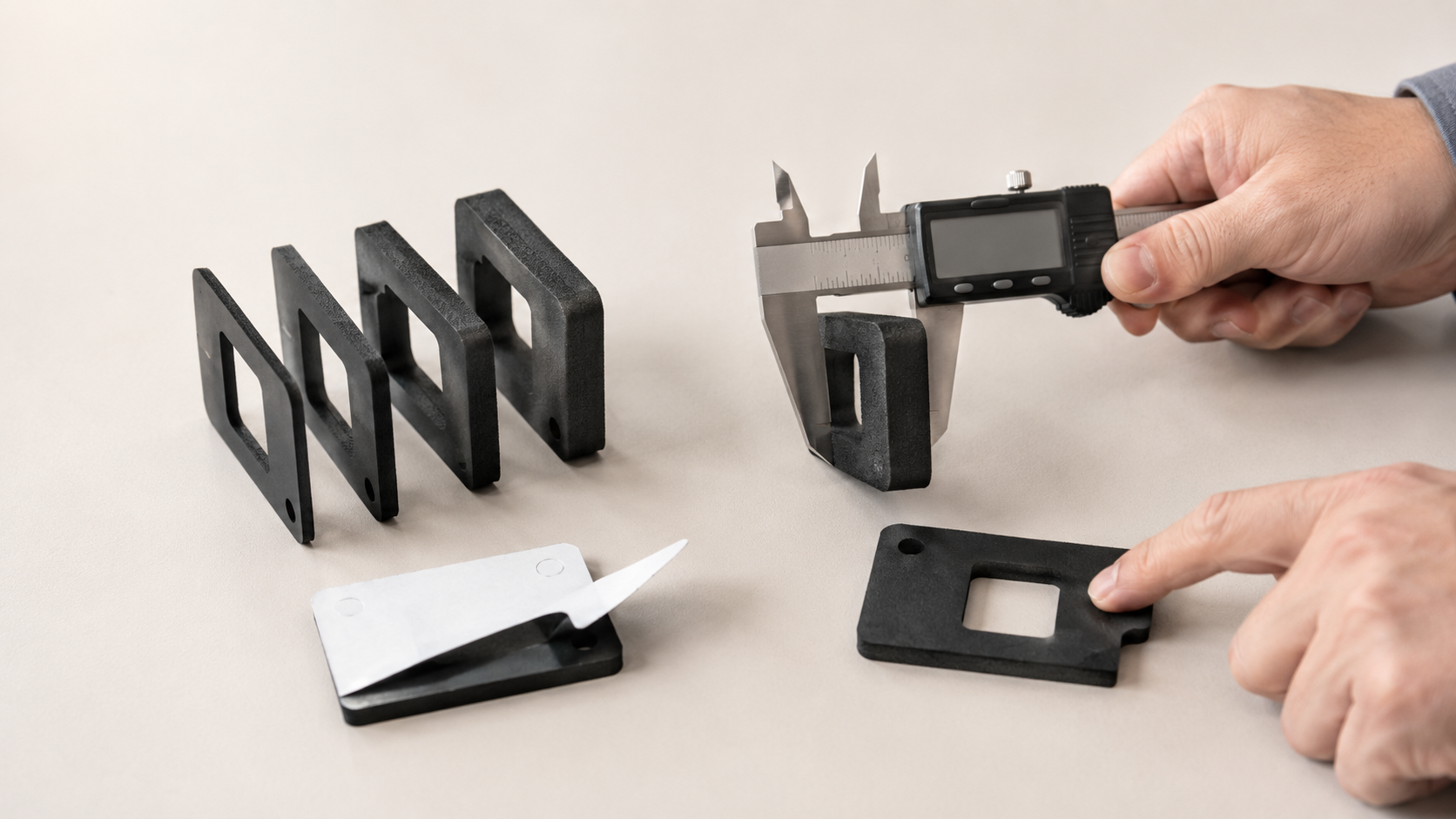
For stable foam gasket die cutting, material selection should include more than thickness and color. The most important parameters include compression force, compression set, density, rebound, thickness tolerance, adhesive compatibility and environmental resistance.
Compression, Thickness, Density and Rebound
Compression is one of the most important properties for die cut foam gasket performance. If the foam is too soft, it may collapse and lose sealing force. If it is too hard, it may increase assembly stress or prevent the housing from closing properly.
Property | Why It Matters | Selection Advice |
Thickness | Determines gap filling and compression space | Match the actual assembly gap |
Density | Affects strength, sealing and cushioning | Use higher density for stronger support |
Compression force | Controls closing pressure | Avoid excessive force on plastic parts |
Rebound | Helps maintain long-term sealing | Choose stable recovery for repeated use |
Compression set | Affects long-term deformation | Use low compression set for durable seals |
Temperature resistance | Prevents failure in hot or cold environments | Match the working environment |
For smart locks, cameras and robotic devices, compression stability is especially important because the gasket may remain under pressure for a long time.
Adhesive Backing and Lamination Design
Many foam gaskets require adhesive backing for fast assembly. For die cut double sided foam tape, the adhesive must bond well to the target surface while avoiding glue overflow, residue or poor release.
Important design points include adhesive thickness, liner type, release force, pull tab design, kiss-cut depth and positioning holes. For automated assembly, the liner and waste removal design are especially important. A good adhesive structure can reduce manual handling, improve placement accuracy and support stable mass production.
Foam Gasket Material Selection by Application

Different products require different custom die cut foam solutions. The table below provides a practical reference for early material selection.
Application | Common Foam Gasket Function | Recommended Selection Focus |
Smart door locks | Waterproofing, dustproofing, button cushioning | Closed-cell foam, adhesive stability, aging resistance |
Security cameras | Lens sealing, housing sealing, vibration control | Waterproof foam, weather resistance, clean edge |
Consumer electronics | Cushioning, dust sealing, light pressure absorption | Thin foam, low compression force, precise dimensions |
Robots | Joint damping, sensor protection, vibration damping | High rebound, anti-fatigue performance, lightweight structure |
Drones | Airframe sealing, shock absorption, lightweight protection | Low density, stable adhesive, thin structure |
Smart speakers and panels | Acoustic support, dustproofing, internal cushioning | Open-cell or semi-open foam, clean lamination |
Battery packs | Gap filling, cushioning, insulation support | Flame-retardant grade, compression control, die cut accuracy |
Smart Door Locks and Smart Home Security Devices
Smart door locks combine mechanical parts, electronic modules, sensors, displays and batteries in a compact space. Foam gaskets may be used around the outer shell, fingerprint module, keypad, camera window, microphone hole, speaker hole and battery cover.
For these parts, a waterproof foam gasket should have stable compression, low adhesive overflow and accurate positioning. If the product is used outdoors or near entryways, material aging, temperature change, humidity and surface bonding should also be considered.
Consumer Electronics, Robots and Security Cameras
For consumer electronics, the gasket is often thin and small, so dimensional accuracy matters. For robots and drones, foam parts need to remain stable under vibration and repeated movement. For security cameras, waterproofing, dustproofing and weather resistance are key concerns.
In these applications, a die cut foam seal must not only fit the drawing but also perform reliably after assembly. Material hardness, adhesive design, compression ratio and edge quality should be confirmed during sampling.
How Xinyusheng Supports Custom Foam Die Cutting Project?
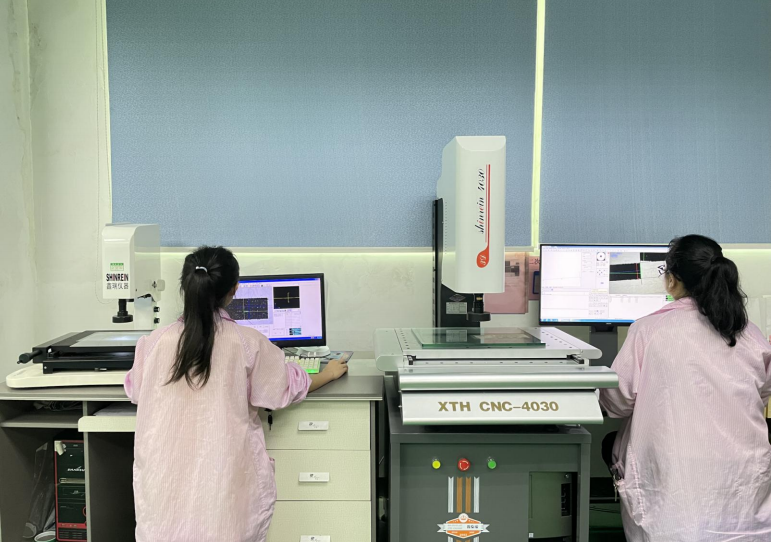
Xinyusheng provides precision die cutting services for functional components including waterproof parts, foam parts, adhesive tapes, insulation parts, conductive EMI parts, protective films and printed products. For foam gasket projects, the process usually starts with drawing review, material confirmation and application analysis.
From Drawing Review to Sampling and Full Inspection
A reliable custom foam die cutting project usually follows this process:
Requirement Review → Material Selection → Drawing Confirmation → Tooling Design → Sampling → Sample Testing → Mass Production → Inspection → Packaging and Delivery
During drawing review, engineers check critical dimensions, assembly gaps, adhesive requirements, compression conditions and tolerance feasibility. During sampling, the selected foam material is tested for fit, compression, bonding and appearance. After sample approval, the project can move to mass production with quality control steps such as first article inspection, IPQC, CCD inspection, manual inspection and OQC.
For foam gaskets and seals, this process helps verify material thickness, compression performance, adhesive bonding, dimensional tolerance, liner release, surface quality and packaging format before shipment.
FAQ
What is the best foam for die cut gaskets?
There is no single best foam for all die cut foam gaskets. Closed-cell foam is usually better for waterproofing and sealing, while open-cell foam is often better for cushioning, acoustic control and light dust sealing.
Is open-cell foam waterproof?
Open-cell foam is generally not the best choice for waterproof sealing because its cells are interconnected. For a waterproof foam gasket, closed-cell foam is usually preferred.
What foam properties are most important for seals?
The most important properties include thickness, density, compression force, compression set, rebound, temperature resistance, water absorption and adhesive compatibility.
Do foam gaskets need adhesive backing?
Many foam gaskets use adhesive backing to improve assembly efficiency and positioning. However, the adhesive must match the surface material, operating environment and assembly process.
What information is needed for a custom foam die cutting quote?
A 2D drawing, material requirement, thickness, tolerance, application position, adhesive requirement, compression condition, quantity and packaging method are recommended for custom foam die cutting evaluation.
Can foam gaskets be used for smart door locks?
Yes. Foam gaskets are commonly used in smart door locks for waterproofing, dustproofing, cushioning, vibration control and module protection.
What is the difference between a foam seal and a foam gasket?
A die cut foam seal usually focuses on blocking dust, air or water, while a foam gasket may also provide cushioning, spacing, vibration damping or assembly support. In many electronic products, one part may perform both functions.
Conclusion
Selecting foam materials for die cut foam gaskets and seals requires a clear understanding of the product function, assembly gap, compression requirement, working environment and production method. Open-cell foam is useful for cushioning, acoustic control and light dust sealing, while closed-cell foam is usually better for waterproofing, outdoor sealing and long-term protection.
For smart door locks, consumer electronics, robots, drones and security devices, the best solution is not only choosing a foam type. It also requires proper adhesive backing, lamination design, die cutting accuracy, inspection control and packaging planning.
Xinyusheng supports custom foam die cutting for functional components used in electronics, smart home devices, robotics, drones, medical devices and industrial applications. With engineering review, sampling, precision die cutting, inspection and full-process quality control, Xinyusheng helps customers develop foam gaskets and seals that fit real assembly needs and support stable mass production.
Table of Contents
Related news
Company News
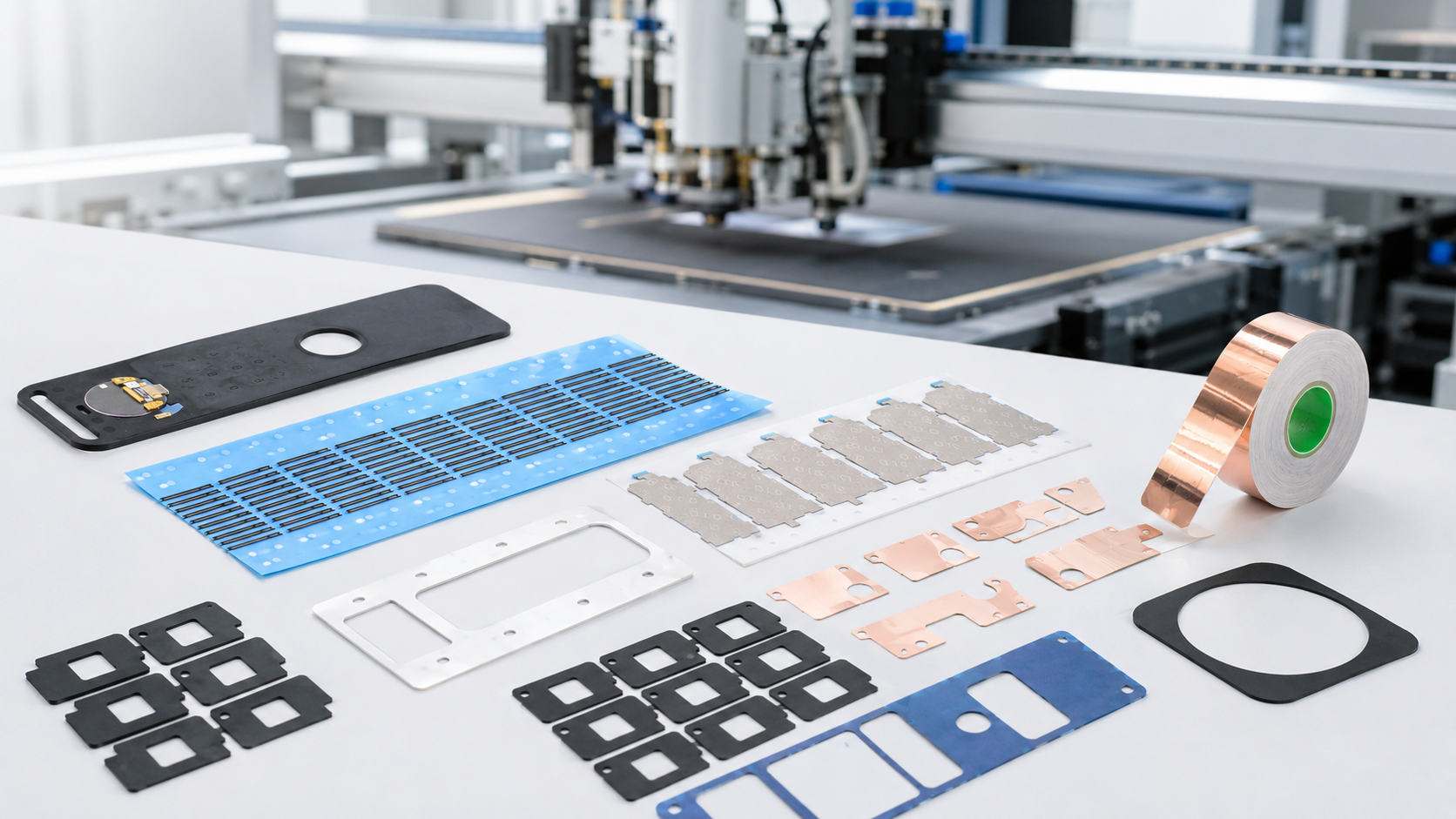
What Is Custom Precision Die Cutting? What Types of Custom Functional Components Is Xinyusheng Suitable For?
May 14,2026
Discover More
Company News
How Are Die Cut Materials Used in Automotive Electronics?
August 29,2026
Discover More
Company News
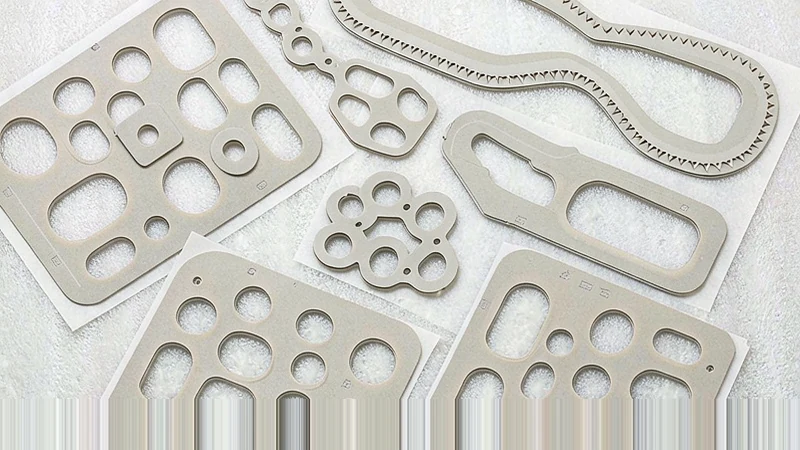
What Types of Thermal Interface Materials Can Be Die Cut?
August 29,2026
Discover More
