EMI Conductive Die Cutting: Materials, Shielding and Applications
Abstract
EMI conductive die cutting converts conductive foam, copper foil, conductive fabric, aluminum foil, conductive adhesive tape and EMI shielding tape into custom parts used for grounding, shielding, cushioning and signal protection. As electronics become smaller, faster and more power-dense, engineers must control electromagnetic interference at seams, connectors, PCB grounding points, module covers and enclosure gaps. This guide explains how EMI shielding gaskets work, how different conductive materials compare, what design details affect shielding reliability, and how custom die cutting supports AI servers, telecom equipment, industrial control, EV electronics and consumer devices.
Why EMI Conductive Die Cutting Matters in Modern Electronics?
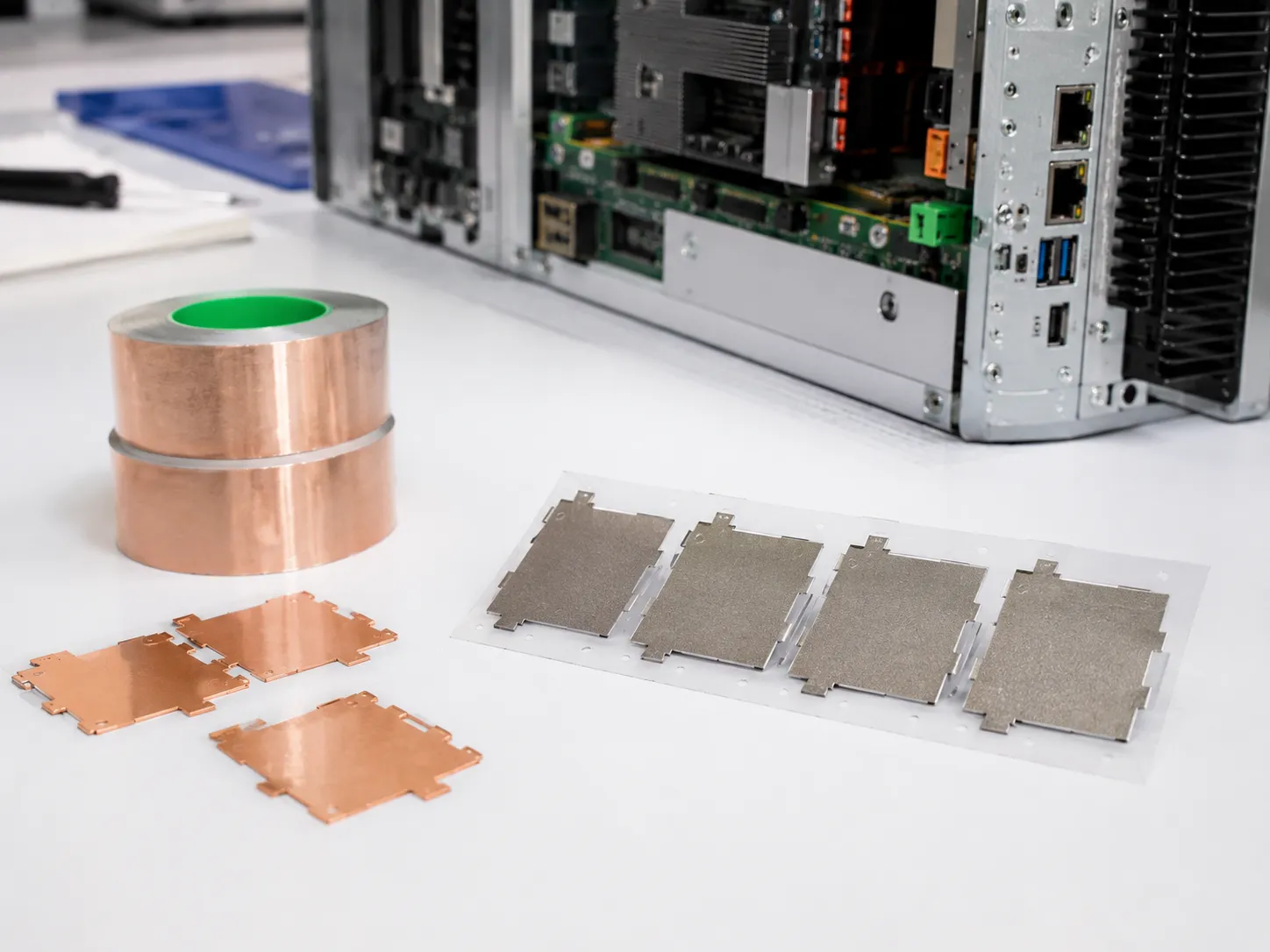
EMI control is becoming more difficult because electronic products are more compact, signal speeds are higher, power density is increasing and more wireless modules are integrated into the same device. The European Commission explains that EMC regulation aims to limit electromagnetic emissions and ensure equipment is not disturbed by radio emissions when used as intended.
For engineers, this is not only a compliance topic. EMI can affect signal stability, communication reliability, sensor accuracy, display performance and system safety. In AI servers, telecom modules, industrial control systems and EV electronics, shielding problems often appear at physical interfaces: metal cover seams, connector openings, PCB-to-chassis contact points, cable exits and module gaps.
This is where EMI conductive die cutting is valuable. It allows conductive materials to be converted into precise shapes that fit real product structures instead of forcing engineers to adapt the product around generic shielding material.
What Are EMI Shielding Gaskets and Conductive Die Cut Parts?
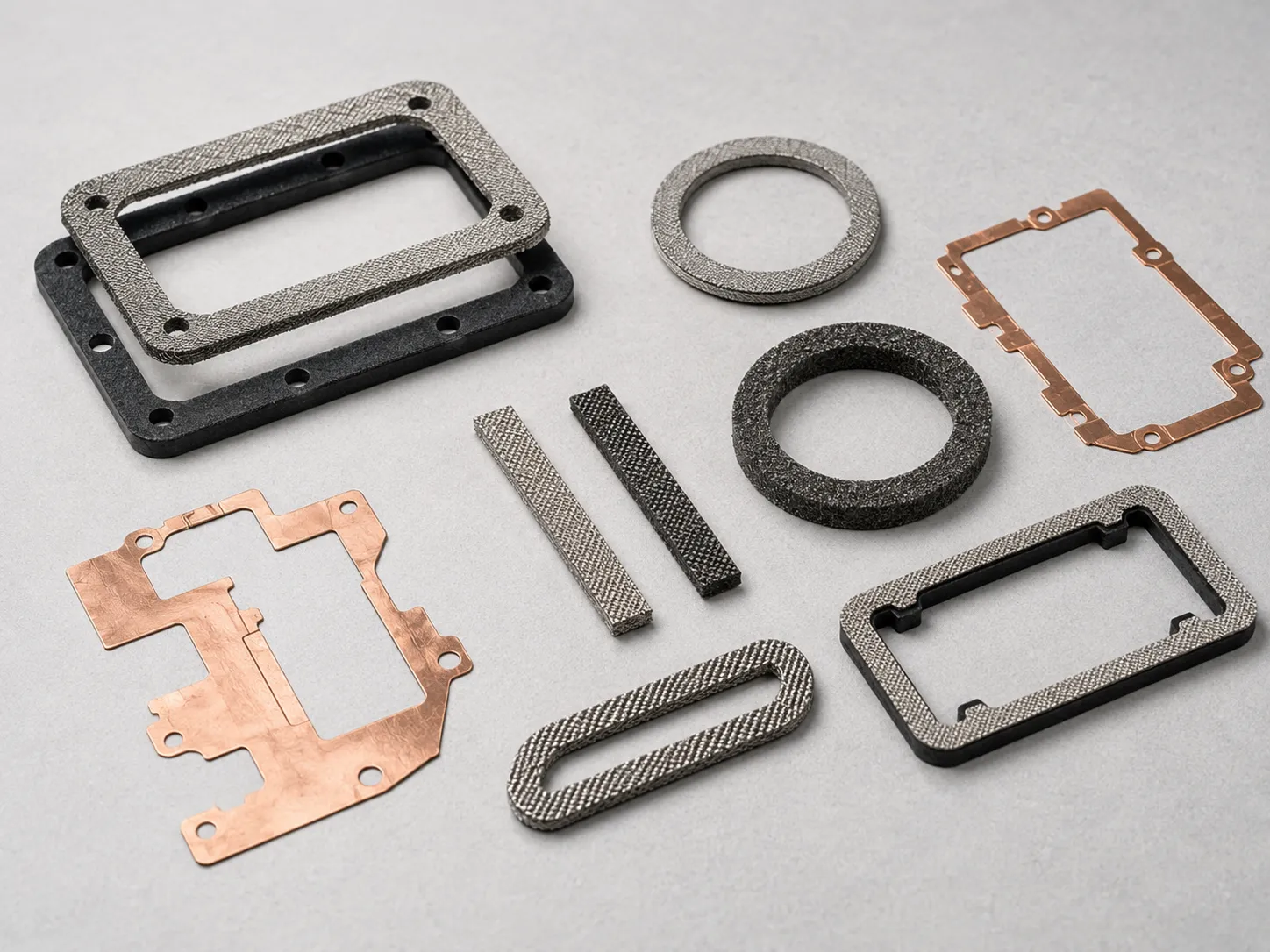
EMI shielding gaskets are conductive components placed between two surfaces to maintain electrical continuity and reduce electromagnetic leakage through gaps or seams. They may also provide compression, cushioning, grounding, sealing support or mechanical tolerance compensation.
In practical design, EMI shielding gaskets must solve both electrical and mechanical problems. A material with good conductivity may still fail if it cannot maintain contact pressure. A gasket with good compression may still fail if the contact surface is coated, uneven or poorly grounded.
Die Cut EMI Part | Main Function | Typical Location |
Conductive foam gasket | Compression + grounding | Enclosure seams, PCB-to-housing contact |
Copper foil part | Low-resistance grounding | PCB, connector, chassis, module cover |
Conductive fabric gasket | Flexible shielding | Lightweight enclosures, telecom modules |
EMI shielding tape | Local shielding and grounding | Cables, connectors, seams, board areas |
Aluminum foil part | Lightweight shielding | Electronics housings, display modules |
Conductive adhesive pad | Bonding + conductivity | Grounding points and assembly fixtures |
The key design question is not “Which material blocks EMI best?” A better question is: “Which material can maintain stable conductive contact in this exact structure after assembly, vibration and aging?”
Conductive Foam Die Cutting for Gap Filling and Grounding
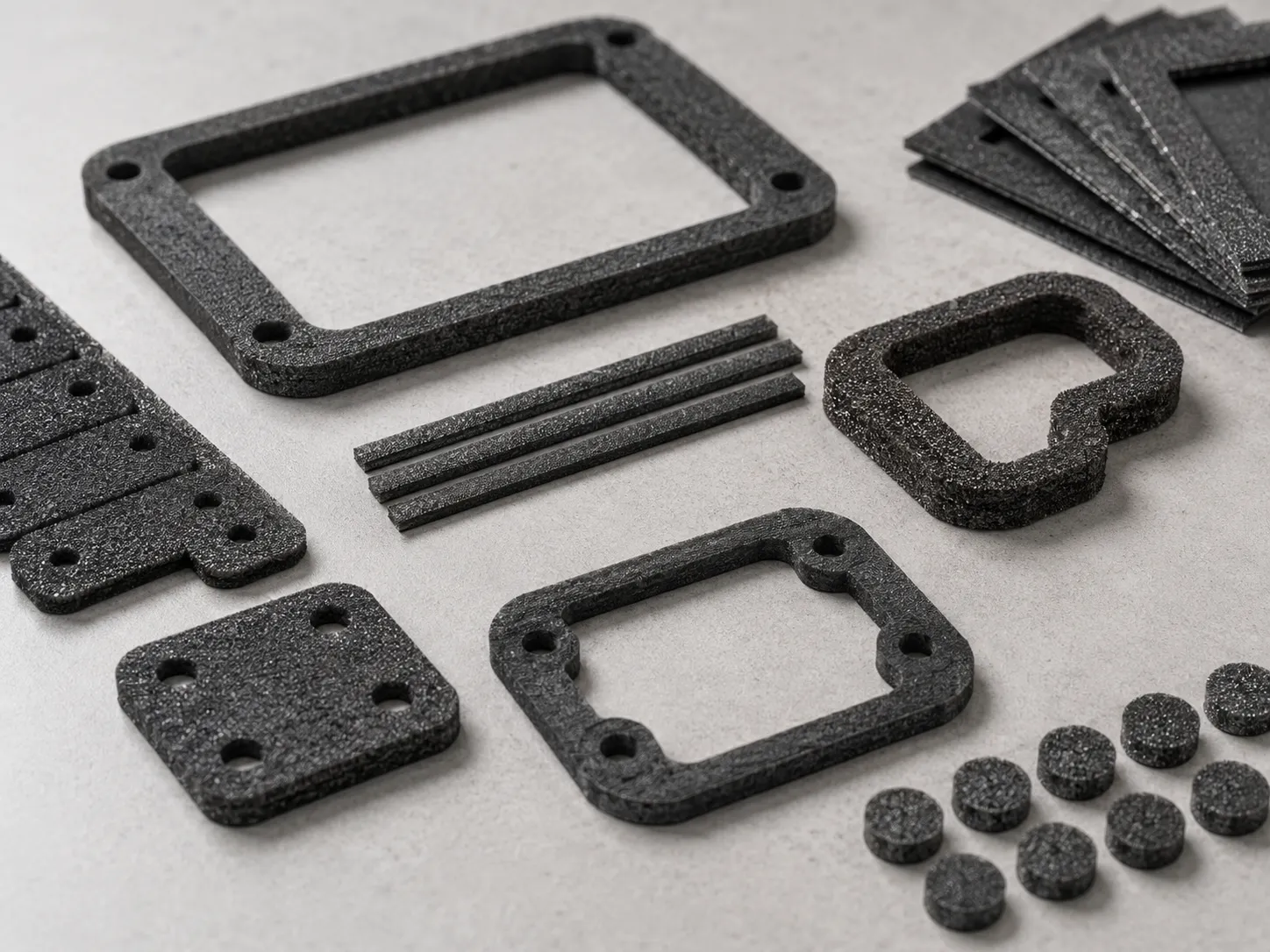
Conductive foam is often selected when the product has uneven surfaces, assembly tolerance, vibration or a gap that must be compressed. It can provide electrical contact while absorbing mechanical variation.
Conductive foam die cutting is commonly used for grounding pads, enclosure gaskets, PCB contact pads, shielding strips and module-to-housing interfaces. Compared with rigid metal foil, it is more forgiving when closure force or surface flatness is not perfect.
Best Use Cases for Conductive Foam
① AI server modules with dense grounding points
② Industrial control enclosures exposed to vibration
③ Telecom equipment with removable covers
④ Drones, robotics and compact electronics
⑤ Gaskets that need both conductivity and cushioning
The design risk is compression set. If conductive foam is compressed too much, too long or under high temperature, it may lose recovery and reduce contact reliability. The drawing should define thickness, compressed height, contact area and allowable tolerance.
Copper Foil and EMI Shielding Tape for Low-Resistance Paths
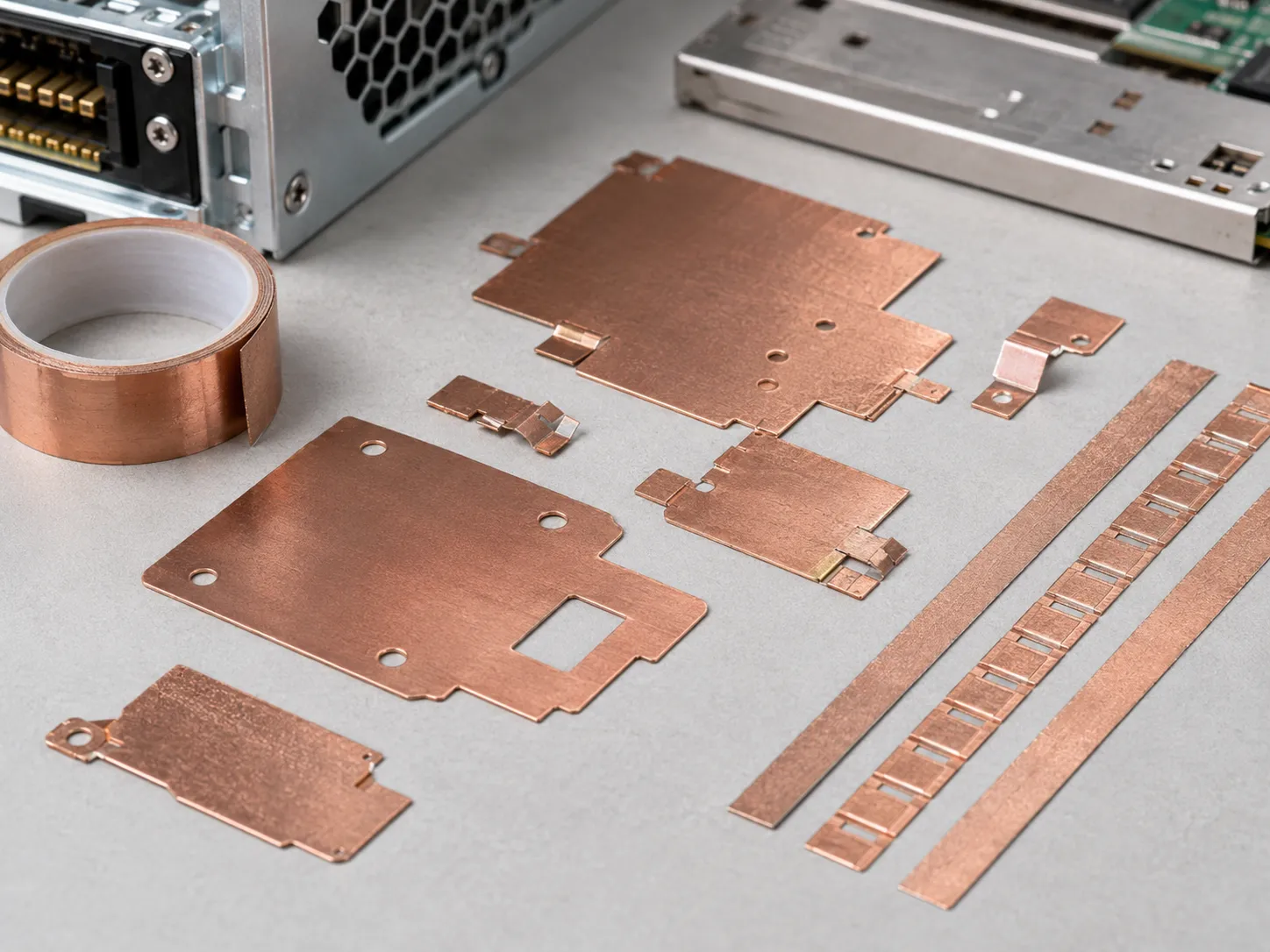
Copper foil is chosen when engineers need a thin, highly conductive path for grounding or shielding. It is widely used around PCBs, connectors, camera modules, antennas, shielding covers and chassis contact points.
EMI shielding tape is often used where fast assembly, localized shielding or flexible grounding is needed. The keyword table shows strong demand for related tape terms, including “EMI shielding tape,” “copper tape EMI shielding” and “EMI/RFI shielding tape,” which makes this topic useful for commercial search intent as well.
When Copper Foil Works Well?
Copper foil works well when the design has:
① Limited thickness space
② Stable contact surface
③ Clear grounding path
④ Need for low resistance
⑤ Simple bending or wrapping requirement
⑥ Localized shielding around sensitive areas
However, copper foil does not solve large gaps by itself. If the surface is uneven or the enclosure force is unstable, copper foil may require conductive adhesive, foam backing, PET insulation backing or a composite die cut structure.
Conductive Fabric Gasket Materials for Flexible EMI Protection
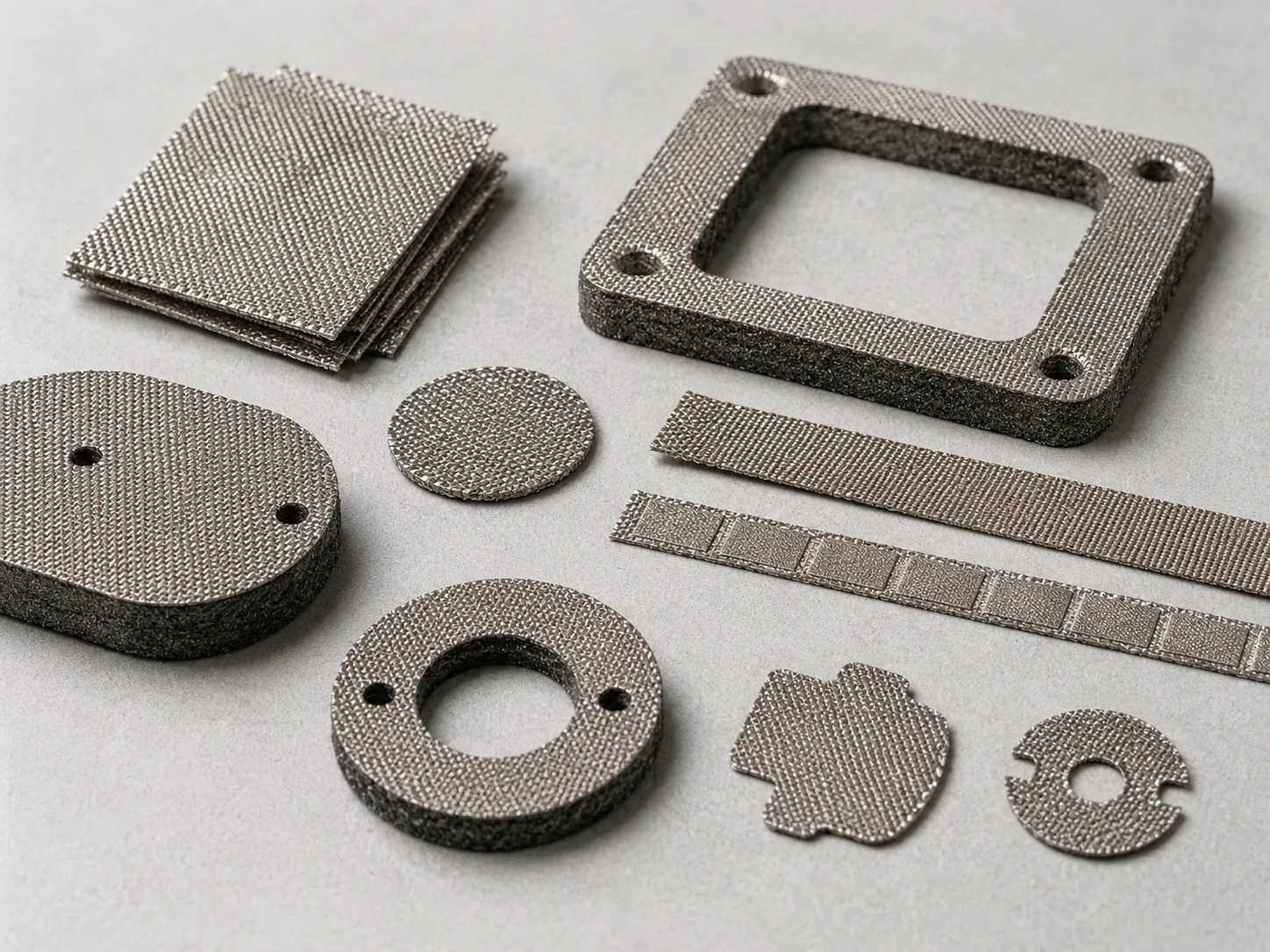
Conductive fabric is typically made by metallizing or coating textile substrates with conductive layers. It is flexible, lightweight and useful for EMI shielding gaskets where low closure force and conformability are required.
Conductive fabric can be die cut into tapes, shielding patches, fabric-over-foam gaskets and enclosure contact parts. It is especially useful when the design needs a balance between flexibility, surface coverage and conductive contact.
What to Watch in Conductive Fabric Die Cutting?
Conductive fabric is not difficult to cut, but it must be processed carefully. Edge fraying, fiber shedding, adhesive compatibility, surface abrasion and bending durability can affect long-term performance. For high-volume parts, liner design and clean waste removal are also important because small loose fibers may affect assembly.
EMI Shielding Material Selection Guide
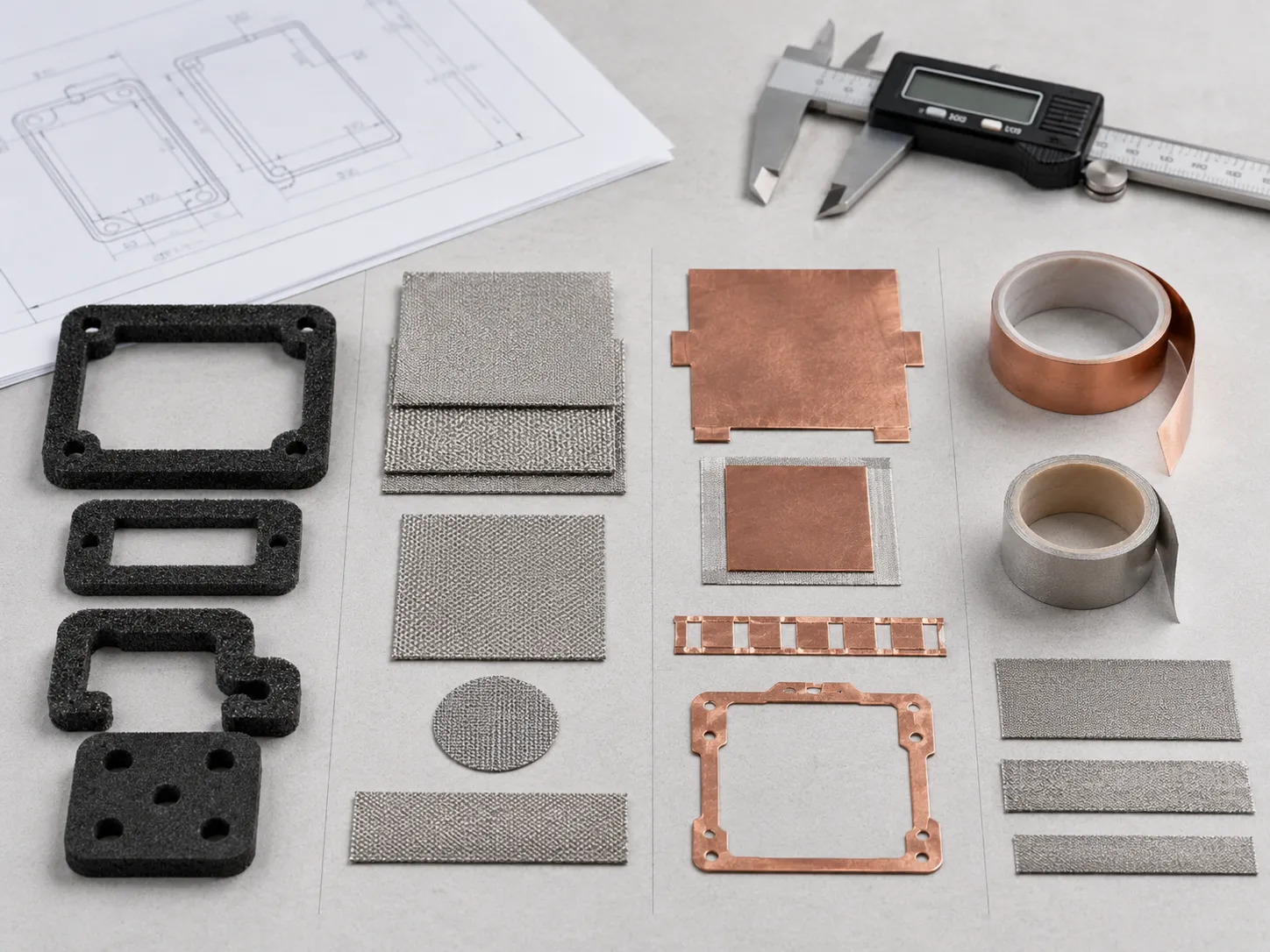
No single material is best for all EMI problems. The correct choice depends on the interference path, structure, compression, frequency range, grounding surface and assembly method.
Selection Factor | Conductive Foam | Copper Foil | Conductive Fabric | EMI Shielding Tape |
Compression | High | Low | Medium if laminated | Low to medium |
Conductivity | Good | Very high | Good | Depends on adhesive and carrier |
Gap filling | Strong | Weak | Good with foam | Limited |
Flexibility | Medium | Medium | High | High |
Thickness | Medium | Very thin | Thin to medium | Thin |
Best use | Gaskets, grounding pads | Grounding tabs, local shielding | Flexible gaskets, fabric-over-foam | Cable, connector and seam shielding |
Main risk | Compression set | Poor contact on uneven surface | Edge fraying or abrasion | Adhesive aging or poor grounding |
Market research also points to growing EMI shielding demand from consumer electronics, 5G infrastructure, electric vehicles and increasingly complex electronic systems. That trend explains why engineers are moving from simple shielding tapes to more customized conductive die cut assemblies.
Die Cutting Design and Quality Control for EMI Components
Design Details That Affect Shielding Reliability
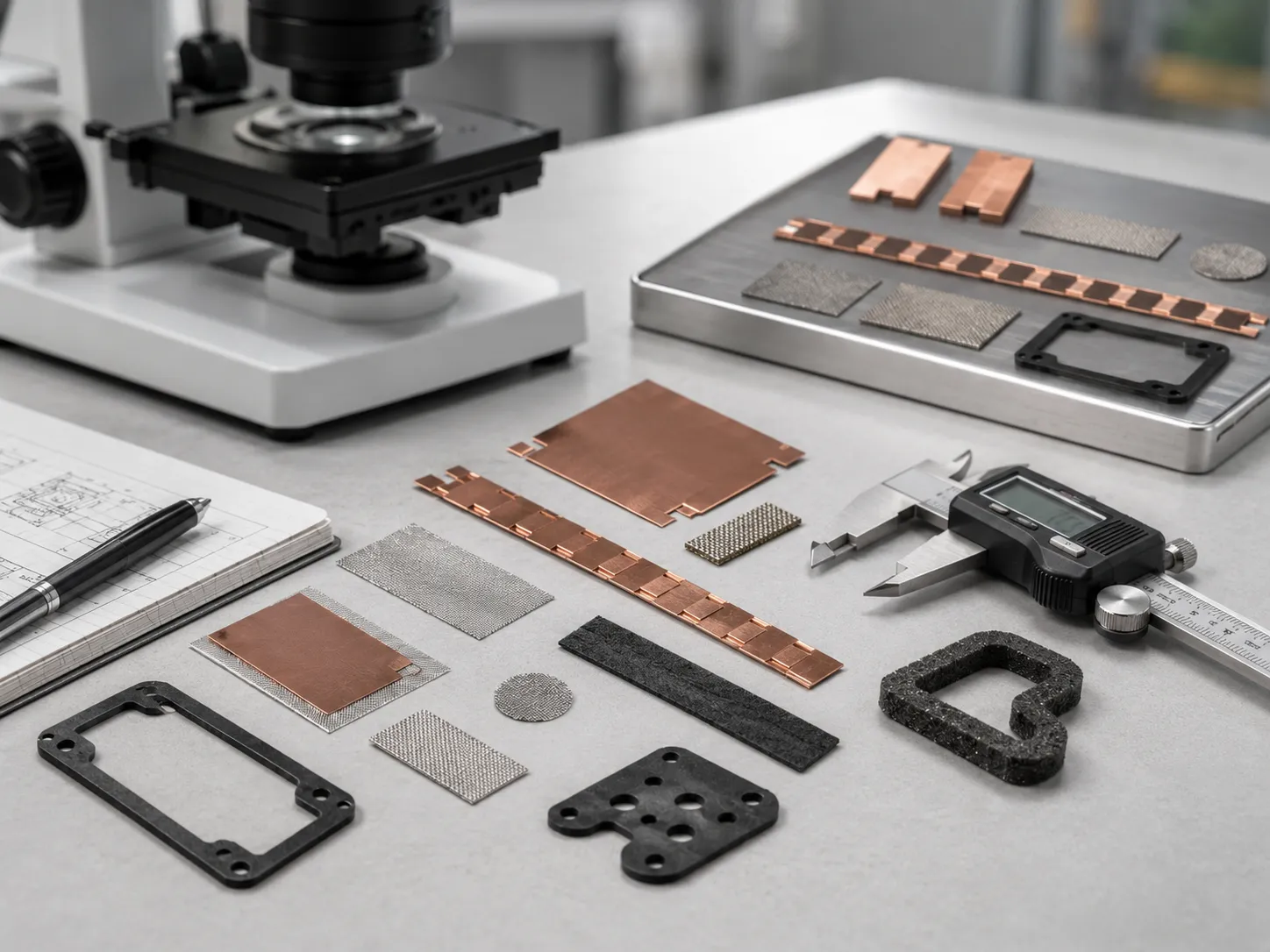
EMI parts are small, but their design details matter. Engineers should confirm:
① Contact surface material: bare metal, coated metal or plastic
② Required compression height and closure force
③ Conductive adhesive or non-conductive adhesive structure
④ Liner type, pull tab direction and assembly method
⑤ Hole positions, edge clearance and grounding area
⑥ Surface resistance or contact resistance target
⑦ Working temperature, vibration and aging conditions
⑧ Packaging format: roll, sheet, tray or individual pieces
If the product is assembled automatically, the liner structure can be as important as the material itself. A good conductive foam gasket may still slow production if it is difficult to peel or position.
Inspection Requirements
Typical inspection items include dimension, thickness, appearance, edge quality, adhesive overflow, surface contamination, compression consistency and packaging condition. For critical EMI shielding gaskets, buyers may also require surface resistance testing, first article inspection, CCD inspection or full inspection.
Applications of Die Cut EMI Shielding Parts
AI Servers and Data Center Hardware
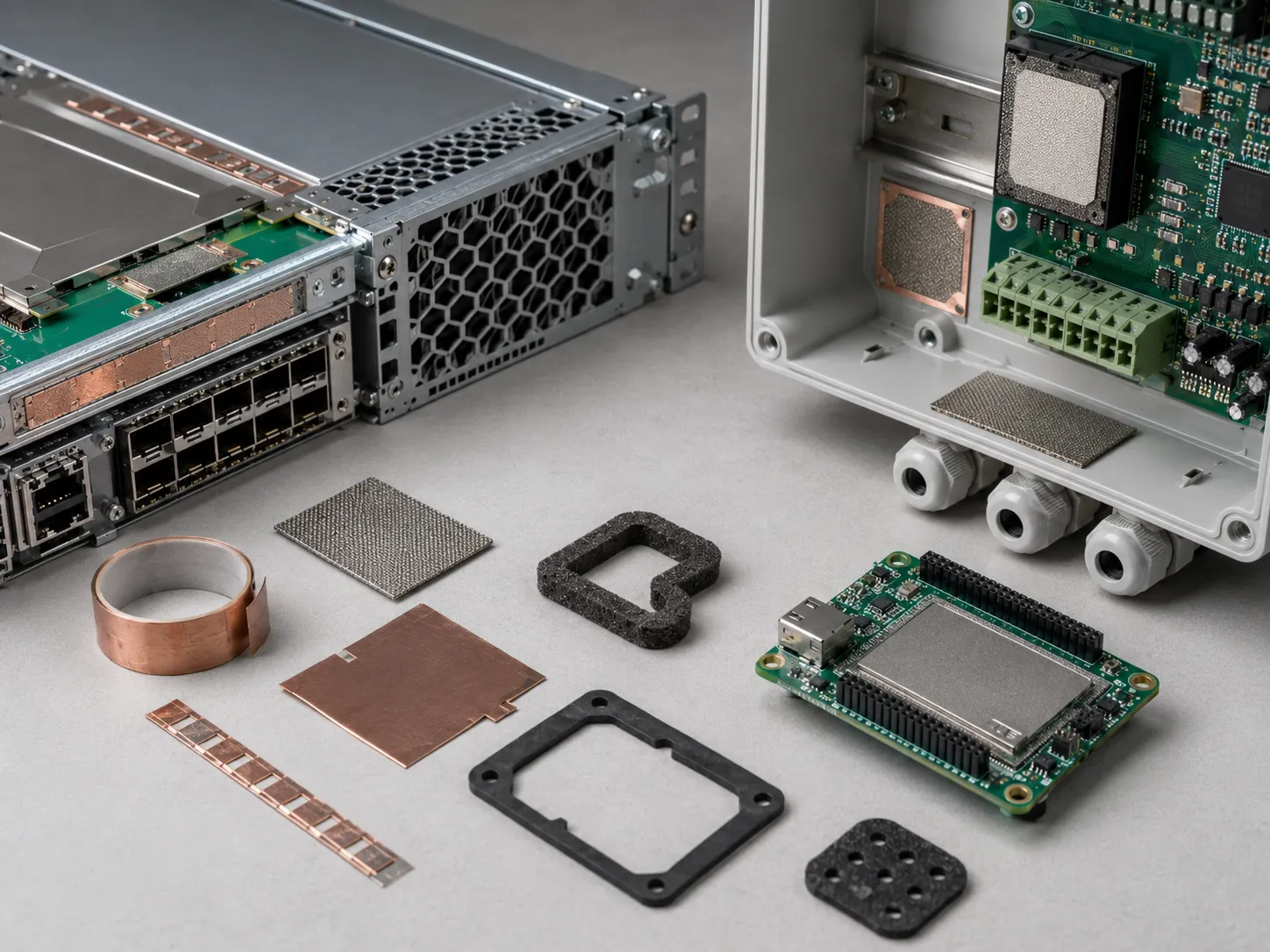
AI servers use EMI shielding parts around high-speed connectors, GPUs, power modules, chassis seams, memory modules and communication interfaces. These systems often need both thermal materials and conductive shielding parts in the same space.
Telecom and Communication Equipment
5G base stations, routers, switches and optical communication devices use conductive foam, copper foil, conductive fabric and EMI tape around RF modules, boards, ports and metal housings.
Industrial Control and Automation
Industrial control devices often operate near motors, power supplies, relays and switching circuits. Conductive gaskets and grounding pads can improve signal stability in enclosed control systems.
EV Electronics and Energy Systems
EV power electronics, battery management systems and charging modules may need conductive shielding, grounding paths and insulation coordination. EMI control is especially important where high-voltage switching and sensitive communication signals coexist.
How Xinyusheng Supports Conductive EMI Die Cutting Projects?
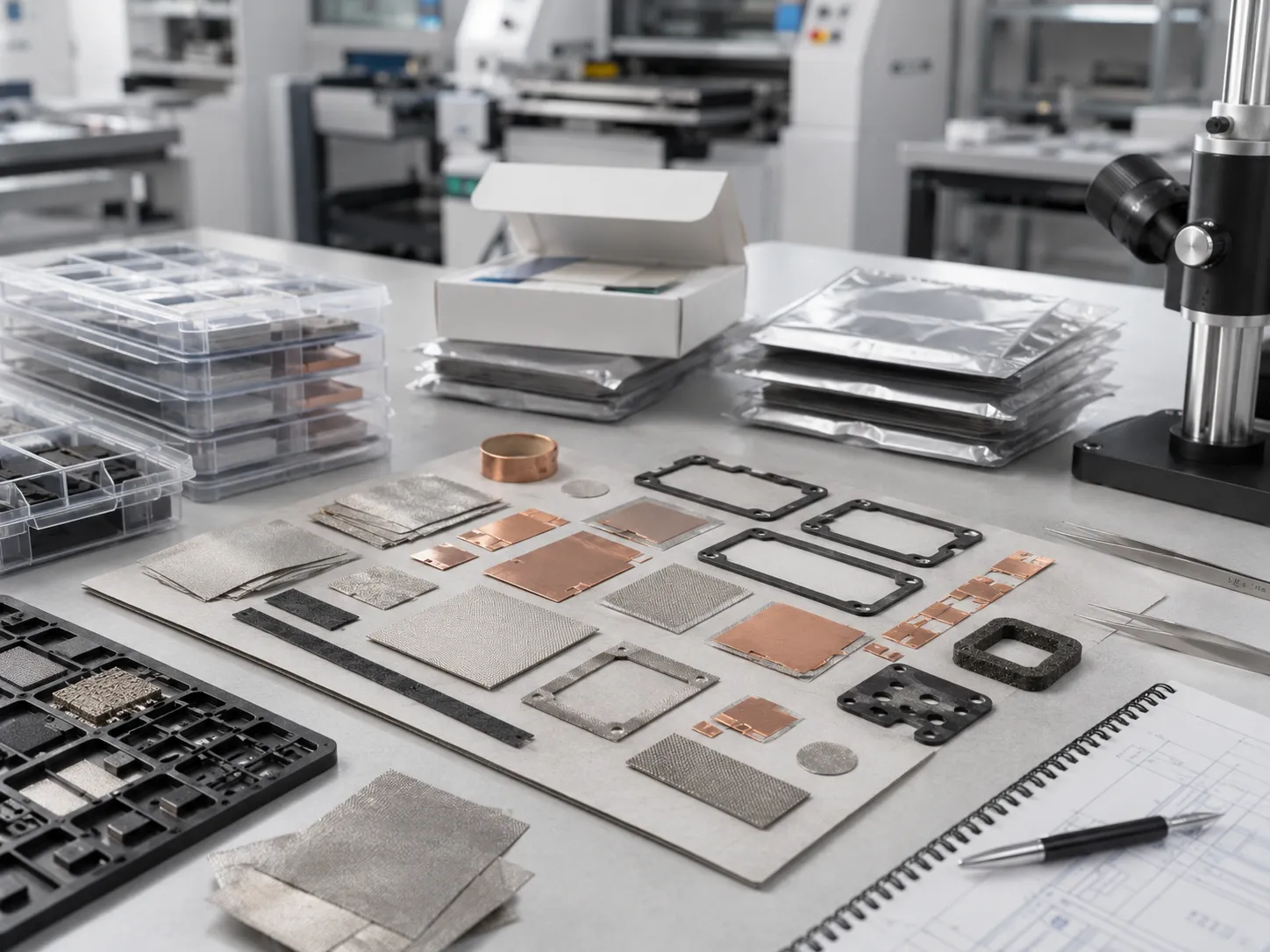
Xinyusheng’s website lists a Conductive (EMI) Series and describes EMI conductive die cutting as a solution with high conductivity and low resistivity for electromagnetic shielding and signal stability. It also notes suitability for telecom, industrial control and new energy applications, with support for conductive plus damping or sealing composite designs.
The SEO planning table also identifies conductive foam, copper foil and conductive fabric comparison as a key topic for supporting the Conductive EMI page, with internal links to the conductive EMI product page, EMI conductive materials page and communications application page.
For custom EMI projects, Xinyusheng can support engineering review, material selection, sample development, lamination, die cutting, inspection and delivery. This is important because EMI conductive die cutting is rarely only about cutting a flat shape. The supplier must understand the grounding path, compression condition, adhesive structure, liner design, surface resistance requirement and final assembly method.
FAQ
What is EMI conductive die cutting?
EMI conductive die cutting is the process of converting conductive materials such as conductive foam, copper foil, conductive fabric, aluminum foil and EMI shielding tape into custom shapes for grounding, shielding and signal protection.
What materials are used for EMI shielding gaskets?
Common materials include conductive foam, conductive fabric, fabric-over-foam, copper foil, aluminum foil, conductive adhesive tape and EMI shielding tape. The best material depends on the structure, compression, conductivity and assembly method.
Is copper foil better than conductive foam for EMI shielding?
Copper foil usually provides higher conductivity and a thinner grounding path. Conductive foam is better for uneven surfaces, vibration and compressible gaps. In many real assemblies, the more reliable choice is the one that maintains contact after compression.
What is the difference between EMI shielding tape and EMI gasket?
EMI shielding tape is often used for localized grounding, cable shielding or seam coverage. An EMI gasket is usually a compressible conductive part placed between two surfaces to maintain electrical contact across a gap or enclosure seam.
What information is needed for a conductive EMI die cutting quote?
Provide drawings, material target, thickness, tolerance, grounding or shielding purpose, contact surface, compression condition, adhesive and liner structure, quantity, inspection requirement and packaging format.
Source References
1.Xinyusheng KPI keyword table: EMI shielding gaskets, EMI/RFI shielding tape, copper tape EMI shielding and conductive foam die cut keyword data.
2.Xinyusheng SEO content plan: Conductive EMI topic direction and internal linking strategy.
3.Xinyusheng official website: Conductive EMI Series, custom die cutting services and application fields.
4.European Commission EMC Directive: electromagnetic emissions and immunity requirements.
5.MarketsandMarkets EMI shielding market trends: 5G, EV, consumer electronics and system complexity as demand drivers.
Table of Contents
Related news
Company News
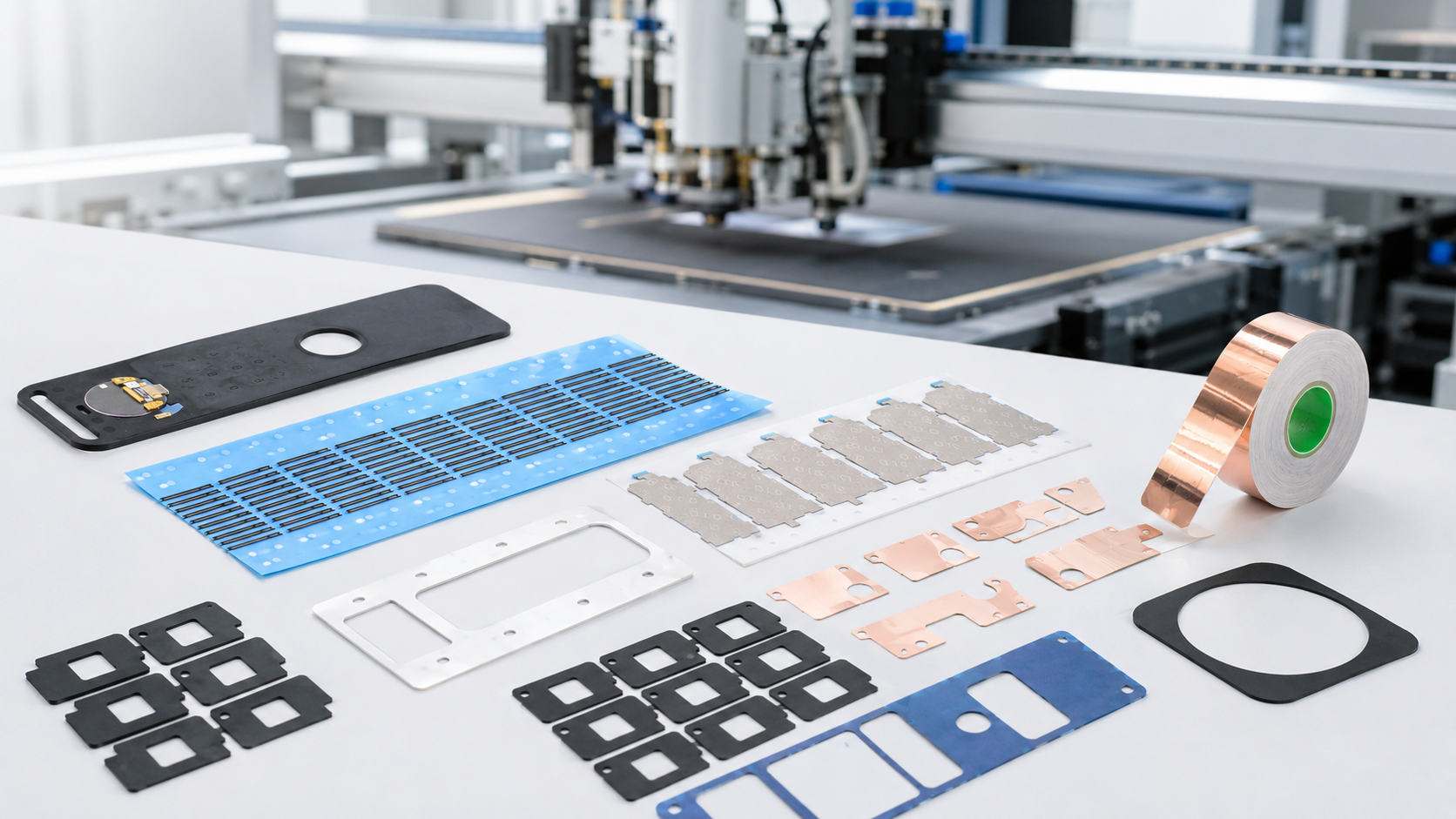
What Is Custom Precision Die Cutting? What Types of Custom Functional Components Is Xinyusheng Suitable For?
May 14,2026
Discover More
Company News
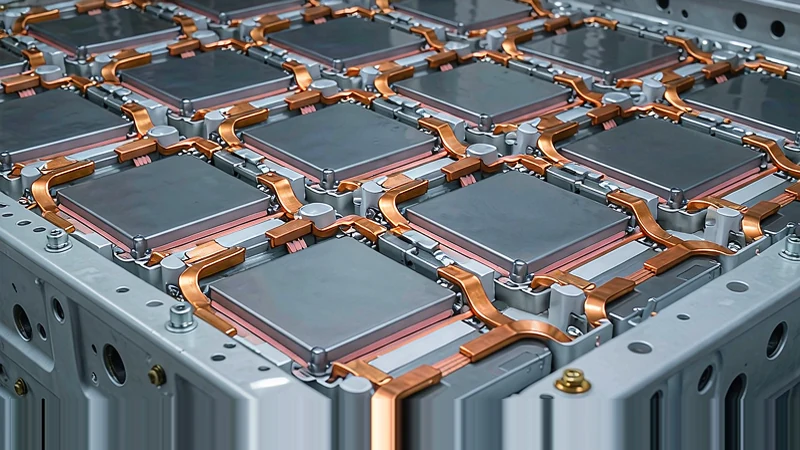
How Are Die Cut Materials Used in Automotive Electronics?
August 29,2026
Discover More
Company News
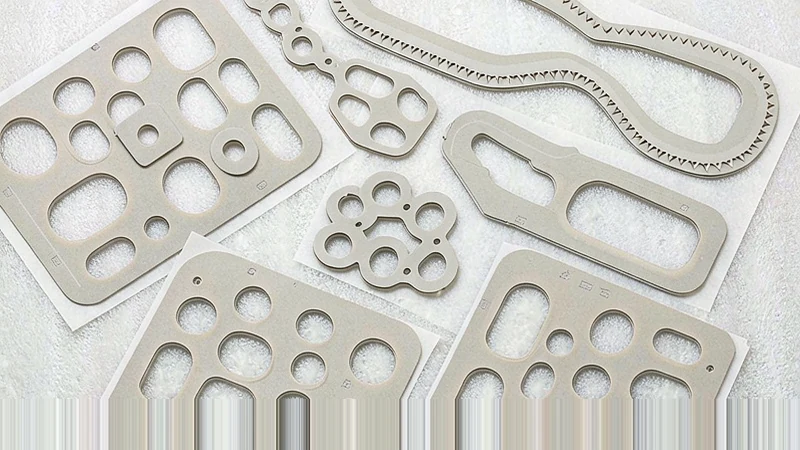
What Types of Thermal Interface Materials Can Be Die Cut?
August 29,2026
Discover More
