What Types of Thermal Interface Materials Can Be Die Cut?
This article explains which thermal interface materials are suitable for die cutting and how their properties affect the final application.
What Thermal Interface Materials Are Suitable for Die Cutting?
| Material Type | Can Be Die Cut? | Main Characteristic | Typical Applications |
|---|---|---|---|
| Thermal Pads | Yes | Compressible, conformable | Electronics, batteries |
| Thermal Films | Yes | Thin, electrically insulating | PCB, power electronics |
| Thermal Tapes | Yes | Thermal transfer + bonding | Heat sink mounting |
| Graphite Sheets | Yes | High in-plane heat spreading | Smartphones, electronics |
| Gap Fillers | Yes, sheet form | Fills uneven gaps | Batteries, modules |
| Phase Change Materials | Certain sheet forms | Low thermal resistance after heating | CPUs, power modules |
| Grease / Paste | No | Dispensed material | Irregular interfaces |
| Thermal Epoxy | No | Liquid adhesive | Permanent bonding |
Die Cut Thermal Pads
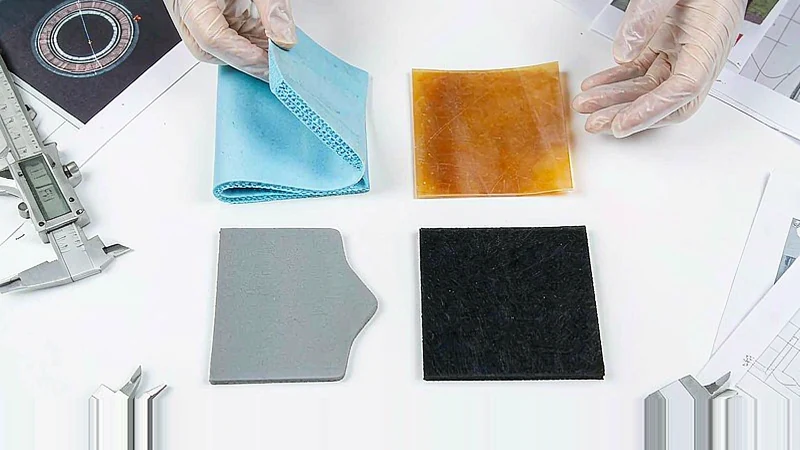
Thermal pads are often chosen for interfaces where the two surfaces do not meet evenly or where a defined gap has to be bridged. Because the material can compress and conform under pressure, it helps maintain contact between the heat source and the heat sink or housing. In practice, this means that thermal conductivity alone does not determine performance; thickness, hardness and compression behavior also affect how well the pad works once assembled.
Their sheet or roll format also makes thermal pads practical for precision die cutting. Instead of using a simple rectangular piece, the part can be shaped around the actual layout of the assembly, with openings, slots, narrow edges or positioning features added where needed. This is especially useful in compact designs where the thermal interface has to fit closely around nearby components.
Material construction varies with the application. Silicone-based pads are common because of their flexibility, while acrylic or ceramic-filled formulations may be selected where different insulation, mechanical or thermal properties are required. For battery packs, power modules and other electronic assemblies, the more useful question is not which material has the highest conductivity value, but which one can maintain reliable contact under the available pressure and space constraints.
Die Cut Thermal Films
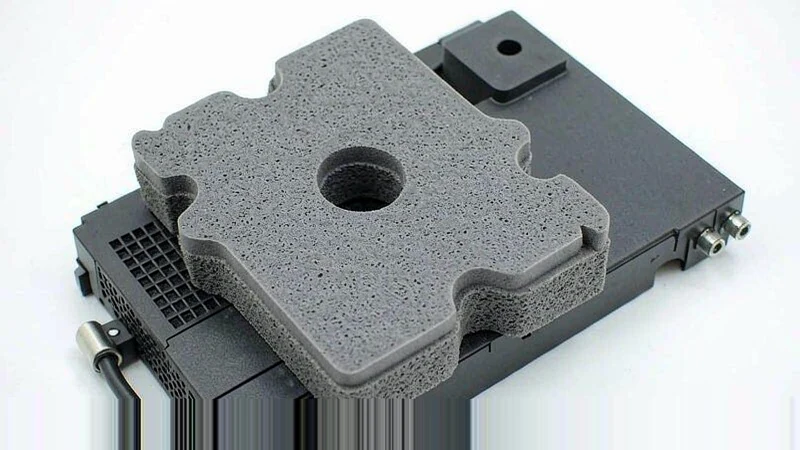
Thermal films are often used in designs where the interface must remain thin, predictable and electrically insulating. Instead of relying on compression to fill a gap, they work best across relatively flat surfaces where the available space is already tightly controlled.
Common constructions include polyimide-based films and thermally filled polymer films. Their value comes from the combination of low profile, structural stability and insulation performance, rather than softness or gap-filling ability. Because the material holds its shape well, it can be positioned accurately during assembly and is less likely to shift or deform during handling.
In many designs, the difficulty is not the size of the film itself but the geometry around it. Clearance may be needed for screws, terminals, connectors or exposed conductive zones, while other areas still require full thermal contact. Die cutting allows these details to be built directly into the part, helping the film fit the assembly cleanly without secondary trimming.
Die Cut Thermal Tapes
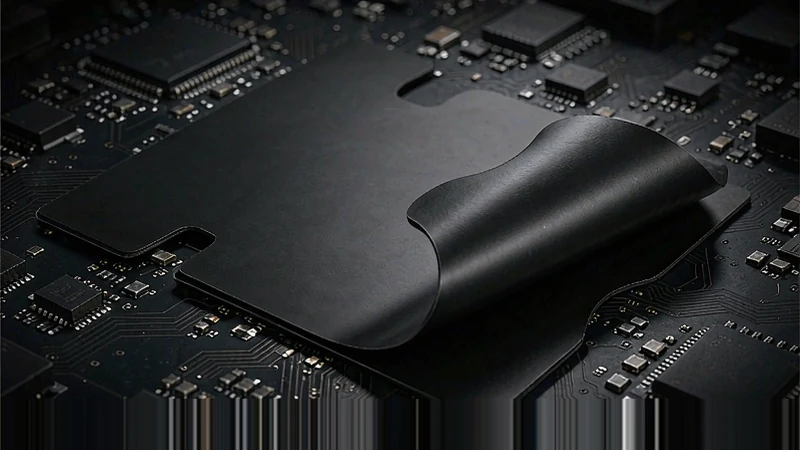
Thermal tapes are often used when a component needs both heat transfer and secure attachment. The adhesive is already built into the thermal material, so the same part can help conduct heat while holding components such as heat sinks or LED modules in place. Depending on the application, the tape may be a thermally conductive transfer adhesive or a carrier-supported construction that is easier to handle and provides better mechanical strength.
For assembly, die cutting makes it possible to shape the tape around the actual contact area rather than using a simple strip or full sheet. Openings, clearances and locating features can be added in advance, which makes positioning easier and reduces extra trimming during installation. The right tape should balance thermal performance with adhesion, material compatibility, operating temperature and the thickness of the bonded interface.
Die Cut Graphite Sheets and Heat Spreaders
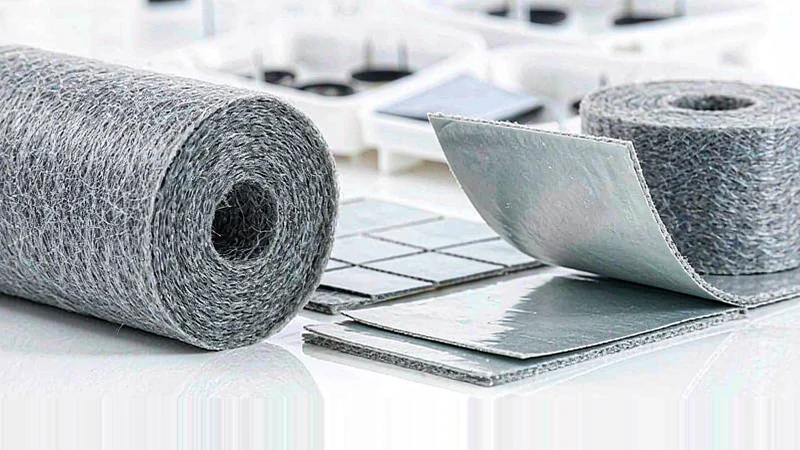
Graphite is usually selected for heat spreading rather than gap filling. Its high in-plane conductivity helps move heat away from a localized source and distribute it across a broader surface, which is especially valuable in compact designs where adding a thicker thermal material is not practical.
Because graphite is available in thin sheet form, it can be die cut to follow the layout of the assembly, including cutouts, narrow edges and irregular boundaries. Adhesive or insulating layers can also be added when needed. For these parts, thickness and material grade matter, but so does the geometry: the way the graphite is shaped and positioned affects how effectively heat is redirected across the available area.
Die Cut Thermal Gap Fillers
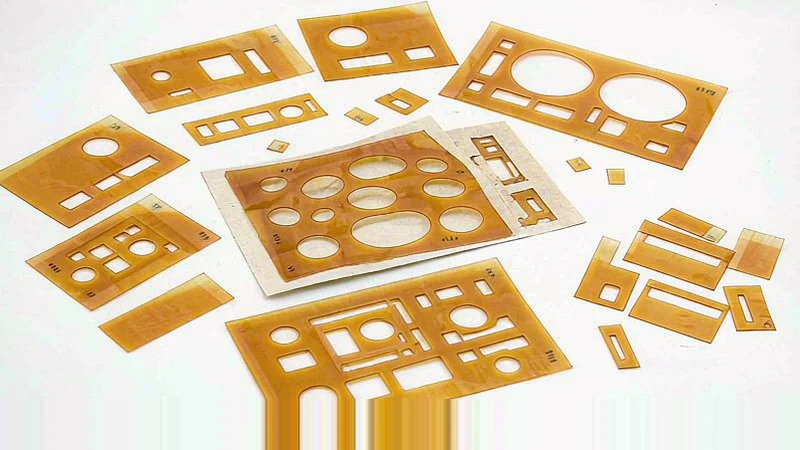
Thermal gap fillers are available in different formats, but only sheet-based materials can be processed by die cutting. Liquid and paste versions are applied directly during assembly, while soft gap-filling sheets can be cut in advance to match the required interface.
Their value becomes more obvious when the space between components is uneven or simply too large for a thin film or tape. The material compresses to follow surface variation and maintain contact across the interface, which makes it useful in battery modules, power electronics and other assemblies with changing component heights. In these cases, the actual gap, available compression and thermal demand should guide material selection rather than conductivity alone.
How to Choose a Thermal Interface Material for Die Cutting
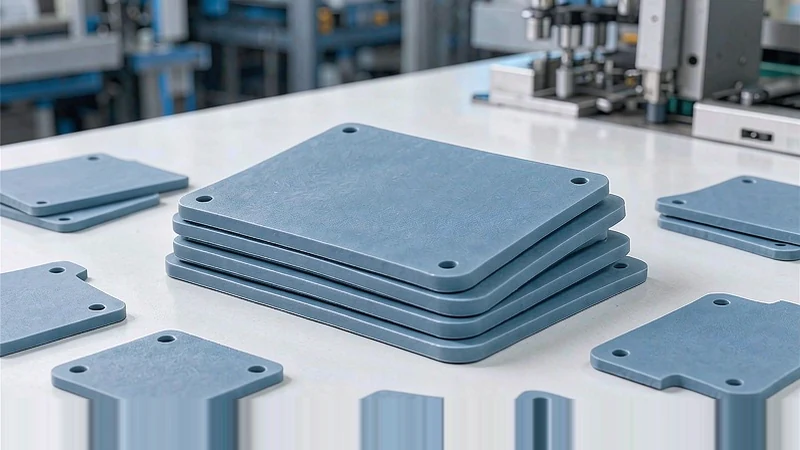
1. Thermal Performance
Thermal conductivity is important, but it should not be treated as the only measure of performance. Thickness, stiffness and the quality of contact across the interface all influence how effectively heat moves through the material once the part is assembled.
2. Gap and Compression
The size and consistency of the gap help narrow down the material choice. Softer pads and gap fillers can accommodate uneven surfaces or larger spacing, while films and tapes are better suited to flatter interfaces with limited room. Compression should also be controlled so the material maintains contact without placing excessive force on nearby components.
3. Electrical Insulation
When the TIM is positioned close to conductive parts or power devices, dielectric performance becomes another key requirement. The material needs to provide sufficient insulation while still fitting within the available space and maintaining the intended thermal path.
4. Adhesive and Assembly
Some designs also require the thermal material to stay firmly in place during assembly or operation. In those cases, substrate compatibility, operating temperature and long-term adhesion may favor a thermal tape or an adhesive-backed TIM over a separate bonding step.
5. Part Geometry
The shape of the finished part can affect which materials are practical to use. Small holes, narrow sections, closely spaced cutouts and thin walls can be more difficult to process in very soft or fragile materials, particularly when dimensional accuracy is critical.
6. Lamination and Converting
For multilayer constructions, the combined material stack needs to remain stable through cutting, liner removal and handling. Adhesive layers, insulation films and protective liners should work together without creating problems with cutting quality, release or final placement.
The most suitable TIM is therefore the one that fits the actual thermal, electrical and dimensional requirements of the part while remaining practical to convert and assemble consistently.
What Can Be Customized During Thermal Interface Die Cutting?
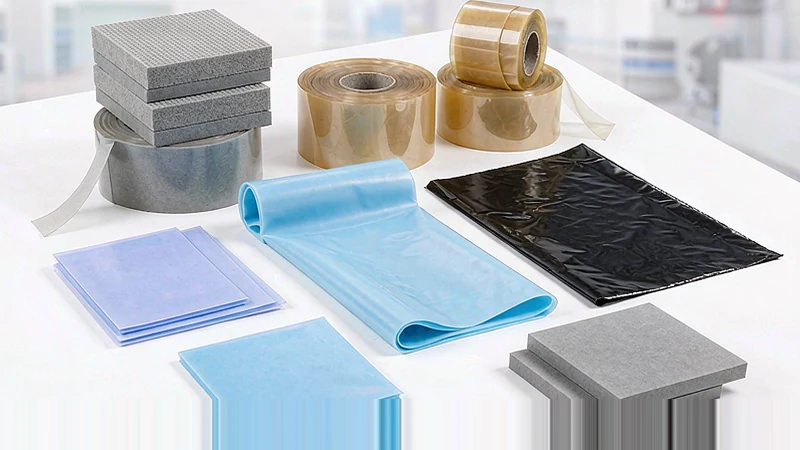
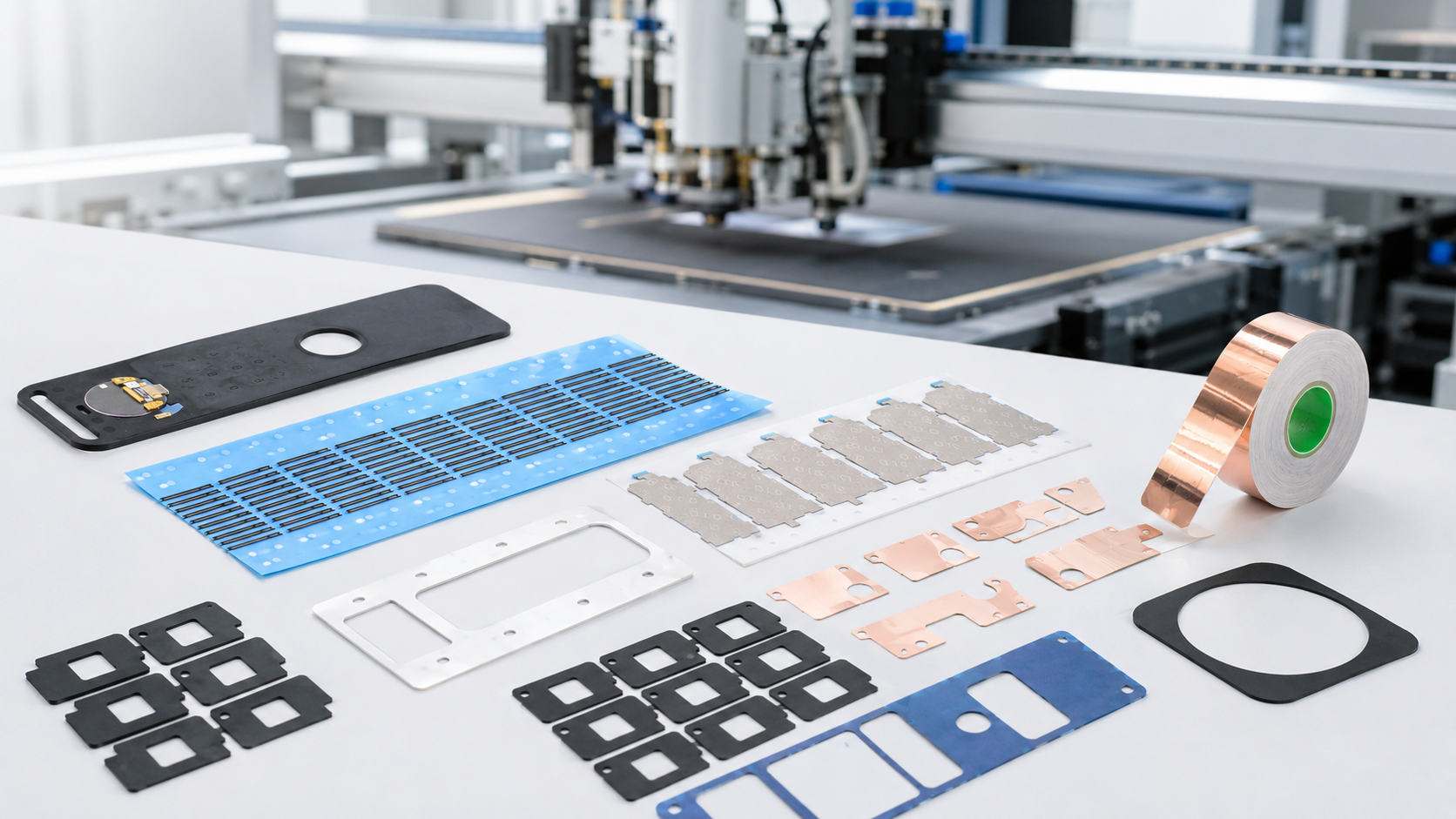
Thermal interface parts can be made to follow the exact shape and structure required by the assembly, from outer contours and internal cutouts to holes, slots and locating features. When the application calls for easier placement, insulation or surface protection, adhesive layers, release liners, insulating films or protective films can be added as part of the construction. Xinyusheng can also combine multiple materials before die cutting and support both flat-bed and rotary processes, so the finished part can be developed around the drawing, material stack and assembly method rather than limited to a standard pad or sheet.
Conclusion
Thermal pads, films, tapes, graphite sheets and sheet-form gap fillers can all be die cut, but each material serves a different thermal and assembly need. The final choice should consider more than thermal conductivity alone, including gap size, compression, insulation, geometry and converting requirements. For custom parts, matching the material and die-cut design to the actual application is the key to achieving reliable thermal performance and easier assembly.
Table of Contents
Related news
Company News
What Is Custom Precision Die Cutting? What Types of Custom Functional Components Is Xinyusheng Suitable For?
May 14,2026
Discover More
Company News
How Are Die Cut Materials Used in Automotive Electronics?
August 29,2026
Discover More
Company News
How Material Type Affects Precision Die-Cutting Tolerances
August 14,2026
Discover More
