Die Cut Adhesive Tape for Electronics Assembly: Materials, Design and Applications
Summary
Die cut adhesive tape is widely used in electronics assembly for bonding, fixing, sealing, cushioning, insulation and component positioning. Compared with liquid glue or mechanical fasteners, adhesive tape supports cleaner assembly, thinner structures, faster production and better repeatability.
For smartphones, wearables, smart home devices, security cameras, AI servers, robots, drones, medical devices and automotive electronics, adhesive tape parts must meet more than basic bonding requirements. Engineers often need low ooze, high adhesion, clean release, temperature resistance, weather resistance, precise shapes and compatibility with automated placement.
Xinyusheng provides custom die cut adhesive tape solutions for electronic assembly, supporting material selection, lamination, precision die cutting, sample validation, inspection and mass production delivery.
What Is Die Cut Adhesive Tape for Electronics Assembly?
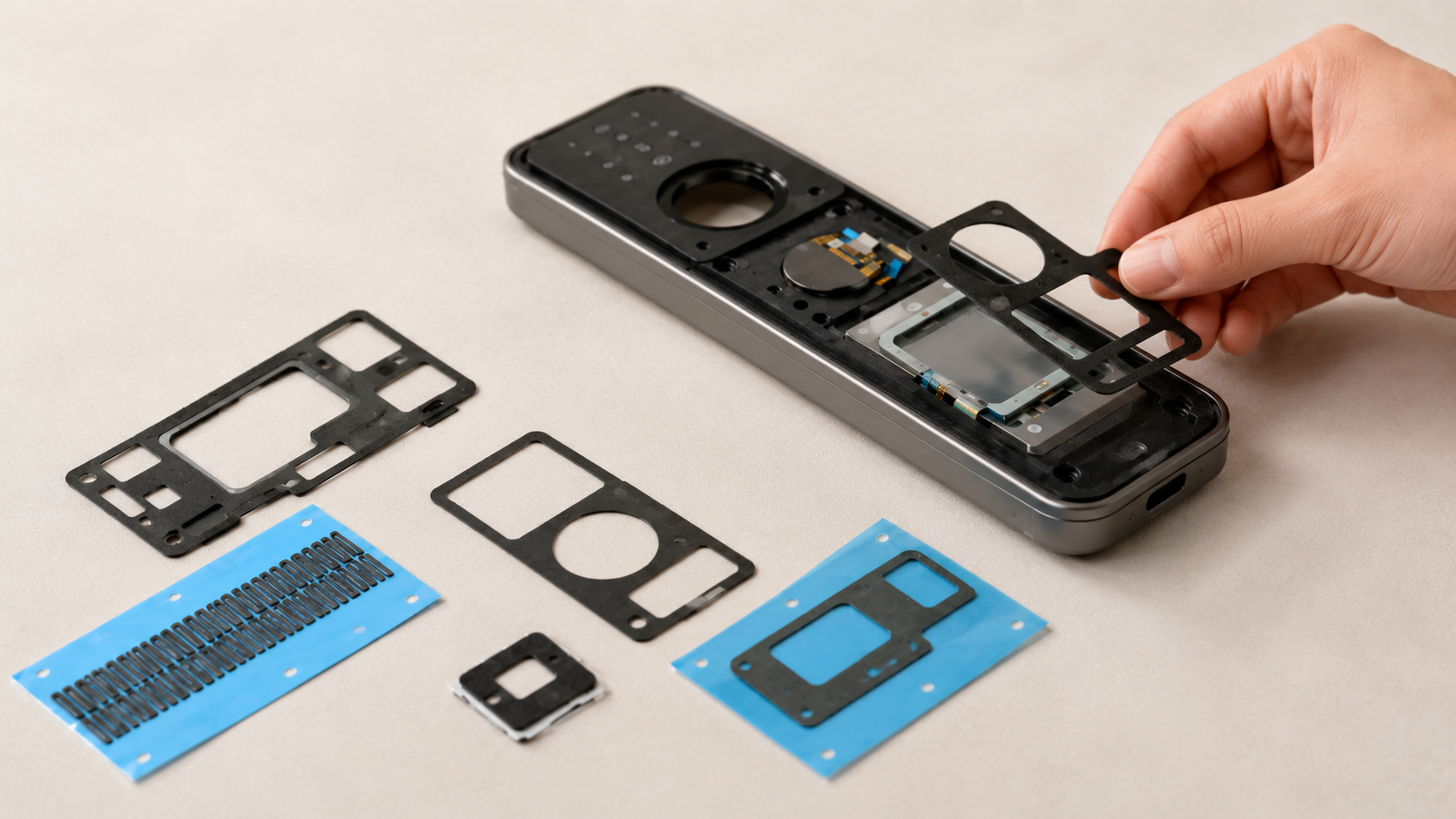
Die cut adhesive tape refers to adhesive tape that is converted into a specific shape through die cutting, kiss cutting, lamination, slitting, waste removal and liner processing. Instead of being supplied only as a standard roll, the tape is customized into parts that fit a product’s structure, assembly process and functional requirements.
In electronics assembly, adhesive tape can be used to bond displays, fix batteries, attach modules, seal housings, mount sensors, protect lenses, manage cables, reduce vibration and support automated assembly.
Why Electronics Use Custom Adhesive Tape Instead of Liquid Glue?
Custom die cut adhesive tape is often preferred because it offers stable thickness, clean edges, easy handling and faster assembly. It can also reduce curing time, minimize messy glue application and improve positioning accuracy.
Assembly Method | Advantage | Limitation |
Liquid glue | Good gap filling and strong bonding | Curing time, overflow risk and process variability |
Screws or clips | Strong mechanical fixing | Takes space, adds weight and may damage thin parts |
Die cut adhesive tape | Clean, thin, fast and repeatable | Requires correct material and design selection |
For compact electronic products, tape is not only a bonding material. It is also part of the product structure and assembly strategy.
Common Materials Used in PSA Die Cutting
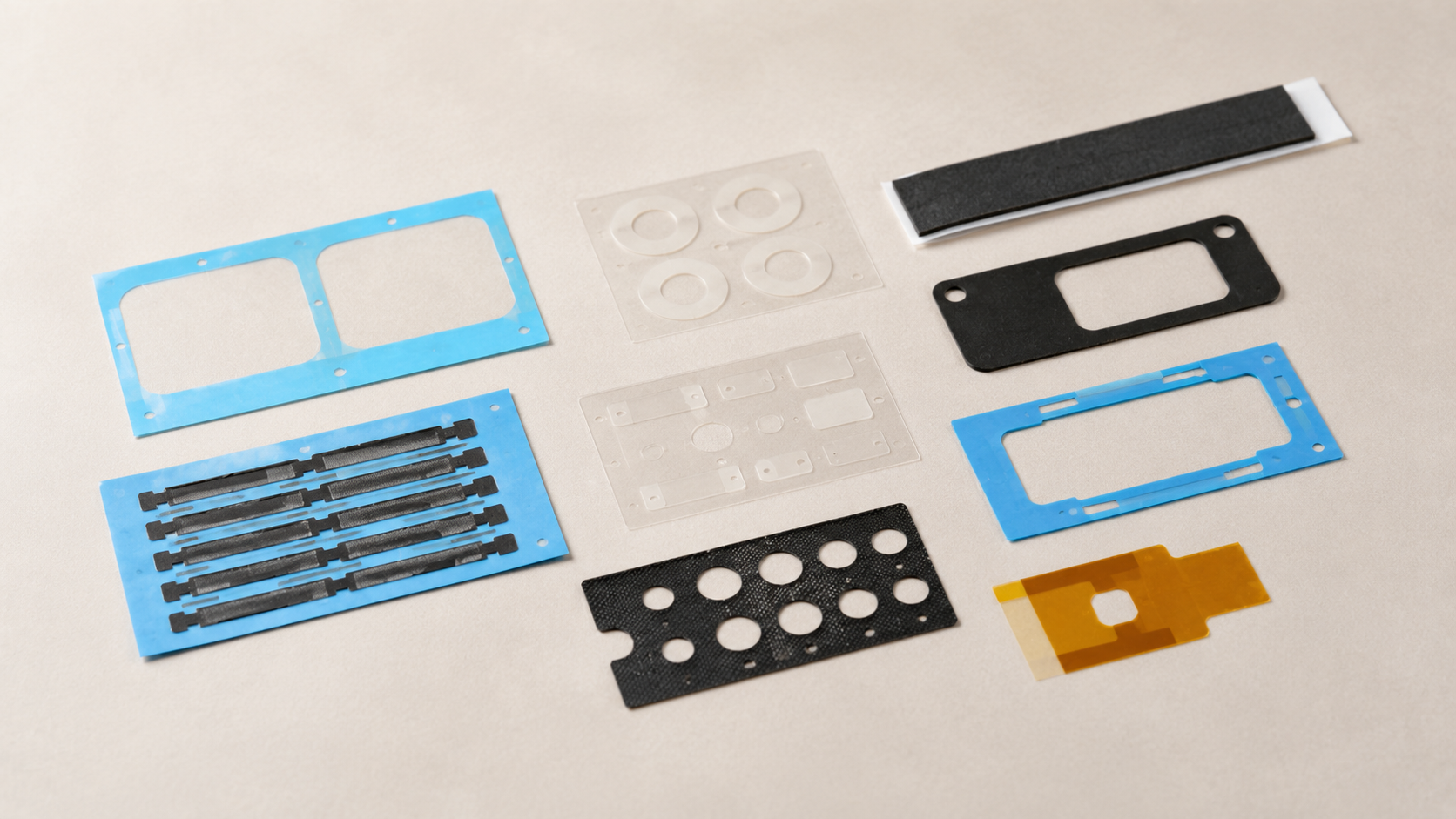
PSA die cutting uses pressure-sensitive adhesive materials that bond when pressure is applied. The adhesive layer may be supported by a carrier such as PET, PI, tissue, foam, cloth, foil or film, depending on the required function.
Different adhesive tape materials provide different performance in bonding strength, temperature resistance, removability, cushioning, insulation and weather resistance.
Double-Sided Tape, PET/PI Tape and Foam Tape
Tape Type | Typical Structure | Common Use | Selection Focus |
Die cut double sided tape | Adhesive + carrier + adhesive + liner | Component bonding, screen bonding and module fixing | Adhesion, thickness and liner release |
PET carrier tape | PET film + adhesive | Thin bonding, insulation support and label bonding | Dimensional stability and clean edge |
PI adhesive tape | Polyimide film + adhesive | High-temperature and insulation areas | Heat resistance and electrical insulation |
Foam tape | Foam carrier + adhesive | Cushioning, gap filling and vibration damping | Compression, rebound and bonding strength |
Transfer tape | Adhesive layer + liner | Ultra-thin bonding | Surface wet-out and handling |
Conductive adhesive tape | Conductive layer + adhesive | EMI grounding and shielding | Conductivity and contact reliability |
For die cut double sided foam tape, both foam compression and adhesive strength must be considered. The foam layer may provide cushioning, while the adhesive layer provides bonding. If one side bonds to plastic and the other side bonds to metal or glass, each adhesive surface may need a different performance profile.
Key Design Factors for Die Cut Adhesive Tape Parts
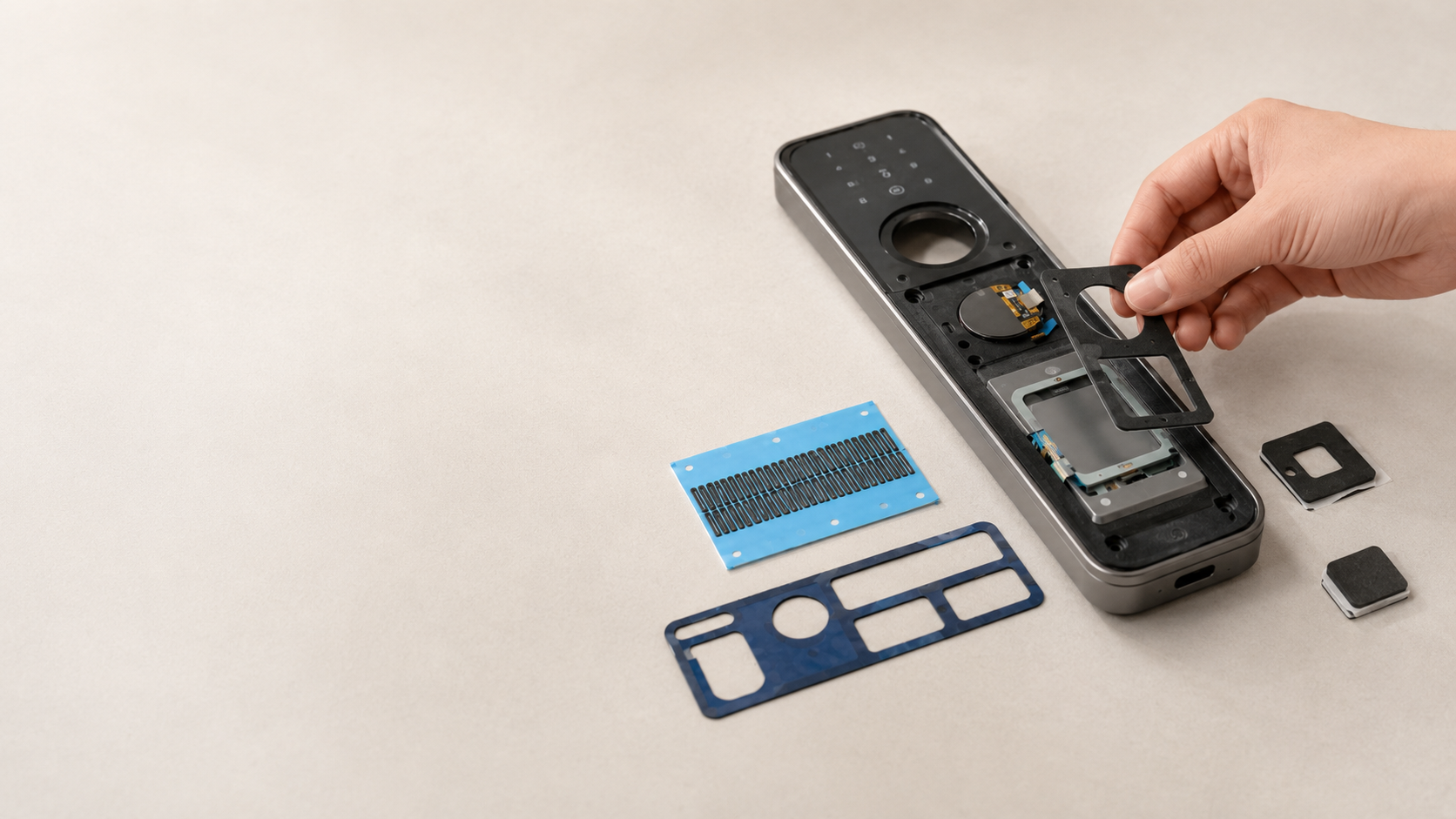
Good precision die cut adhesive tape design starts with the actual assembly conditions. The tape must match the substrate, surface energy, temperature range, pressure, application method and long-term use environment.
Important design questions include:
Design Question | Why It Matters |
What materials need to be bonded? | Different substrates require different adhesive systems |
Is the surface plastic, metal, glass or coated? | Surface energy affects adhesion strength |
Will the part face heat, humidity, UV or chemicals? | Environment affects long-term reliability |
Does the tape need to be removable or permanent? | Adhesive type should match rework needs |
Will assembly be manual or automated? | Liner, part spacing and delivery format must match the process |
Does the part need a pull tab or positioning hole? | Handling design improves assembly efficiency |
Low Ooze, High Adhesion and Temperature Resistance
Low ooze is important for small electronic parts because adhesive overflow may contaminate lenses, sensors, buttons, displays or precision surfaces. Die cut PSA with low-ooze performance helps keep the assembly area clean and reduces rework risk.
High adhesion is important when the part must remain bonded under stress, vibration or long-term compression. However, stronger adhesion is not always better. If the tape is too aggressive, it may be difficult to reposition, remove or assemble without damaging the substrate.
Temperature resistance is another key factor. Electronics may face heat from batteries, processors, charging modules, power supplies or outdoor environments. For these applications, adhesive stability under heat aging and temperature cycling should be confirmed during sampling.
Requirement | Risk If Ignored | Design Recommendation |
Low ooze | Glue overflow, residue and contamination | Use low-flow adhesive and proper die pressure |
High adhesion | Edge lift or bonding failure | Match adhesive to substrate surface energy |
Temperature resistance | Softening, adhesive shift or delamination | Choose high-temperature PSA or PI-based tape |
Clean removal | Residue or surface damage | Select removable adhesive if rework is required |
Thin structure | Assembly interference | Control total tape thickness and liner thickness |
Liner, Pull Tab, Positioning Hole and Waste Removal
For adhesive tape die cut parts, liner design is as important as adhesive performance. A poor liner design can slow down production, cause misalignment or increase defect rates.
Design Feature | Function |
Release liner | Protects adhesive and supports handling |
Extended liner | Helps operators peel and position the part |
Pull tab | Improves assembly speed and removal control |
Positioning hole | Supports accurate placement or automated alignment |
Kiss-cut structure | Keeps parts on liner for easy picking |
Waste bridge | Prevents part shifting during waste removal |
Roll format | Supports automated placement and high-volume assembly |
Sheet format | Suitable for samples, large parts or manual assembly |
For automated assembly, roll-to-roll format, liner release force and part spacing must be confirmed early. If the liner release is too tight, the machine may fail to pick the part. If it is too loose, the part may lift during transport or waste removal.
Application Guide for Die Cut Adhesive Tape in Electronics
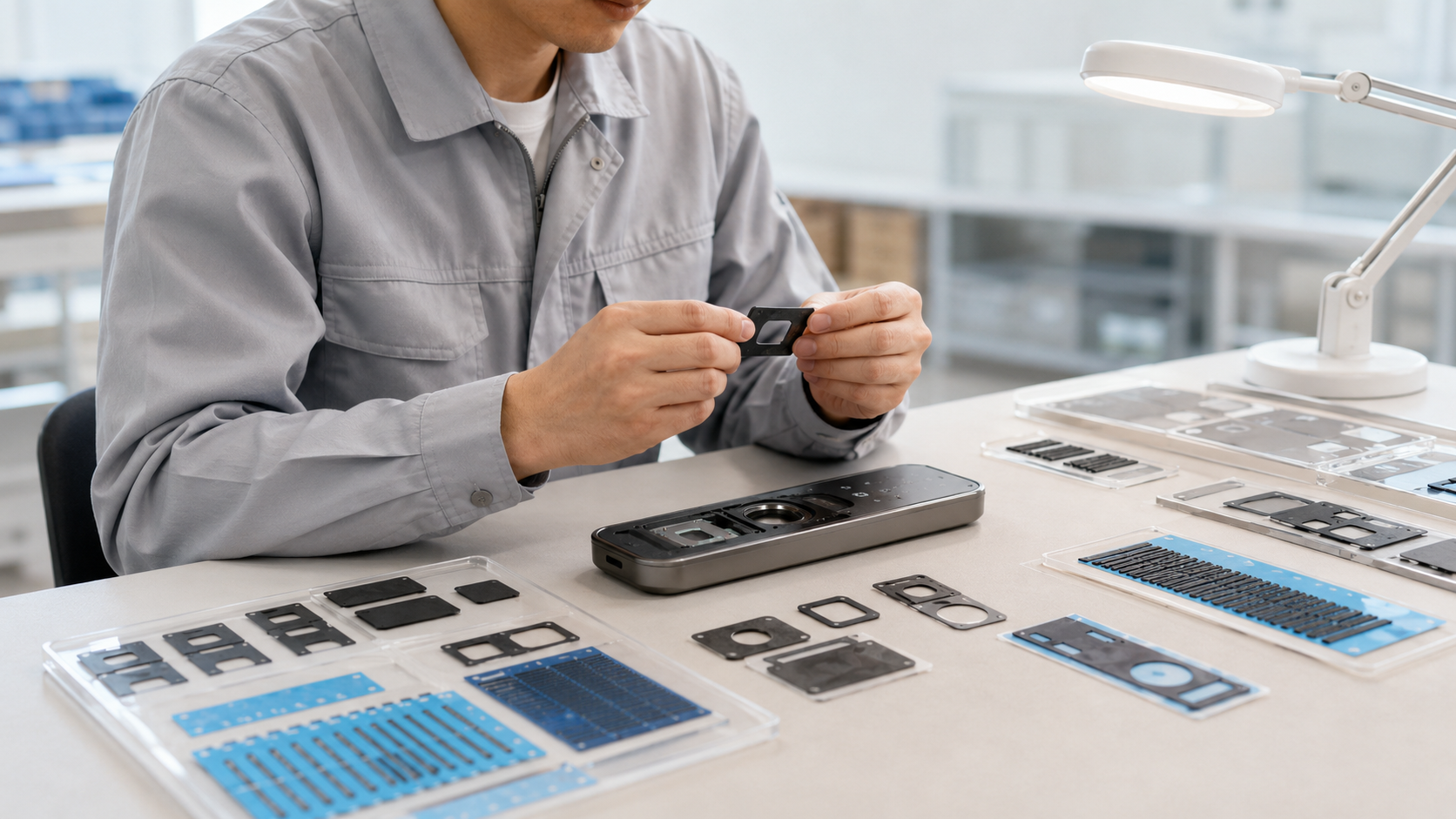
Die cut adhesive tape is used across many electronic products, but the performance priority changes by application. A smartphone may require thin bonding and no residue. A security camera may need outdoor weather resistance. An AI server may require stable module fixing and heat-resistant materials.
Application | Typical Tape Function | Selection Focus |
Smartphones and tablets | Screen bonding, module fixing and battery fixing | Thin profile, low ooze and clean edges |
Wearables | Sensor bonding, battery fixing and waterproof support | Thin structure, stable adhesion and clean handling |
Smart home devices | Component fixing, sealing and panel bonding | Easy assembly and long-term bonding |
Security cameras | Lens area bonding and housing sealing | Weather resistance and anti-aging |
Robots and drones | Cable fixing, airframe bonding and module fixing | Lightweight design and vibration resistance |
AI servers | Module bonding and internal fastening | Heat resistance and dimensional stability |
Automotive electronics | Wire-harness fixing and in-vehicle bonding | Temperature durability and quality control |
Medical devices | Equipment bonding and sealing | Clean processing and traceability |
Consumer Electronics, Smart Home and Security Devices
For consumer electronics, custom die cut tape should be thin, accurate and clean. The most common concerns are edge lift, glue residue, liner release, part deformation and contamination.
In smart home and security devices, adhesive tape often supports both bonding and sealing. Outdoor or semi-outdoor products may require weather resistance, corrosion resistance and stable adhesion under temperature and humidity changes.
AI Servers, Automotive Electronics and Medical Devices
AI servers and industrial control equipment require adhesive tape parts that remain stable under heat and long operating hours. Tape may be used for internal fastening, module bonding, insulation support, wire fixing or thermal structure support.
Automotive electronics require more attention to heat, vibration, humidity and long-term reliability. Medical devices may require cleaner materials, controlled production, reliable traceability and low residue.
For these industries, precision die cutting services are valuable because the tape part must meet both material performance and assembly efficiency requirements.
How Xinyusheng Supports Custom Die Cut Adhesive Tape Projects?
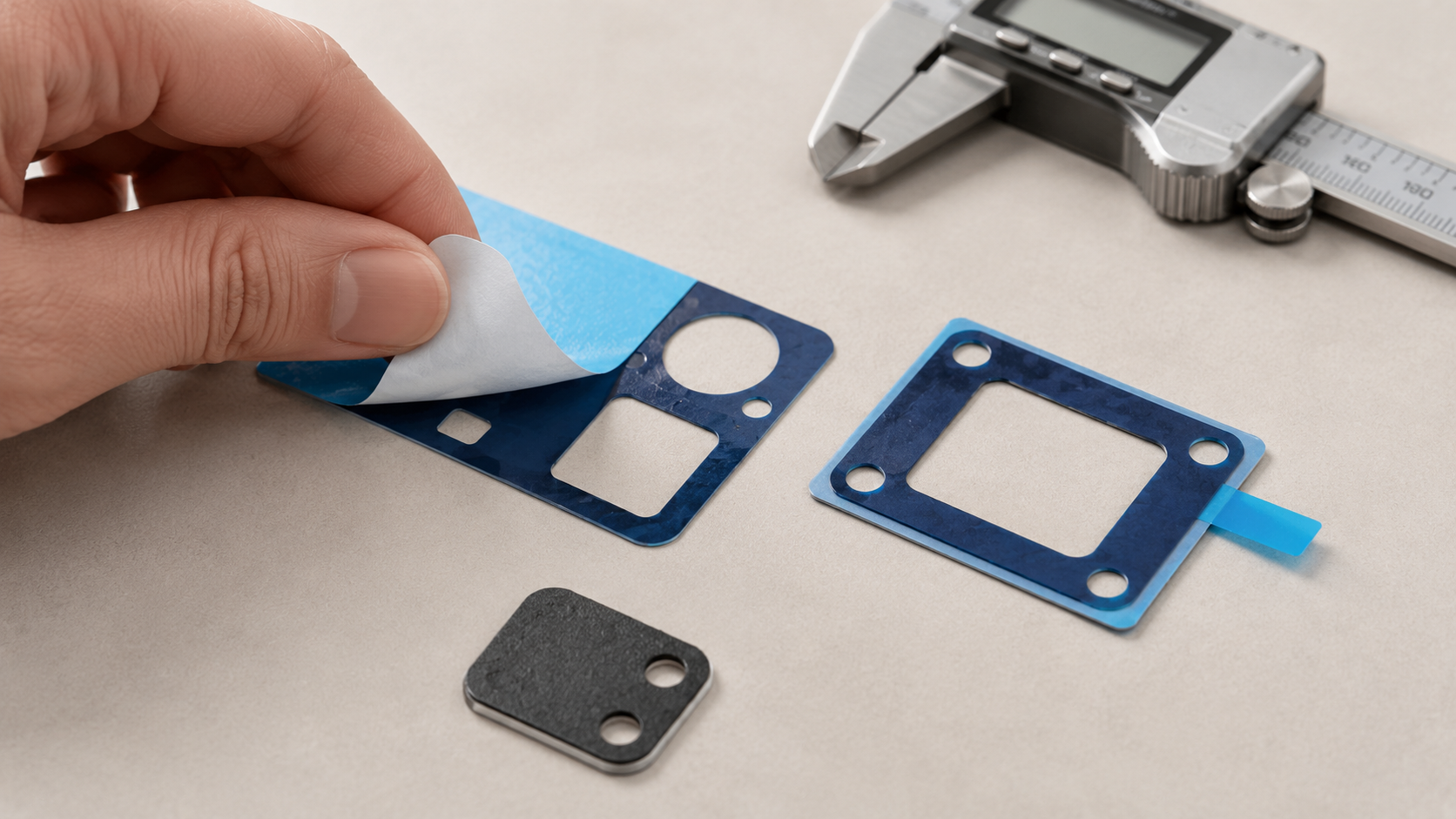
Xinyusheng supports custom die cut adhesive tape projects for electronics assembly, smart home devices, security equipment, robots, drones, AI servers, new energy vehicles, telecom equipment and medical devices.
The project usually begins with drawing review, material confirmation and application analysis. Engineers evaluate the tape structure, adhesive type, thickness, liner, tolerance, bonding surface, temperature requirement, assembly method and packaging form.
From Material Review to Sampling and Mass Production
A practical PSA die cutting project flow includes:
Requirement Review → Material Selection → Adhesive Structure Design → Drawing Confirmation → Tooling Design → Sampling → Sample Testing → Mass Production → Inspection → Packaging and Delivery
During sampling, the adhesive tape part should be tested for bonding strength, liner release, edge quality, fit, low-ooze performance and assembly efficiency. For mass production, quality control may include first article inspection, IPQC, CCD inspection, manual inspection and OQC.
Stage | What to Check |
Drawing review | Shape, tolerance, adhesive area and critical dimensions |
Material review | Adhesive type, carrier, liner, thickness and temperature range |
Sampling | Fit, bonding, peeling, residue and liner release |
Process validation | Lamination, kiss cutting, waste removal and packaging |
Mass production | Consistency, inspection data and defect control |
Delivery | Roll or sheet format, labeling and packing protection |
This process helps customers reduce trial-and-error, improve assembly yield and move from prototype to mass production more smoothly.
FAQ
What is die cut adhesive tape?
Die cut adhesive tape is adhesive tape that has been converted into a custom shape for bonding, fixing, sealing or assembly. It can be supplied in sheets, rolls or kiss-cut formats depending on the application.
What is PSA die cutting?
PSA die cutting is the process of cutting pressure-sensitive adhesive materials into custom shapes. It may include lamination, kiss cutting, slitting, waste removal and liner processing.
What is the difference between double-sided tape and transfer tape?
Die cut double sided tape usually has adhesive on both sides of a carrier, while transfer tape is mainly an adhesive layer on a release liner without a carrier. Double-sided tape provides more dimensional stability, while transfer tape is useful for ultra-thin bonding.
How can adhesive overflow be reduced?
Adhesive overflow can be reduced by selecting low-ooze adhesive, optimizing adhesive thickness, controlling die pressure, using proper liner design and validating the structure during sampling.
What information is needed for a custom die cut tape quote?
A good RFQ should include a 2D drawing, material requirement, total thickness, adhesive type, liner requirement, tolerance, application surface, quantity, packaging format and assembly method.
Can die cut adhesive tape support automated assembly?
Yes. Adhesive tape die cut parts can be designed with roll format, positioning holes, stable liner release and kiss-cut structure to support automated placement.
Can one tape work for all electronics applications?
No. Different substrates, temperatures, assembly forces and environments require different adhesive structures. The best tape should be selected based on the actual product design and working conditions.
Conclusion
Die cut adhesive tape plays an important role in modern electronics assembly. It can provide bonding, fixing, sealing, cushioning, insulation and process efficiency in a thin and clean format.
To choose the right tape, engineers should consider adhesive type, carrier material, liner design, low-ooze performance, temperature resistance, bonding surface, assembly method and final delivery format. A successful tape part is not only about strong adhesion. It must also support clean handling, accurate placement, stable production and long-term reliability.
Xinyusheng provides custom die cut adhesive tape and precision die cutting services for electronic components, smart devices, robots, drones, AI servers, automotive electronics, medical devices and industrial applications. With engineering review, material selection, sampling, precision die cutting, inspection and mass production support, Xinyusheng helps customers develop adhesive tape parts that meet real assembly needs and improve production efficiency.
Table of Contents
Related news
Company News
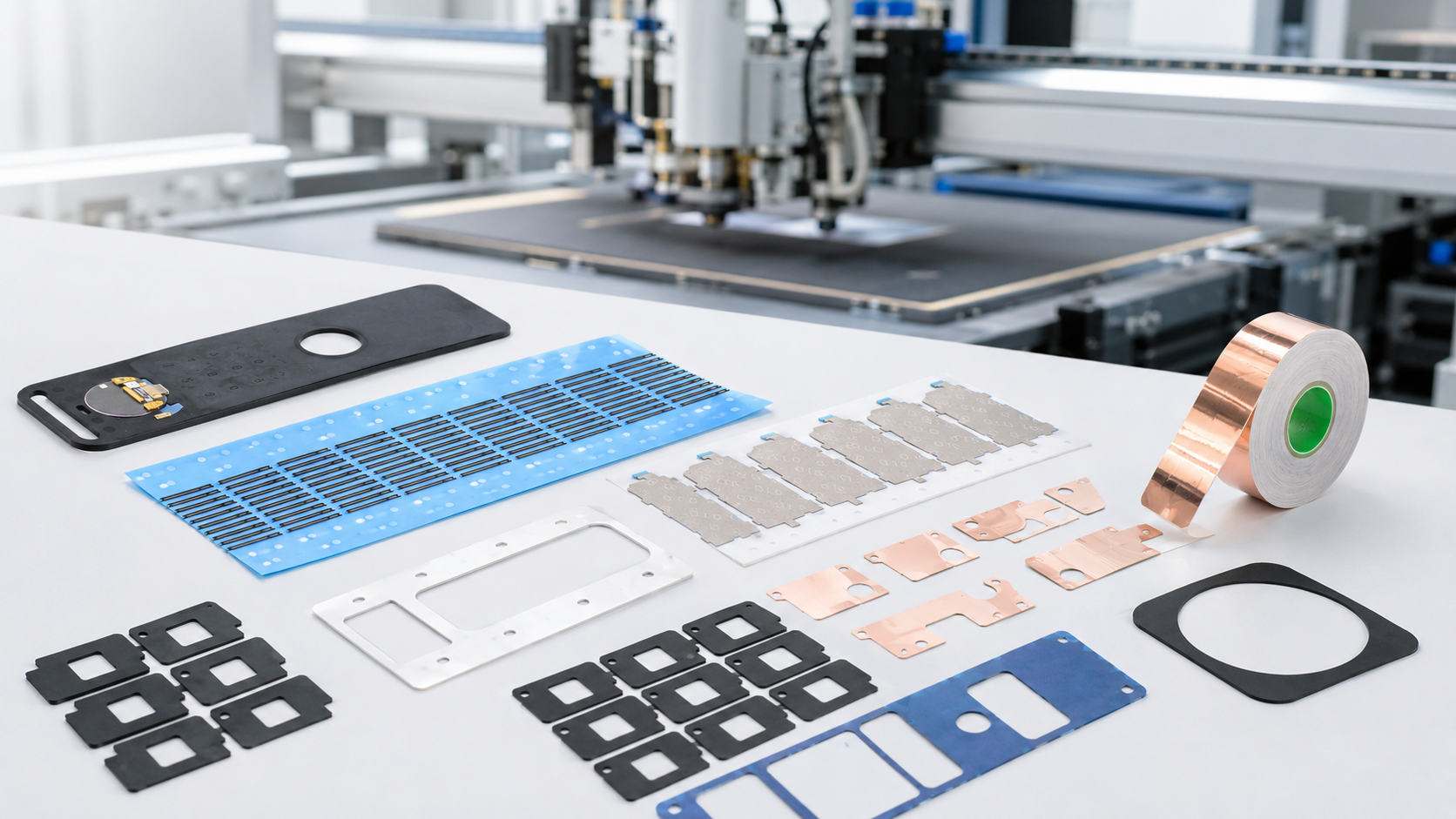
What Is Custom Precision Die Cutting? What Types of Custom Functional Components Is Xinyusheng Suitable For?
May 14,2026
Discover More
Company News
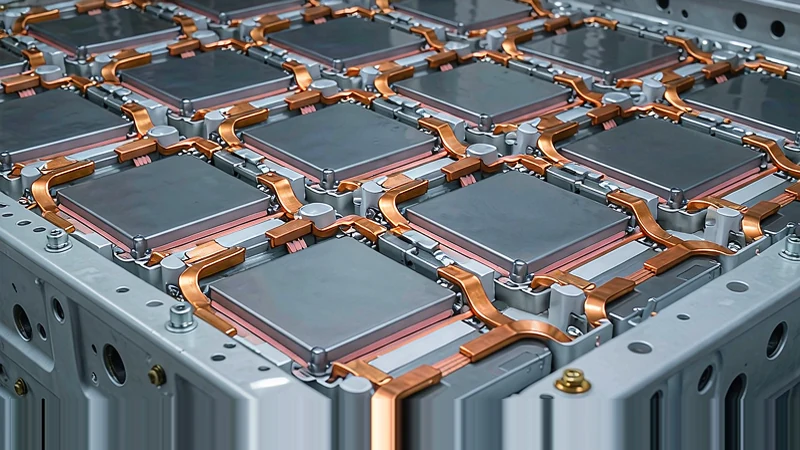
How Are Die Cut Materials Used in Automotive Electronics?
August 29,2026
Discover More
Company News
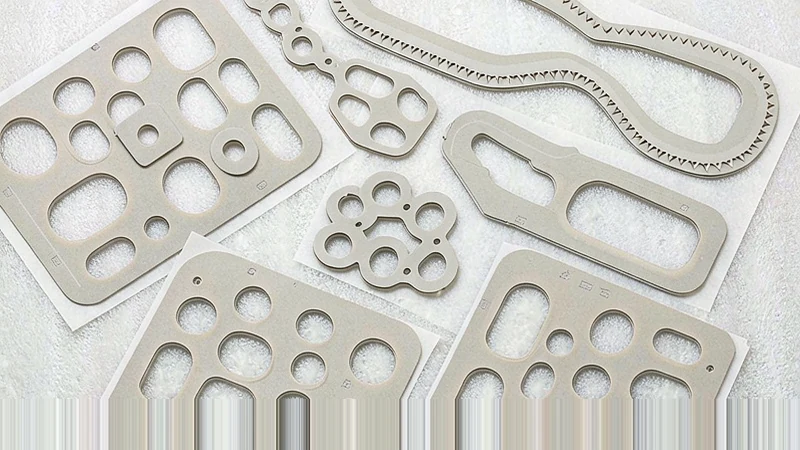
What Types of Thermal Interface Materials Can Be Die Cut?
August 29,2026
Discover More
