Where to Get High-Speed Precision Die Cutting Services for Custom Parts?
Summary
You can get high-speed precision die cutting services from specialized die cutting manufacturers, flexible material converters and custom component suppliers that support engineering review, prototyping, certified production and quality inspection.
For custom parts, the best supplier is not simply the one with the fastest machine or lowest quote. A reliable precision die cutting services provider should understand your material, drawing, tolerance, assembly method, inspection needs and delivery schedule.
This guide explains how to choose a supplier for custom die cut components, especially for electronics, EV batteries, medical devices, telecom equipment, robotics and industrial applications.
What Are High-Speed Precision Die Cutting Services?
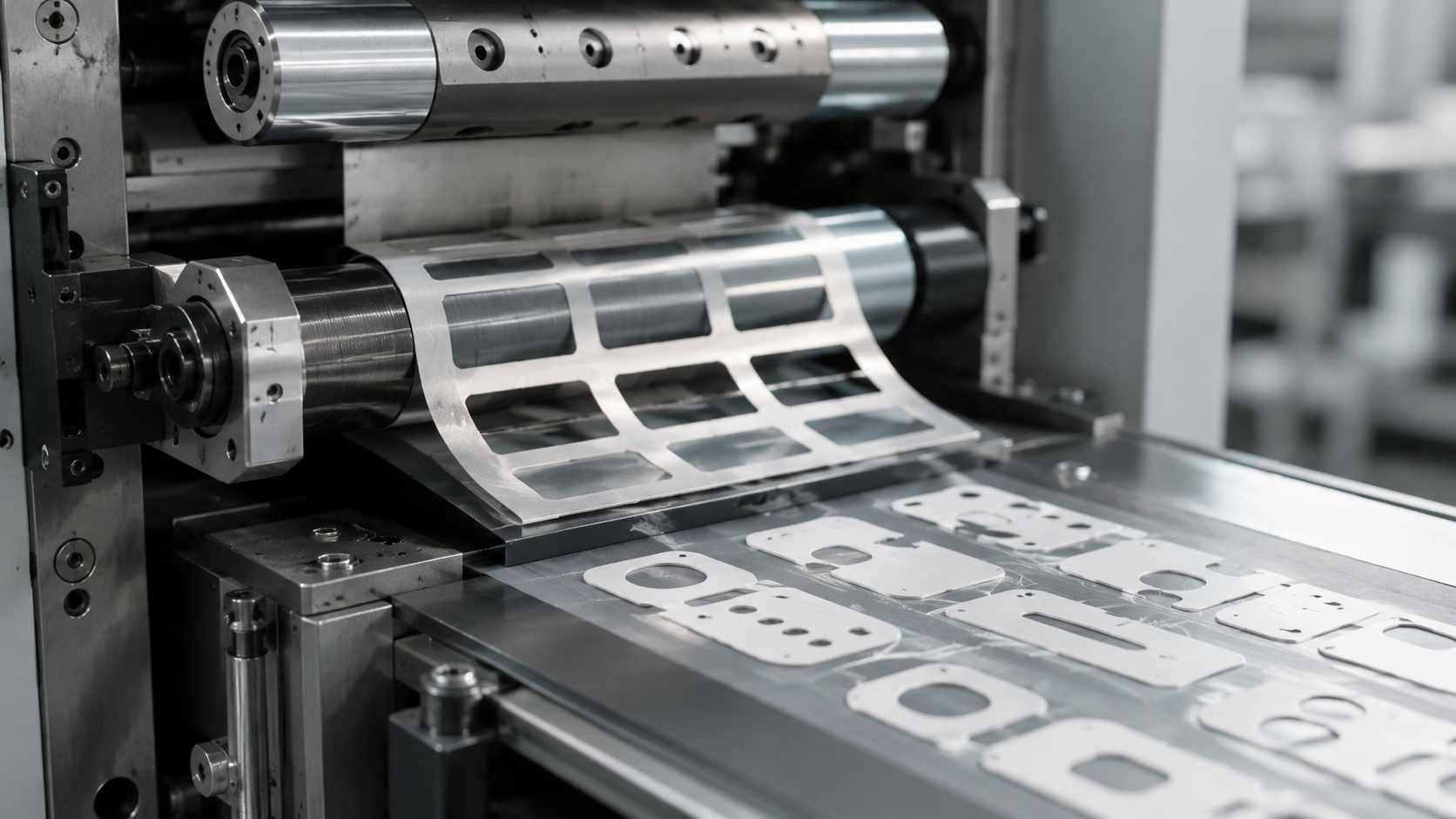
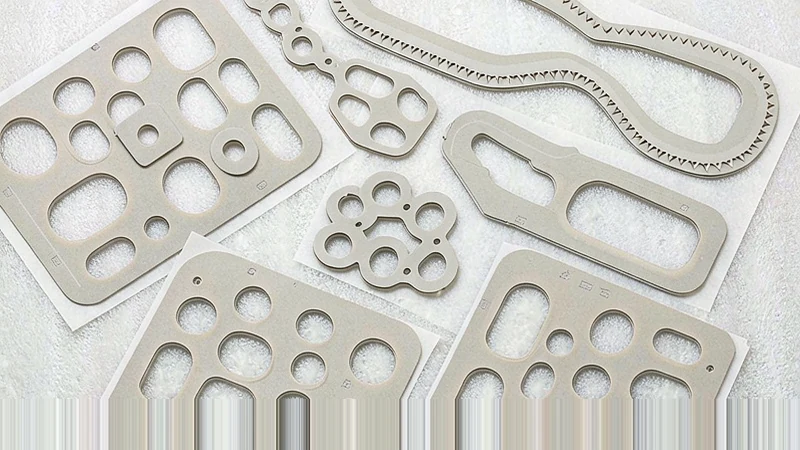
High-speed precision die cutting services are manufacturing services used to cut, laminate and convert flexible materials into custom-shaped parts with consistent size, position and performance.
These services are commonly used for foam gaskets, adhesive tapes, insulation films, thermal interface materials, conductive foams, copper foils, protective films, waterproof membranes, dustproof meshes and printed functional parts.
Why Speed Alone Is Not Enough?
High speed only matters when the supplier can maintain stable quality at scale. For custom parts, fast production without accurate registration, clean edges, stable lamination and inspection control can create higher assembly costs later.
A good die cutting supplier should balance speed, tolerance, material behavior, waste removal, packaging and delivery reliability.
What Makes Precision Die Cutting Different?
Precision die cutting focuses on repeatability. It is not just cutting a shape from a sheet or roll. It often includes material selection, adhesive lamination, liner design, positioning holes, kiss cutting, multi-layer stacking and quality inspection.
For parts used in electronics or automotive assemblies, small dimensional errors may cause sealing failure, poor adhesion, electrical risk or difficult assembly.
Where to Get Custom Precision Die Cutting Services?
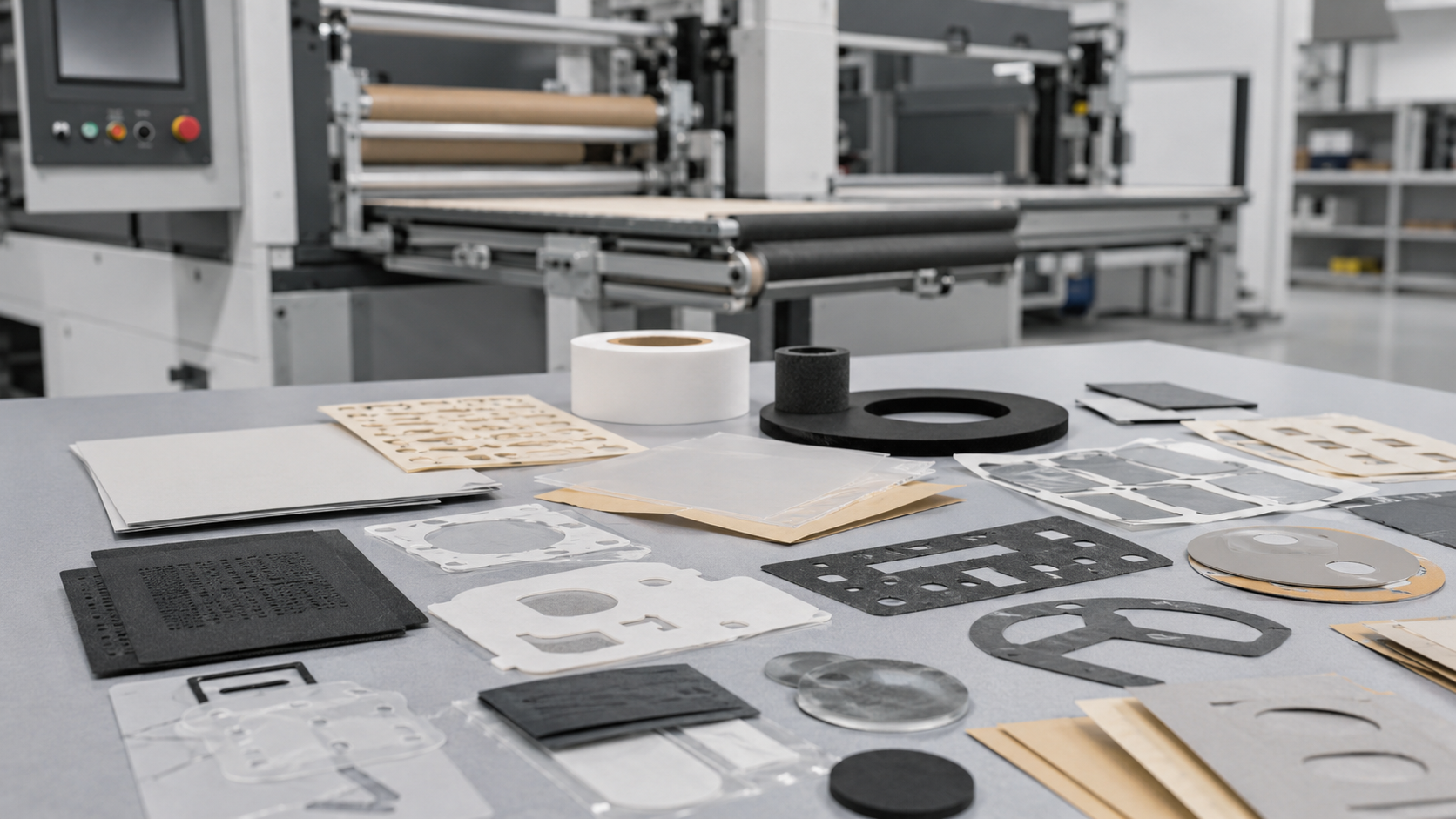
You can source custom precision die cutting services from manufacturers that specialize in flexible materials and custom functional components.
The right source usually has three capabilities: engineering support, converting equipment and quality control. Buyers should avoid choosing a supplier only from a product catalog. Custom parts need drawing review, material evaluation and sample testing before mass production.
Common Supplier Types
Supplier Type | Suitable For | Possible Limitation |
Precision die cutting manufacturer | Custom functional parts, production projects, OEM components | Requires drawings and technical details |
Flexible material converter | Multi-layer materials, tapes, foams, films, laminates | May focus more on material converting than final component design |
General cutting factory | Simple shapes, low-cost parts, basic cutting | May lack tight tolerance, certification or full inspection |
Trading company | Sourcing and price comparison | Limited engineering and process control |
For high-value custom parts, buyers should prioritize manufacturers with in-house die cutting, lamination, sample making and inspection capabilities.
How to Choose a Precision Die Cutting Supplier?
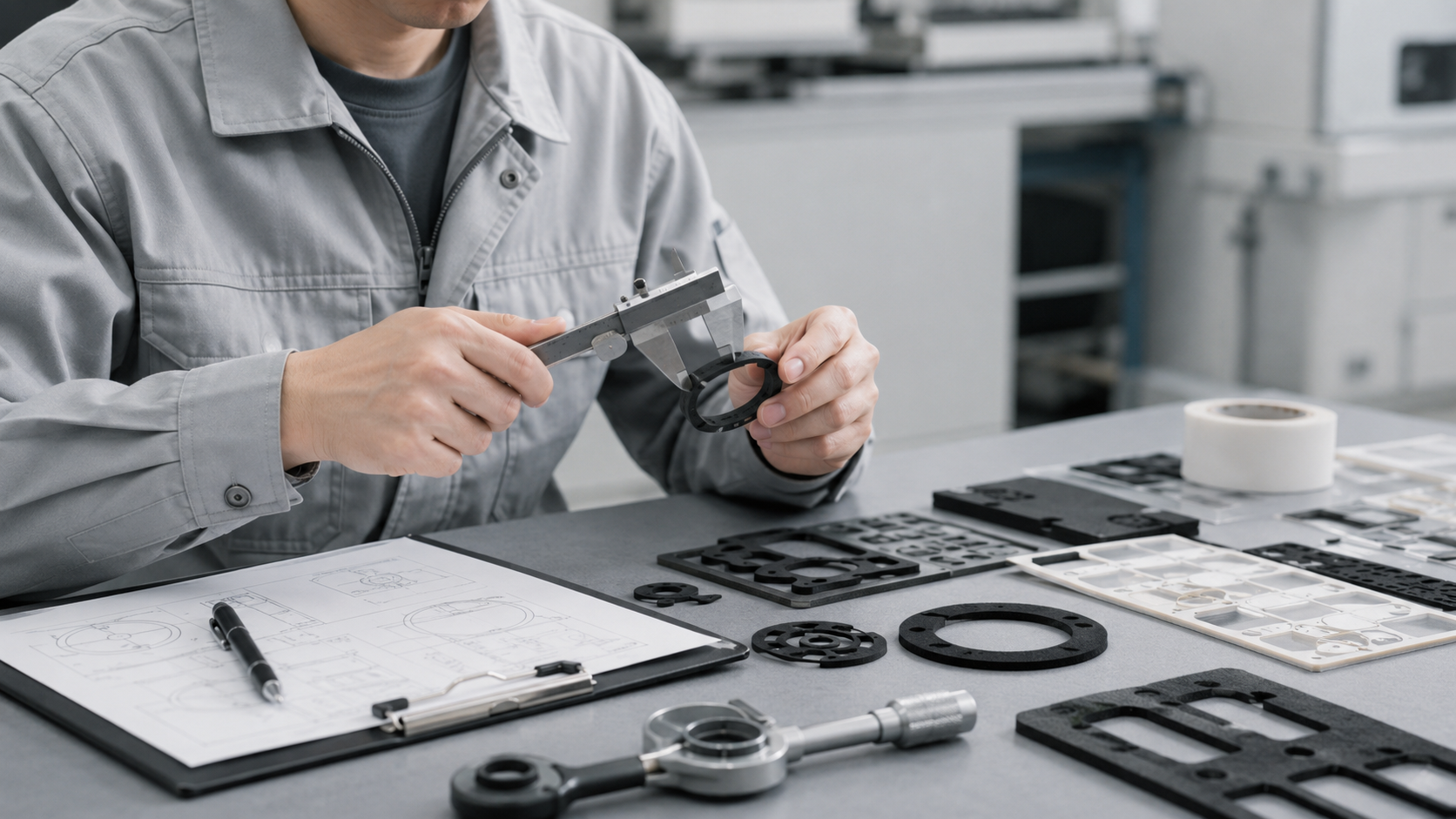
The best precision die cutting supplier should be evaluated by equipment, prototyping ability, certifications, inspection process and delivery control.
Check Equipment and Process Capability
Different parts require different processes. Roll materials and high-volume parts often benefit from rotary die cutting. Large-format parts, thicker materials or small-batch prototypes may be better suited for flatbed die cutting or digital cutting.
A supplier with both rotary die cutting services and flatbed die cutting services can recommend the process based on part size, material format, tolerance and quantity.
Check Prototyping and Engineering Support
Sample making is important because custom die cut parts often require adjustment before mass production.
A professional supplier should review the drawing, ask about the application, confirm material thickness, evaluate adhesive selection and suggest improvements for manufacturability. This reduces the risk of poor fit, material waste and delayed production.
Check Certifications and Industry Experience
Certifications help buyers evaluate whether the supplier has a structured quality management system.
For electronics, EV battery, medical and automotive projects, common considerations include ISO quality systems, material traceability, inspection reports and process documentation. Certifications do not replace testing, but they help reduce supplier risk.
Check Inspection and Quality Control
For custom die cut components, inspection should cover incoming materials, first article confirmation, in-process inspection, final inspection and outgoing quality checks.
Full inspection may be necessary for high-risk parts such as battery insulation pieces, adhesive assembly parts, precision foam gaskets or conductive shielding components.
Check Lead Time and Delivery Stability
Lead time depends on drawing review, material availability, tooling, sampling, testing, production and packaging.
A supplier that promises fast delivery without confirming materials, tolerance and inspection requirements may not be reliable. For urgent projects, ask whether the supplier has sample equipment, material inventory, flexible production scheduling and clear delivery communication.
Supplier Selection Table for Custom Die Cut Components
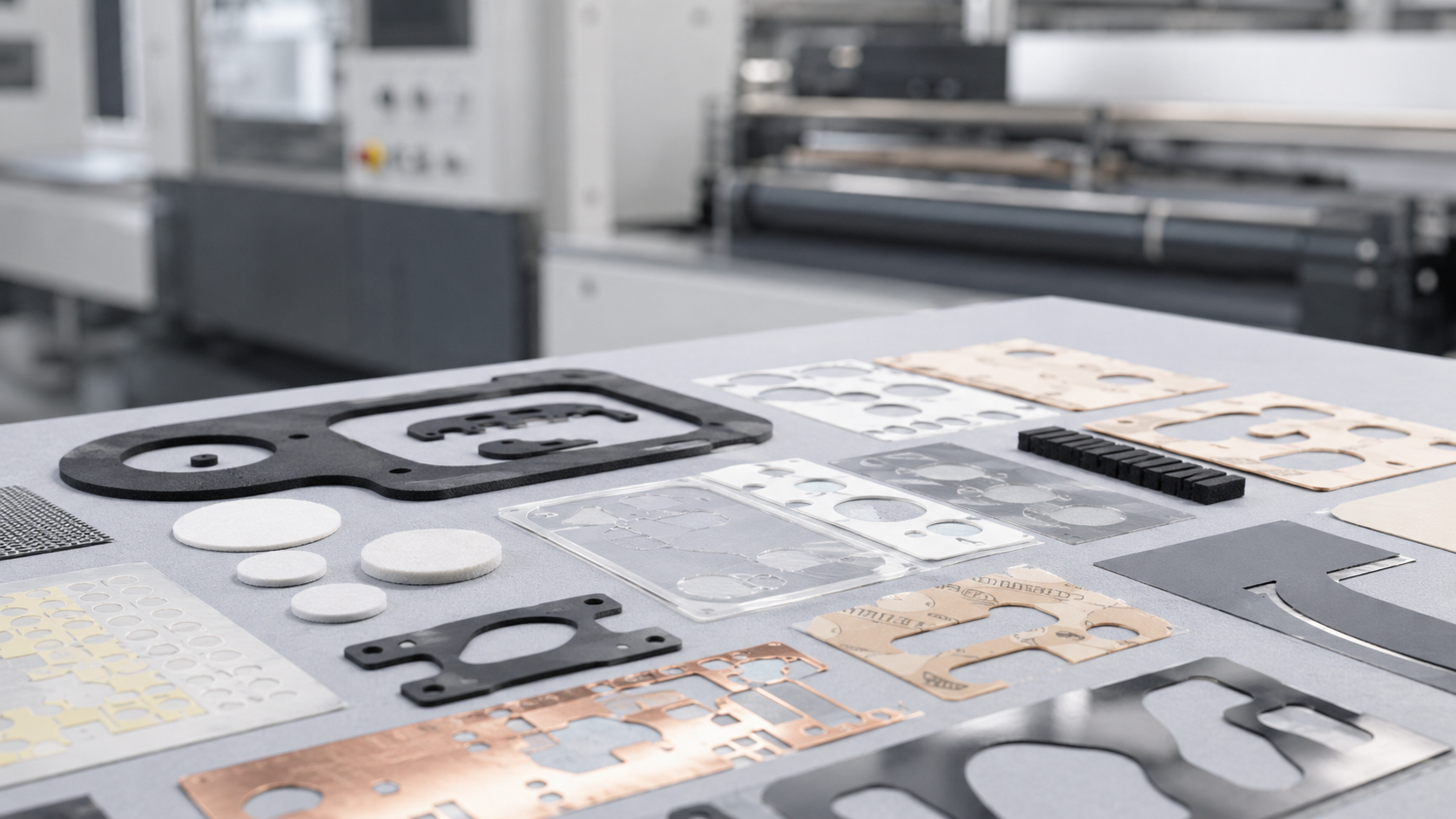
Use this table when comparing custom precision die cutting services providers.
Evaluation Item | What to Ask | Why It Matters |
Equipment | Do you support rotary, flatbed, laser or digital cutting? | Determines speed, tolerance, size and volume suitability |
Sampling | Can you provide prototypes before mass production? | Reduces design and assembly risk |
Engineering Review | Can you review drawings and suggest material/process improvements? | Helps avoid poor fit, waste and tooling errors |
Certification | Do you have relevant quality certifications? | Supports OEM, medical, automotive or electronics projects |
Full Inspection | Do you offer IQC, first article, IPQC, final inspection or 100% inspection? | Improves consistency and lowers defect risk |
Materials | Can you process foam, tape, film, graphite, copper foil, mesh and insulation materials? | Ensures one-stop material converting support |
Tolerance | What tolerance can you maintain for this material and structure? | Prevents unrealistic expectations |
Lead Time | What is the sample and mass production timeline? | Helps project scheduling and procurement planning |
Packaging | Can parts be supplied in sheets, rolls, kiss-cut format or custom packaging? | Improves assembly efficiency |
High-Speed Die Cutting Equipment: Rotary vs Flatbed
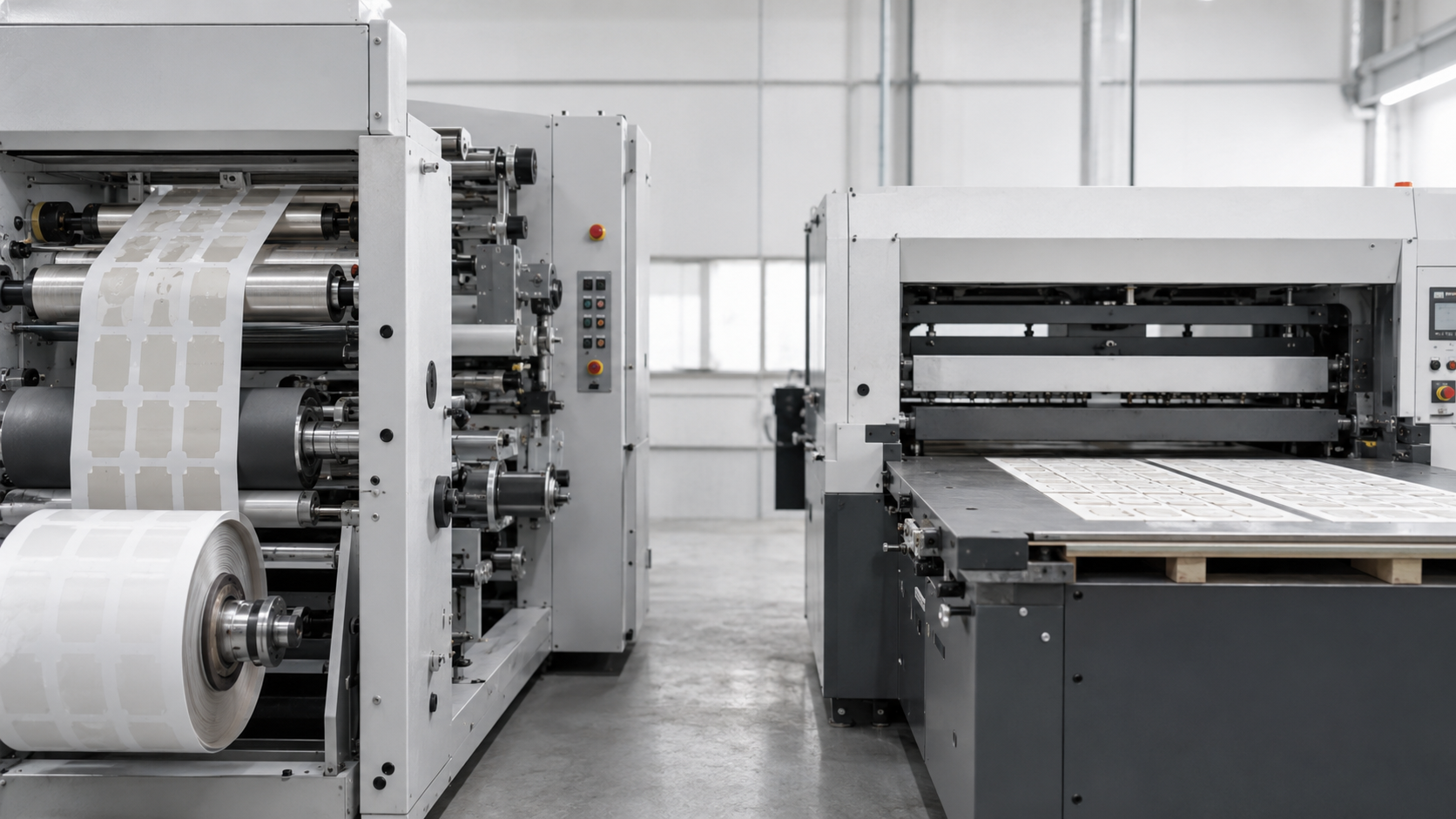
The right process depends on material format, quantity, part size and required precision.
Rotary Die Cutting for High-Volume Production
Rotary die cutting services are often suitable for roll materials, repeatable shapes and high-volume production. The material moves continuously through rotating tools, making it efficient for tapes, films, foams, labels, gaskets and multilayer components.
Rotary die cutting is often preferred when buyers need stable output, roll-to-roll processing and consistent repeatability.
Flatbed Die Cutting for Prototypes and Larger Parts
Flatbed die cutting services are often better for prototypes, lower-volume production, larger parts and thicker materials. It can be more flexible for early-stage projects because tooling and setup may be easier for certain structures.
Flatbed processing can also be useful when the part shape is large, the material is supplied in sheets, or the project still needs design verification.
Process Comparison
Process | Best For | Typical Advantage |
Rotary die cutting | Roll materials, repeatable parts, high-volume orders | Fast, efficient, suitable for continuous production |
Flatbed die cutting | Sheet materials, prototypes, larger or thicker parts | Flexible, suitable for sample and small-batch production |
Laser/digital cutting | Complex shapes, low tooling requirement, early prototypes | Fast iteration, no traditional die required |
What Information Should You Prepare Before RFQ?
A clear RFQ helps the supplier quote faster and avoid misunderstandings.
Before contacting a precision die cutting manufacturer, prepare the following information:
RFQ Item | Recommended Details |
Drawing | PDF, CAD, DXF, DWG or clear 2D drawing |
Material | Foam, tape, film, graphite, copper foil, mesh, rubber or other material |
Thickness | Material thickness and total laminated thickness |
Tolerance | Critical dimensions and acceptable tolerance |
Application | Sealing, cushioning, insulation, heat transfer, EMI shielding or bonding |
Quantity | Prototype quantity and estimated mass production volume |
Adhesive | Single-sided, double-sided or no adhesive |
Inspection | Standard inspection, full inspection or test report requirement |
Packaging | Sheet, roll, kiss-cut liner, tab design or custom packaging |
Delivery | Sample deadline and mass production schedule |
The more complete the RFQ information is, the easier it is for the supplier to recommend materials, confirm process feasibility and control lead time.
When is Xinyusheng Suitable for Custom Die Cutting Projects?
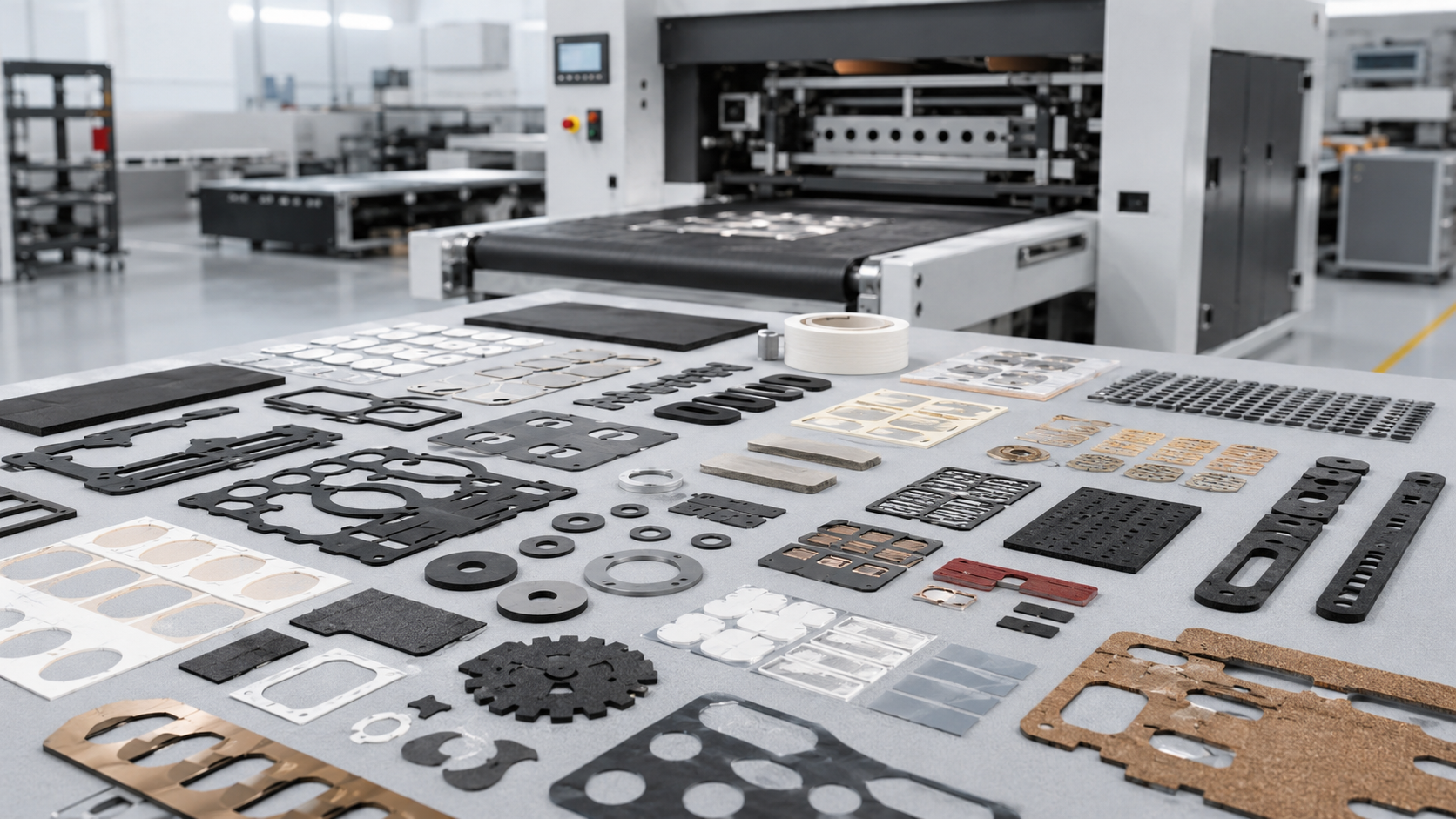
Xinyusheng is suitable when buyers need custom die cutting services for functional components rather than simple shape cutting.
The company focuses on precision functional die cut parts for consumer electronics, automotive electronics, new energy, medical devices, telecom equipment and industrial applications. Its product range includes waterproof parts, thermal materials, adhesive tapes, foams, insulation materials, conductive materials, meshes, protective films and printed components.
Suitable Project Types
Xinyusheng can be considered for projects such as:
Custom foam gaskets and sealing parts
Die cut adhesive tapes for electronics assembly
Battery insulation and thermal management parts
Conductive foam, copper foil and EMI shielding components
Protective films, mesh parts and waterproof membranes
Precision die cut components for telecom, medical, robotics and consumer electronics
Why Engineering Review Matters?
For custom projects, buyers often provide drawings and application requirements first. The supplier then reviews the material, thickness, tolerance, process and packaging method before sample making.
This workflow is important because many die cut parts must fit into a specific structure. A small change in thickness, adhesive, liner or tolerance may affect final assembly.
FAQ About High-Speed Precision Die Cutting Services
Where can I get high-speed precision die cutting services?
You can get high-speed precision die cutting services from specialized die cutting manufacturers or flexible material converters that support rotary die cutting, flatbed die cutting, sampling, quality inspection and custom material processing.
What materials can be used for custom die cut parts?
Common materials include foam, rubber, silicone, adhesive tape, PET, PI, PC, graphite, copper foil, aluminum foil, conductive fabric, mesh, protective film and insulation materials.
Is rotary die cutting always better than flatbed die cutting?
No. Rotary die cutting is usually better for high-volume roll-to-roll production, while flatbed die cutting is often better for prototypes, sheet materials, larger parts and some thicker materials.
How do I choose a die cutting supplier?
Choose a supplier by comparing equipment, engineering support, sample making, certification, inspection process, material experience and delivery reliability. Do not compare price alone.
What affects the cost of custom die cut components?
Cost is affected by material type, thickness, part size, tolerance, tooling, lamination structure, quantity, inspection requirement, packaging format and delivery schedule.
Do custom die cut parts need samples before mass production?
Yes. Samples are strongly recommended for custom die cut parts because they allow buyers to check fit, adhesion, function, tolerance and assembly performance before mass production.
Conclusion
To get reliable high-speed precision die cutting services for custom parts, buyers should look beyond speed and price. The right supplier should understand drawings, materials, tolerance, prototyping, certification, inspection and delivery control.
For electronics, EV battery, telecom, medical and industrial projects, a strong supplier should provide both process capability and engineering support. By using a structured supplier selection table, buyers can reduce sourcing risk and find a partner that can support custom parts from sample to mass production.
Table of Contents
Related news
Company News
What Is Custom Precision Die Cutting? What Types of Custom Functional Components Is Xinyusheng Suitable For?
May 14,2026
Discover More
Company News
How Are Die Cut Materials Used in Automotive Electronics?
August 29,2026
Discover More
Company News
What Types of Thermal Interface Materials Can Be Die Cut?
August 29,2026
Discover More
