How to Custom Die Cut Components: Drawing, Material and Quote Guide?
Abstract
A good custom die cutting quote does not start with price. It starts with a clear drawing, correct material information, realistic tolerance, expected quantity, application conditions and delivery schedule. For overseas buyers, engineers and sourcing teams, a complete RFQ can shorten communication time, reduce sampling mistakes and help the supplier recommend the right process before mass production. This guide explains what information to prepare when requesting custom die cut components for electronics, EV batteries, AI servers, telecom equipment, medical devices, robotics and industrial products.
Why RFQ Details Matter for Custom Die Cutting?
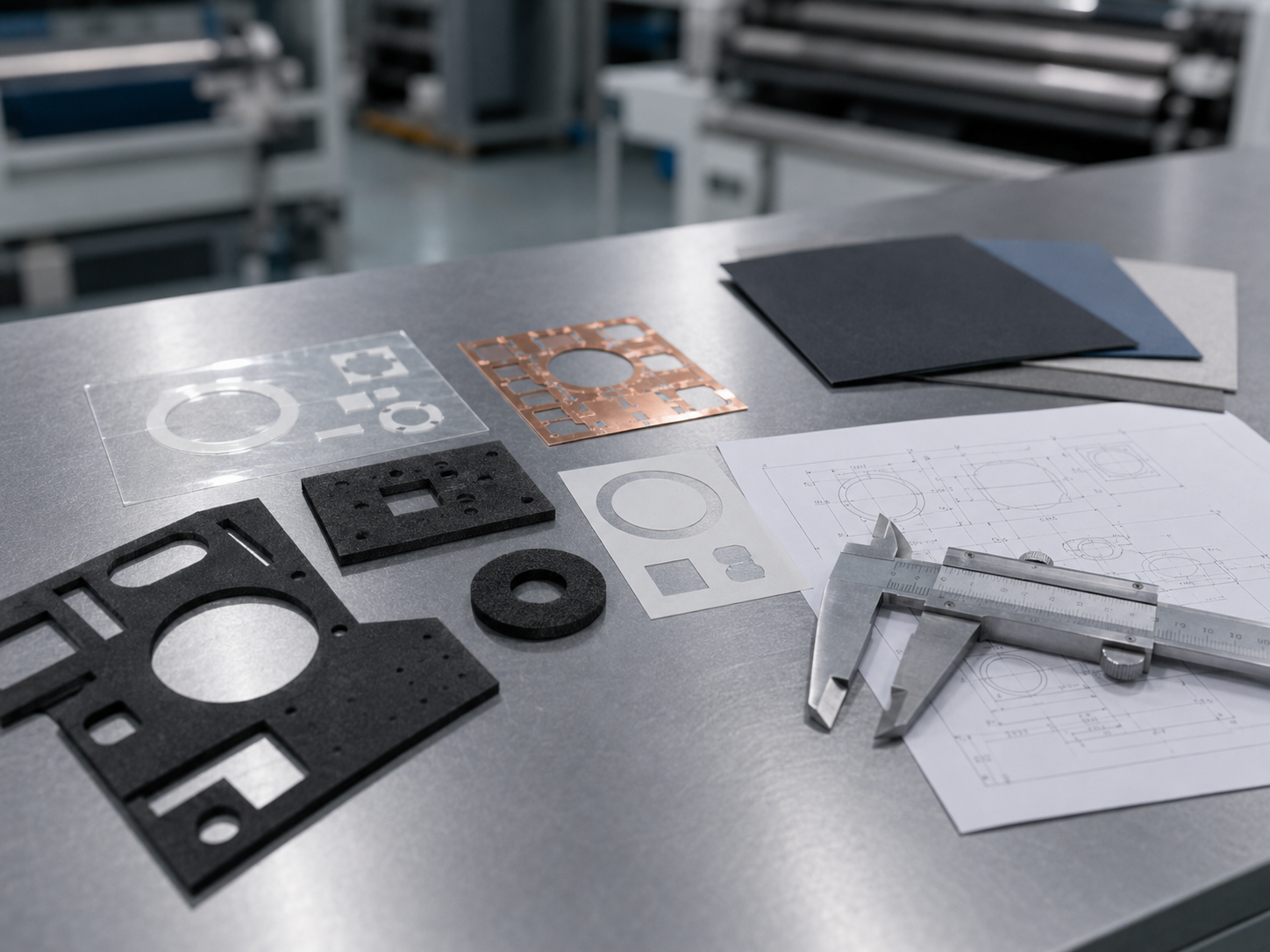
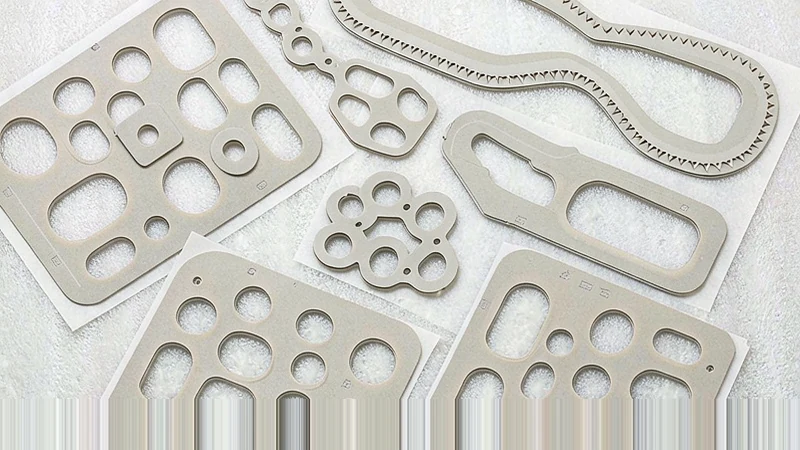
Custom die cutting is used to convert flexible materials into functional components such as adhesive tapes, foam gaskets, insulation films, conductive foils, thermal pads, dustproof mesh and protective films. These parts may look simple, but their performance depends on details.
A foam gasket may fail if the compression is wrong. A copper foil tab may lose contact if the adhesive direction is unclear. A PET insulation sheet may cause assembly problems if the hole tolerance is missing. This is why an RFQ should not only ask, “How much is this part?” It should explain how the part will be used.
For OEM projects, the quotation stage is also an engineering filter. A clear RFQ helps the supplier evaluate geometry risks, material availability, tooling cost, inspection method and production process before quoting. Industry guidance on die cut drawings also notes that drawings should specify dimensions, tolerances, materials and other factors needed to build the product accurately.
What Drawings Are Needed for a Die Cut Quote?
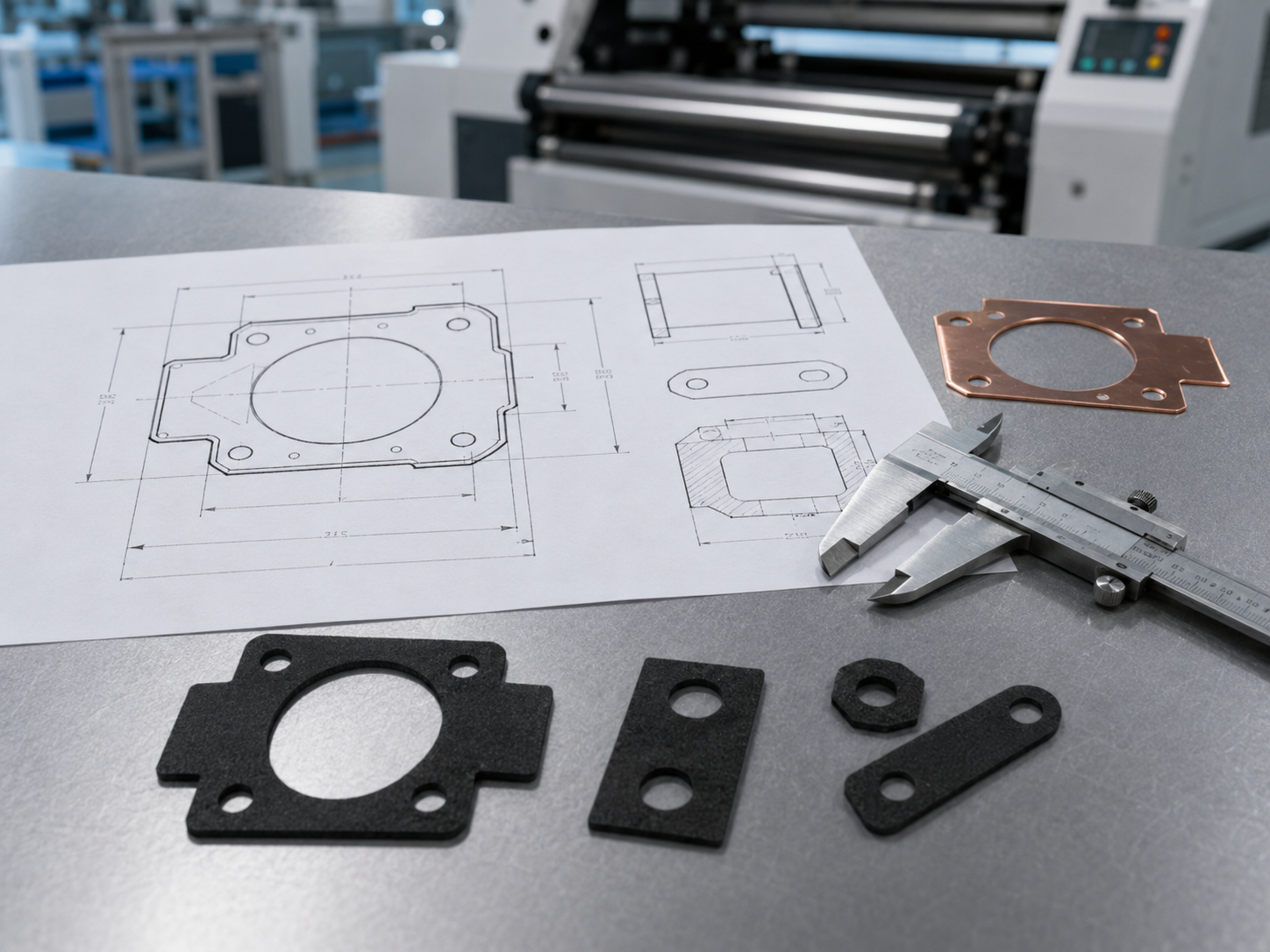
A dimensioned 2D drawing is the most useful file for a custom die cutting quote. It should show the overall length and width, hole size, radius, slot position, edge width, thickness, critical dimensions and tolerance.
Recommended File Formats
File Type | Best Use |
Easy review, quotation, basic dimensions | |
DXF / DWG | Tooling design, cutting path confirmation |
STEP | Assembly reference when the die cut part fits into a device |
AI / EPS | Printed films, labels, graphic overlay parts |
Physical sample | Reverse engineering or material matching |
If only a photo is available, mark the key size and application area clearly. Photos can support early discussion, but they are usually not enough for accurate tooling or mass production.
What to Mark on the Drawing?
A good drawing should include:
l Part outline and total size
l Hole size and hole-to-edge distance
l Critical areas that must fit with screws, clips, ribs or connectors
l Material thickness
l Adhesive side and release liner side
l Pull tab, finger lift or split liner position
l Quantity per sheet or roll if required
l Tolerance for critical dimensions
For small electronic parts, do not apply tight tolerance everywhere. Mark the dimensions that truly affect assembly. This helps reduce unnecessary cost and improves manufacturing feasibility.
How to Define Die Cut Materials and Layer Structure?
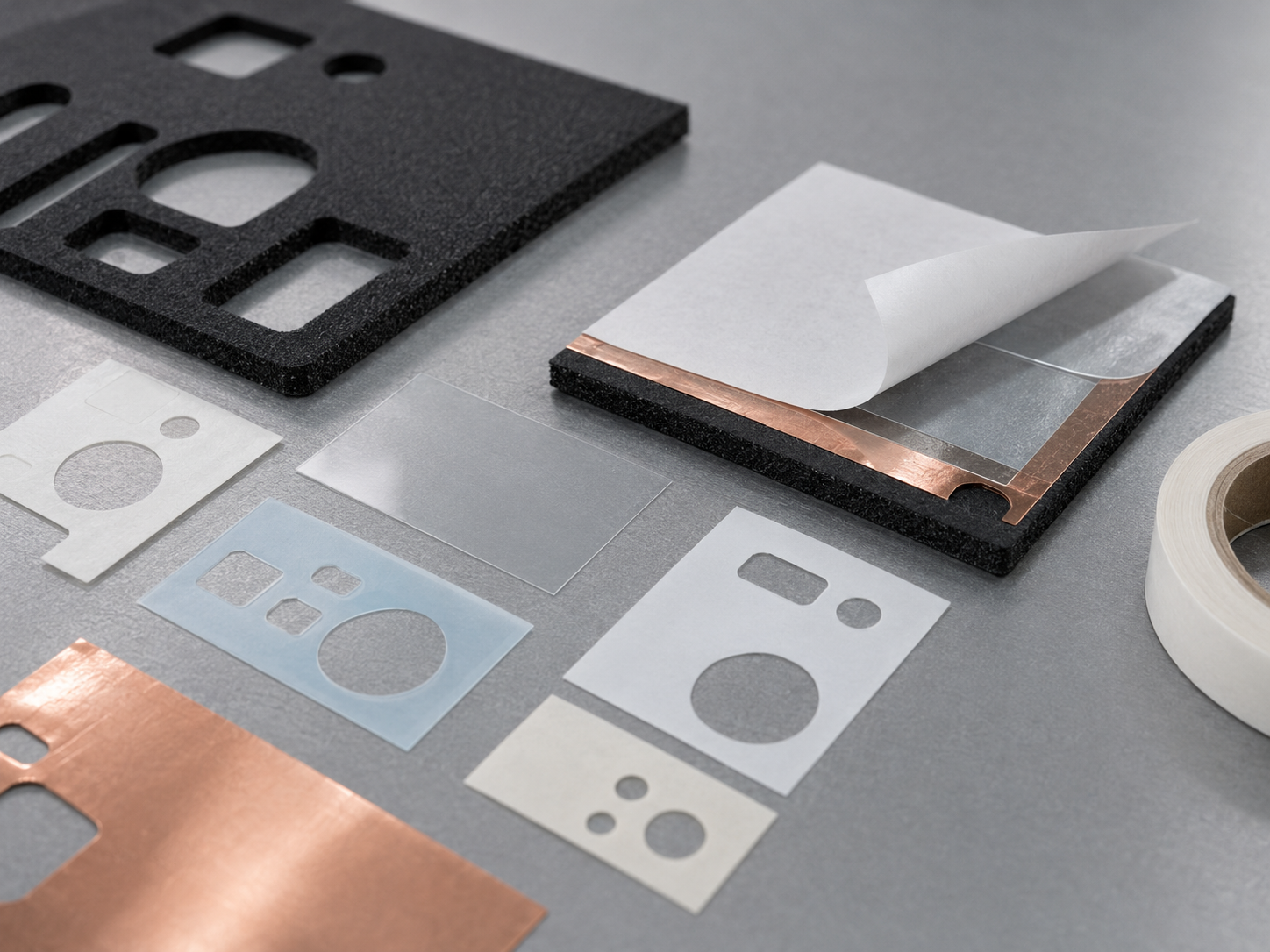
Material information is often the biggest reason a quote becomes slow or inaccurate. In custom die cutting, the material is not just a name. It includes thickness, adhesive, liner, surface treatment, compression behavior and environmental requirements.
Material Type | Information to Provide | Typical Function |
Foam | Type, thickness, density, compression, adhesive | Sealing, cushioning, dustproofing |
Double-sided tape | Adhesive type, carrier, liner, bonding surface | Bonding and fixing |
PI / PET film | Thickness, flame rating, insulation requirement | Electrical insulation |
Copper / aluminum foil | Thickness, conductive adhesive, insulation backing | Grounding, EMI shielding |
Conductive fabric / foam | Resistance, compression, surface material | EMI shielding and grounding |
Graphite / thermal pad | Thermal conductivity, thickness, insulation layer | Heat spreading and thermal control |
Silicone / rubber | Hardness, thickness, temperature range | Waterproofing, sealing, vibration damping |
If the material is not confirmed, describe the application instead. For example, “This gasket seals a smart lock housing,” or “This insulation film is used between battery cells.” A capable supplier can then recommend material options based on function, cost and production feasibility.
Quantity, Tolerance and Lead Time for Precision Die Cut Parts
Quantity Affects Process Choice
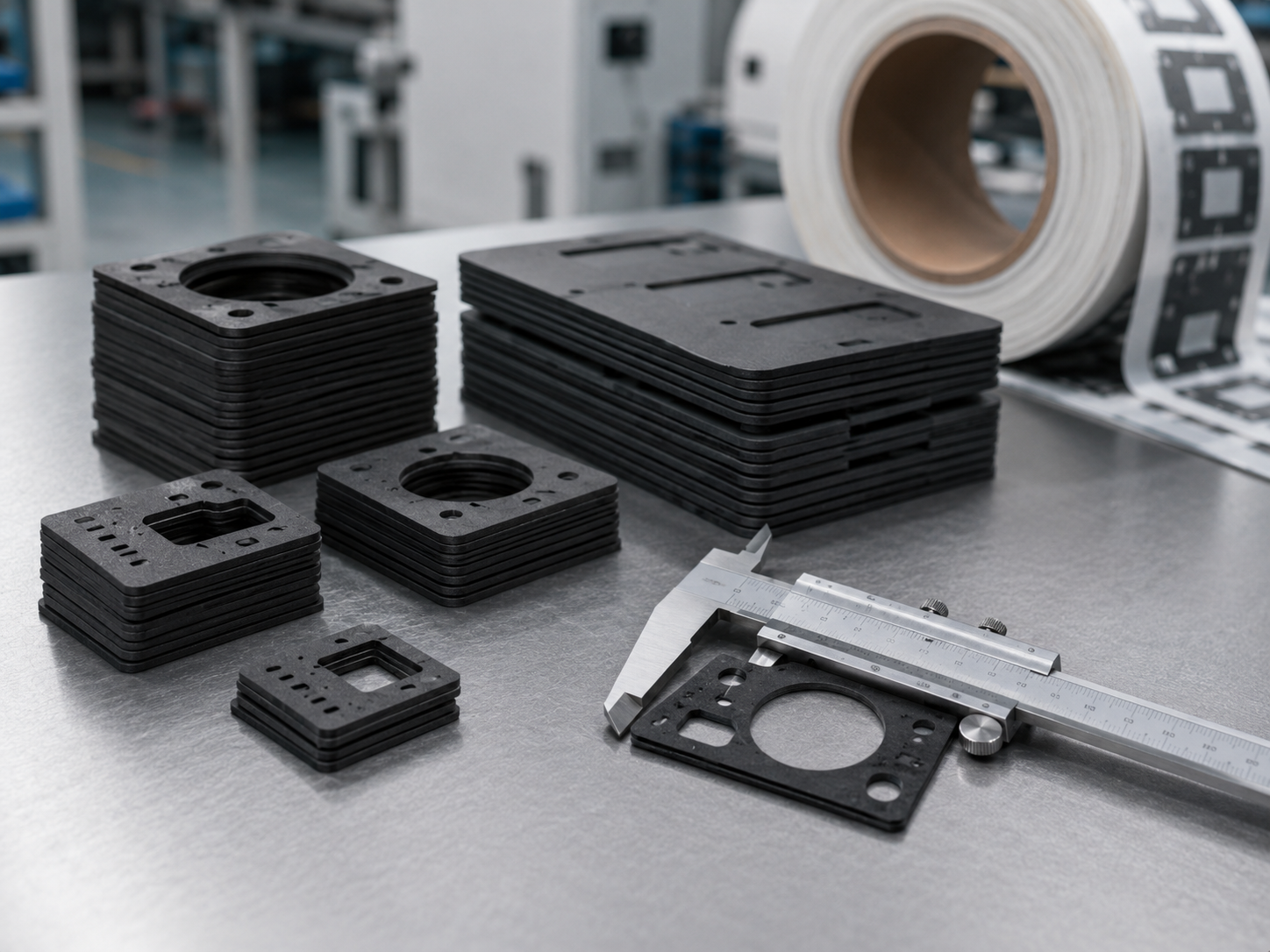
Quantity directly affects tooling and process selection. Small batches may use sample cutting, laser cutting or flatbed die cutting. High-volume parts may be better suited for rotary die cutting, roll-to-roll lamination and automatic waste removal.
Project Stage | Typical Buyer Need | Supplier Focus |
Prototype | Fast samples, design verification | Material test, fit check, easy revision |
Pilot run | Small batch for assembly trial | Process stability, inspection standard |
Mass production | Stable supply and cost control | Tooling life, yield, packaging, delivery |
Industry sources note that material lead time can be one of the longest parts of a custom die cut timeline, especially when special materials need to be sourced or shipped. This is why buyers should share forecast quantity early, not only the first sample quantity.
Tolerance Should Match Material Behavior
Tolerance depends on material type, thickness, part size, hole design, tooling method and inspection standard. Soft foam, rubber and adhesive materials compress or rebound differently from PET film or copper foil. A realistic tolerance improves both cost control and mass production stability.
For critical projects, mark two tolerance levels:
l Critical tolerance: holes, slots, connector areas, assembly datum
l General tolerance: outer edges or non-functional dimensions
This prevents overengineering and helps the supplier focus inspection on the features that matter.
Prototype, Sample Approval and Mass Production Flow
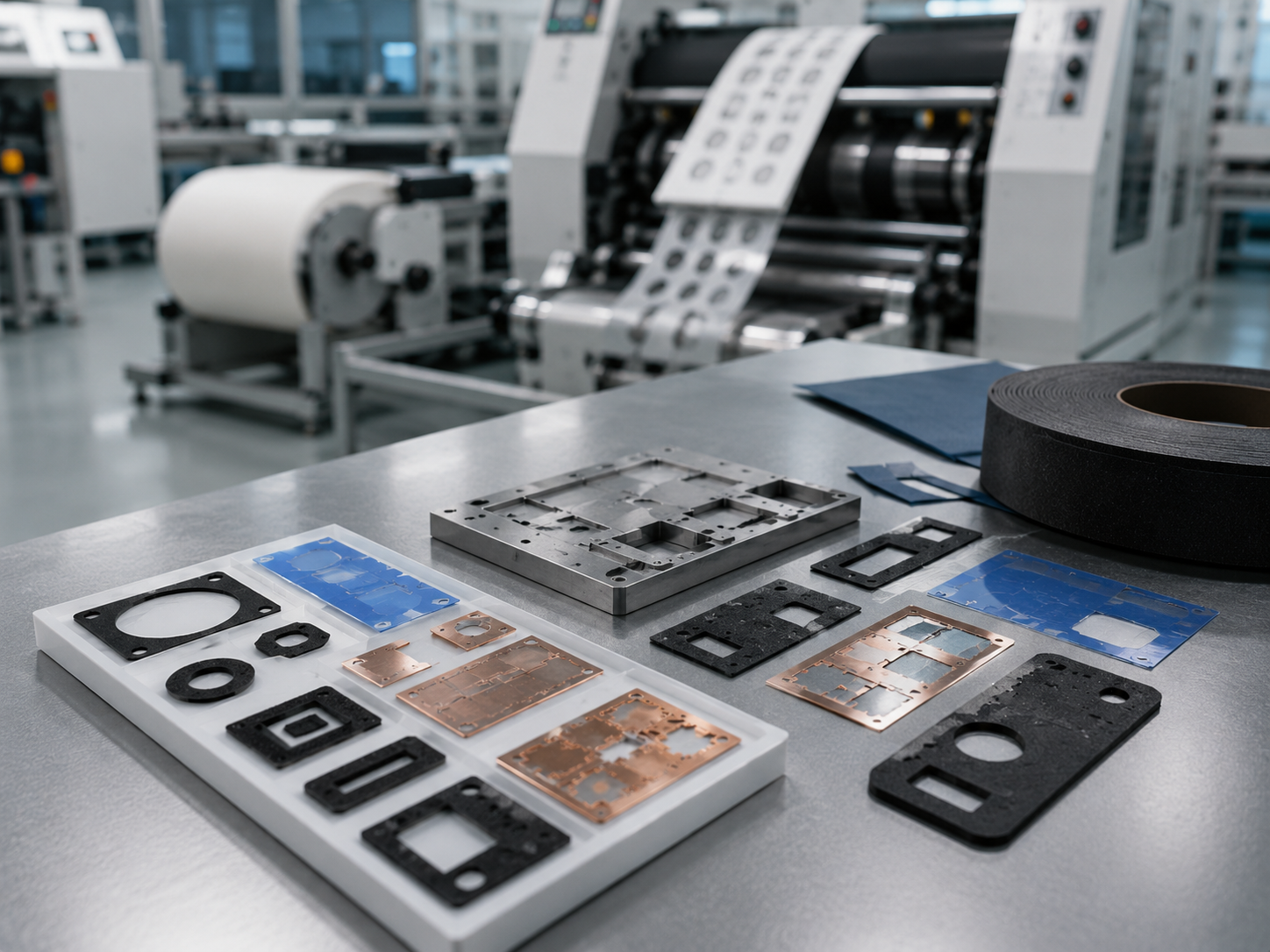
A reliable RFQ should connect quotation with the full production path. The typical process for custom die cutting is:
Step | Buyer Input | Supplier Output |
1. Requirement review | Drawing, material, application, quantity | Initial technical review |
2. Material suggestion | Target function and working condition | Material recommendation |
3. Quotation | Tolerance, quantity, packaging, delivery | Price, tooling cost, lead time |
4. Sample making | Confirmed drawing and material | Prototype or first article sample |
5. Sample approval | Fit test, function test, feedback | Drawing or process adjustment |
6. Mass production | Approved sample and PO | Production, inspection, packaging |
7. Delivery | Packaging and shipment needs | Finished parts and reports if required |
Xinyusheng’s internal project research records a similar service flow: customer requirement and drawing review, technical communication, sample making, sample confirmation, mass production, packaging and delivery. It also notes full-process inspection, in-house testing, manual and machine inspection, and report support.
Common RFQ Mistakes That Delay a Custom Die Cutting Quote
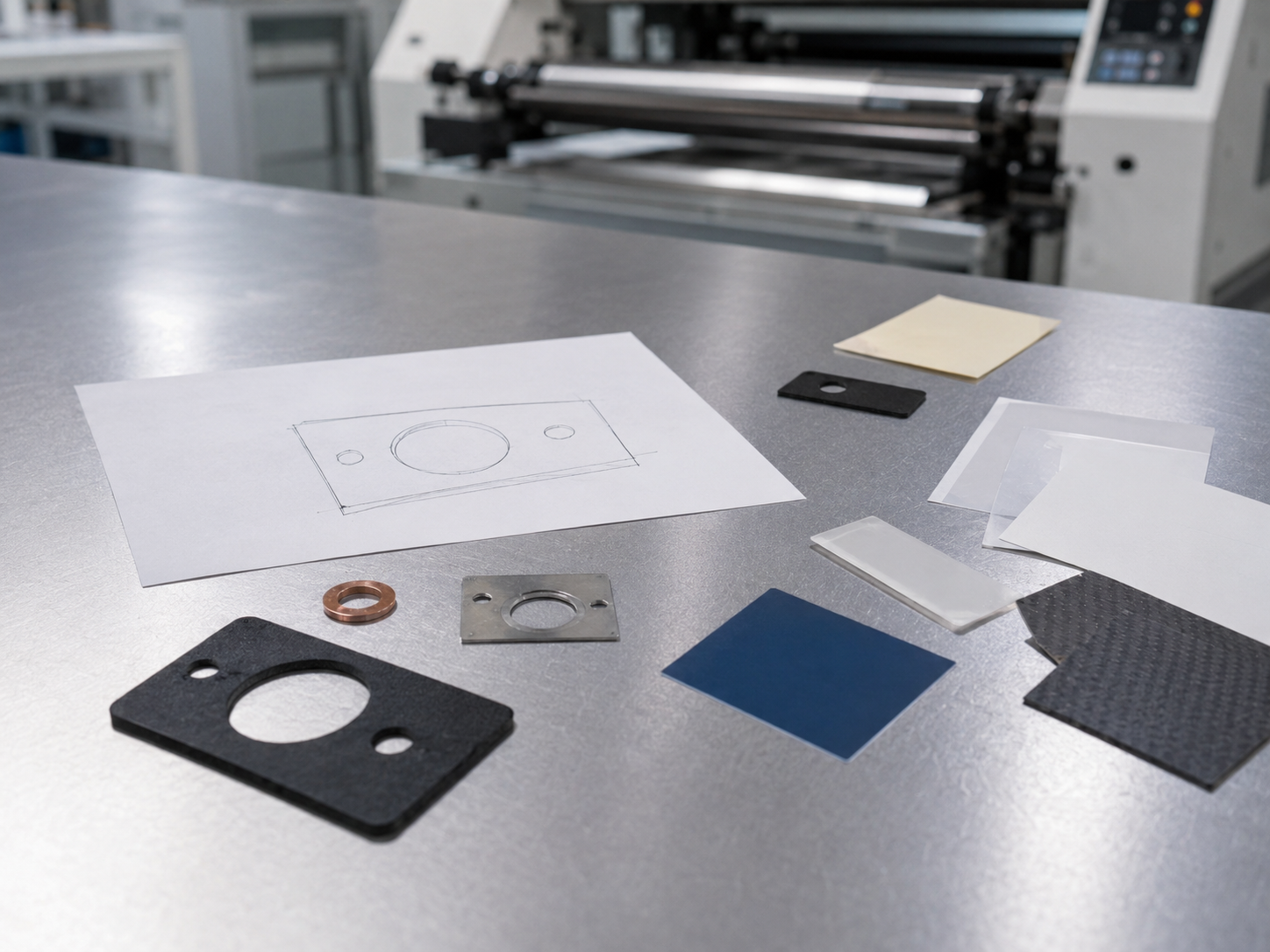
Mistake 1: No Material Thickness
A material name without thickness is incomplete. For example, PET film can be supplied in many thicknesses. Foam performance changes significantly with thickness and compression.
Mistake 2: No Adhesive Direction
For adhesive parts, mark which side has adhesive, whether the liner is single-sided or double-sided, and whether a pull tab is needed. This affects assembly speed and waste removal.
Mistake 3: No Quantity Range
A quote for 100 samples and a quote for 500,000 mass production pieces may use different processes. Share prototype quantity, pilot quantity and estimated annual demand.
Mistake 4: Unrealistic Tolerance
Do not copy metal machining tolerance directly onto soft die cut materials. Flexible materials need tolerance designed around real material behavior.
Mistake 5: No Application Context
A part used in an EV battery pack, medical device or AI server has different expectations for material reliability, cleanliness, insulation, heat resistance or EMI performance.
Custom Die Cutting Quote Checklist
Before sending an RFQ, prepare this information:
RFQ Item | What to Provide |
Drawing | PDF, DXF, DWG, STEP or sample photo |
Material | Name, thickness, brand or functional requirement |
Structure | Single layer, adhesive-backed, laminated, liner type |
Tolerance | Critical dimensions and general dimensions |
Application | Electronics, EV battery, medical, telecom, AI server, etc. |
Quantity | Prototype, pilot run, mass production forecast |
Lead time | Sample deadline and mass production schedule |
Inspection | Dimension report, appearance inspection, CCD, full inspection |
Packaging | Sheet, roll, tray, bag, or custom packaging |
Certification | ISO, IATF, RoHS, halogen-free or customer-specific requirement |
For regulated or automotive-related projects, quality management expectations matter. ISO states that the ISO 9000 family helps organizations improve products and services and consistently meet customer expectations, while AIAG explains that IATF 16949:2016 defines quality management system requirements for organizations across the global automotive industry.
How Xinyusheng Supports Custom Die Cut Components?

Xinyusheng provides custom precision die cutting and custom die cutting services for functional components used in electronics, EV batteries, medical devices, AI servers, telecom equipment and industrial applications. Its website highlights ±0.03 mm precision, global application support and engineering connection for custom projects.
The company’s capability covers engineering review, material selection, sample making, lamination, die cutting, inspection and mass production delivery. Product categories include waterproof series, thermal management series, tape series, foam series, insulation series, light-blocking series, conductive EMI series, mesh series, protective film series and printing series.
For buyers, the most practical value is early engineering communication. Instead of quoting only by part size, Xinyusheng can review the drawing, material, tolerance, assembly method and application condition, then recommend a more suitable sample and production plan.
FAQ
What files are needed for a custom die cutting quote?
A PDF drawing is useful for quotation, while DXF or DWG files are better for tooling and cutting path review. STEP files can help when the part must fit into a housing or assembly.
Can I request a quote without a final material?
Yes. Provide the application, required function, thickness range, temperature, compression, bonding surface and working environment. The supplier can recommend material options.
How does tolerance affect the quote?
Tighter tolerance may require better tooling, slower production, more inspection and higher scrap control. Mark critical tolerance only where it affects assembly or performance.
Is sampling necessary before mass production?
Yes. Sampling confirms material fit, adhesive performance, dimensional stability, installation method and inspection standard before larger tooling or volume production.
What affects lead time most?
Drawing clarity, material availability, tooling complexity, sample approval speed, inspection requirements and packaging method all affect lead time.
Source References
l Xinyusheng official website: custom precision die cutting services, application fields and precision capability.
l Xinyusheng KPI keyword table and internal project research notes.
l ISO quality management information and AIAG IATF 16949 automotive quality management reference.
l Industry references on die cut drawings, tolerance discussion and lead time factors.
Table of Contents
Related news
Company News
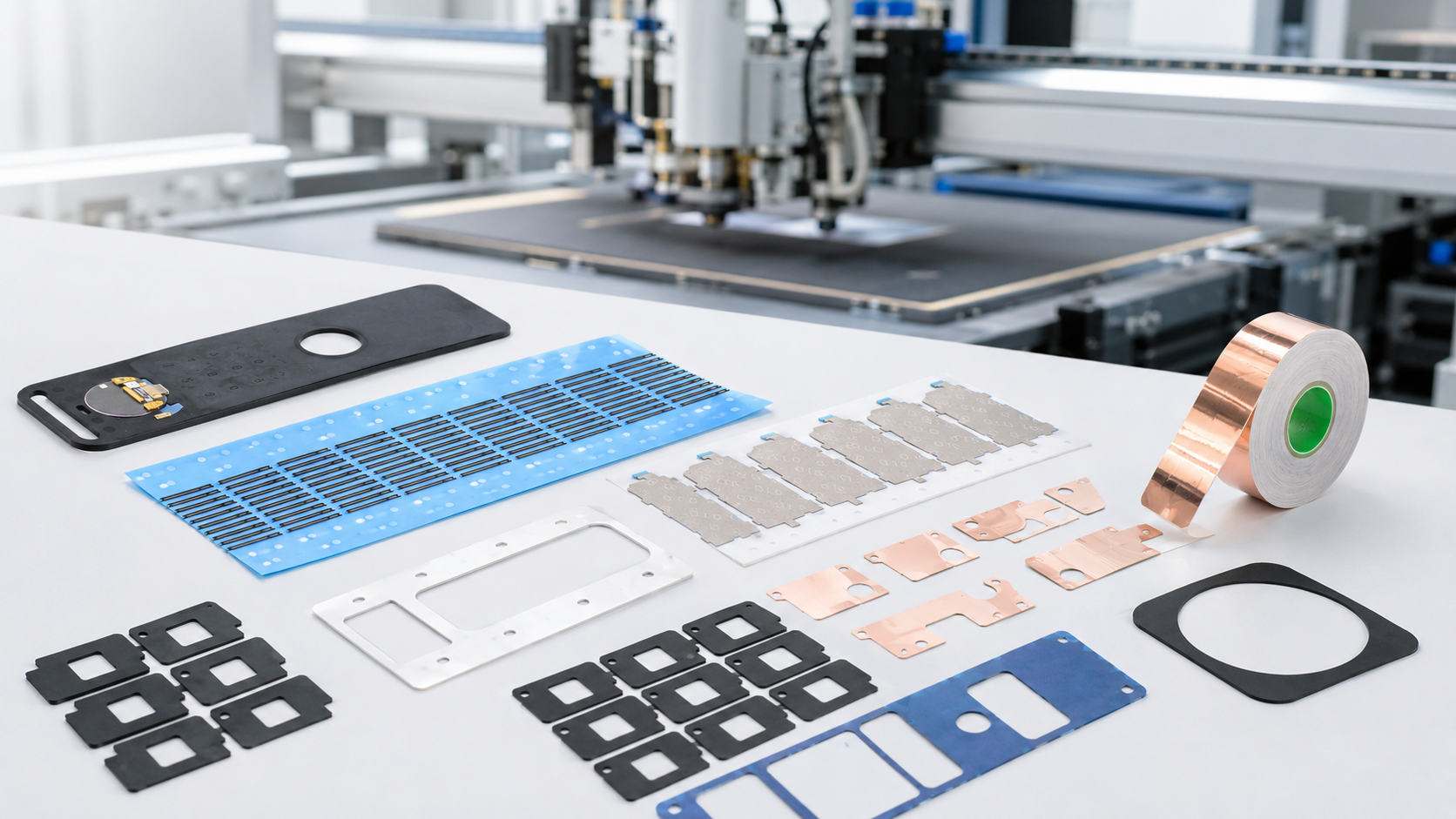
What Is Custom Precision Die Cutting? What Types of Custom Functional Components Is Xinyusheng Suitable For?
May 14,2026
Discover More
Company News
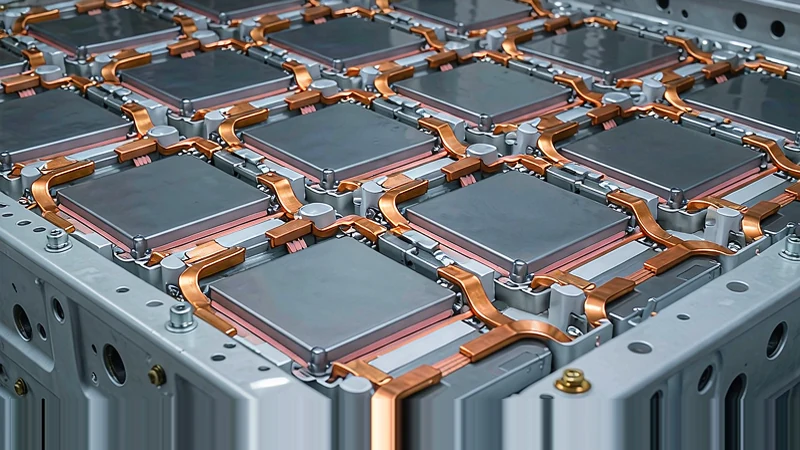
How Are Die Cut Materials Used in Automotive Electronics?
August 29,2026
Discover More
Company News
What Types of Thermal Interface Materials Can Be Die Cut?
August 29,2026
Discover More
