Die Cut Thermal and EMI Components for AI Servers and Industrial Control
Abstract
AI servers and industrial control systems are becoming hotter, denser and more electrically sensitive. High-power GPUs, power modules, high-speed signals, compact enclosures and continuous-duty operation create two problems at the same time: heat must be transferred away quickly, and electromagnetic interference must be controlled before it affects signal integrity or system reliability. Die cut thermal interface material, EMI shielding gaskets, copper foil, conductive fabric, conductive foam and insulation films help engineers solve these interface-level problems inside real assemblies. This article explains how these components work, how to select them and why precision die cutting matters for AI server and industrial control applications.
Why AI Server Thermal Interface Material and EMI Shielding Matter?
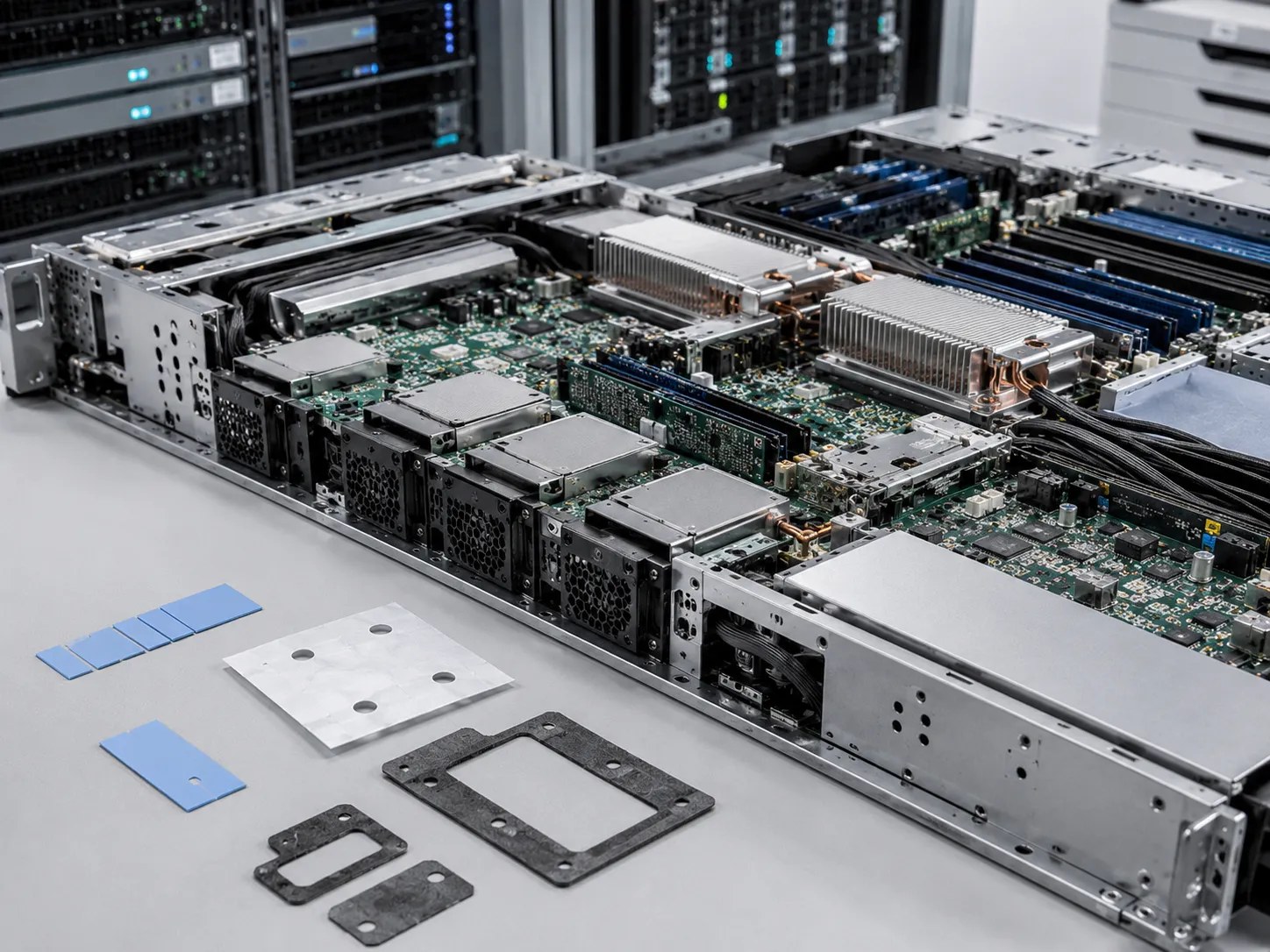
AI infrastructure is pushing server design beyond traditional thermal and electrical margins. IEA notes that cooling and environmental control can account for about 7% of total consumption in efficient hyperscale data centers and over 30% in less-efficient enterprise data centers, which explains why thermal design is now a system-level concern rather than a secondary mechanical detail.
At the equipment level, the challenge is more concentrated. GPUs, accelerators, power supplies, memory modules and high-speed interconnects sit closer together. Heat sources are stronger, air paths are tighter, and local hot spots are harder to manage. At the same time, faster switching speeds and denser signals increase EMI risk. EMC design aims to ensure electronic devices operate reliably without causing or being affected by electromagnetic interference.
This is where die cut components become important. They are not decorative pads or simple spacers. They are engineered interface parts that fill gaps, conduct heat, block noise, create grounding paths, prevent short circuits and support stable assembly.
What Are Die Cut Thermal and EMI Components?
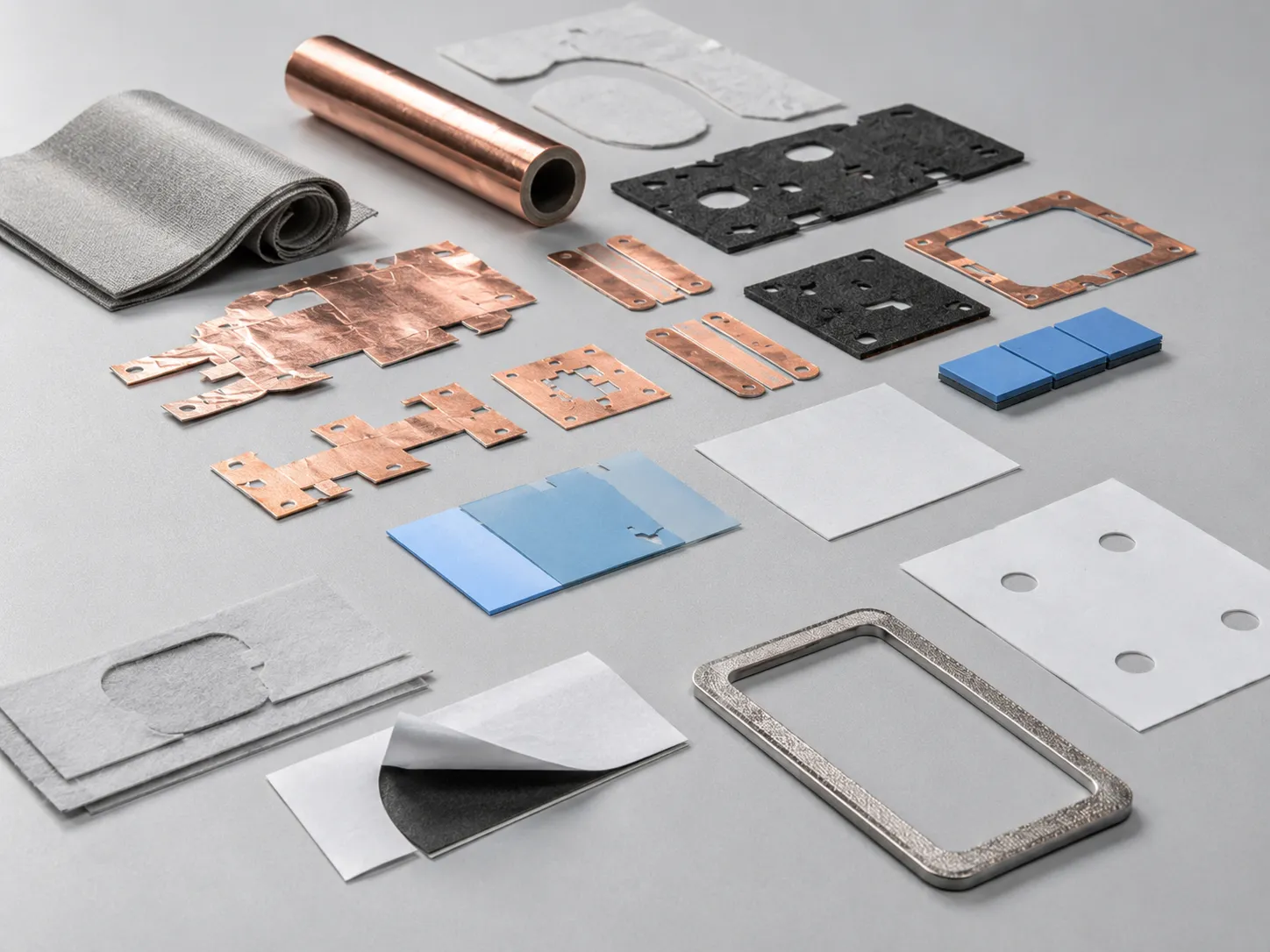
Die cut thermal and EMI components are custom-shaped functional parts made from flexible materials such as graphite, thermal pads, thermal tapes, copper foil, aluminum foil, conductive fabric, conductive foam, PET, PI, silicone, foam and adhesive films.
They are used between heat sources, heat sinks, cold plates, chassis, PCB areas, power modules, connectors, covers and enclosure seams. In AI servers and industrial control systems, these components usually serve one or more functions:
Component Type | Main Function | Common Location |
Thermal pad | Gap filling and heat transfer | GPU modules, power devices, heat sinks |
Graphite sheet | Lateral heat spreading | Processor areas, compact modules |
Thermal tape | Bonding and heat transfer | Small heat sinks, power components |
Copper foil | Grounding and local shielding | PCB, connector, chassis contact |
Conductive fabric | Flexible EMI shielding | Enclosure seams, module gaps |
Conductive foam | Compression + conductivity | Grounding pads, shielding gaskets |
PET / PI insulation film | Electrical isolation | PCB, power supply, metal housing |
A well-designed die cut thermal interface material does more than touch two surfaces. It compensates for uneven gaps, maintains contact pressure and supports repeatable thermal performance across production batches.
Die Cut Thermal Interface Material for High-Power Modules
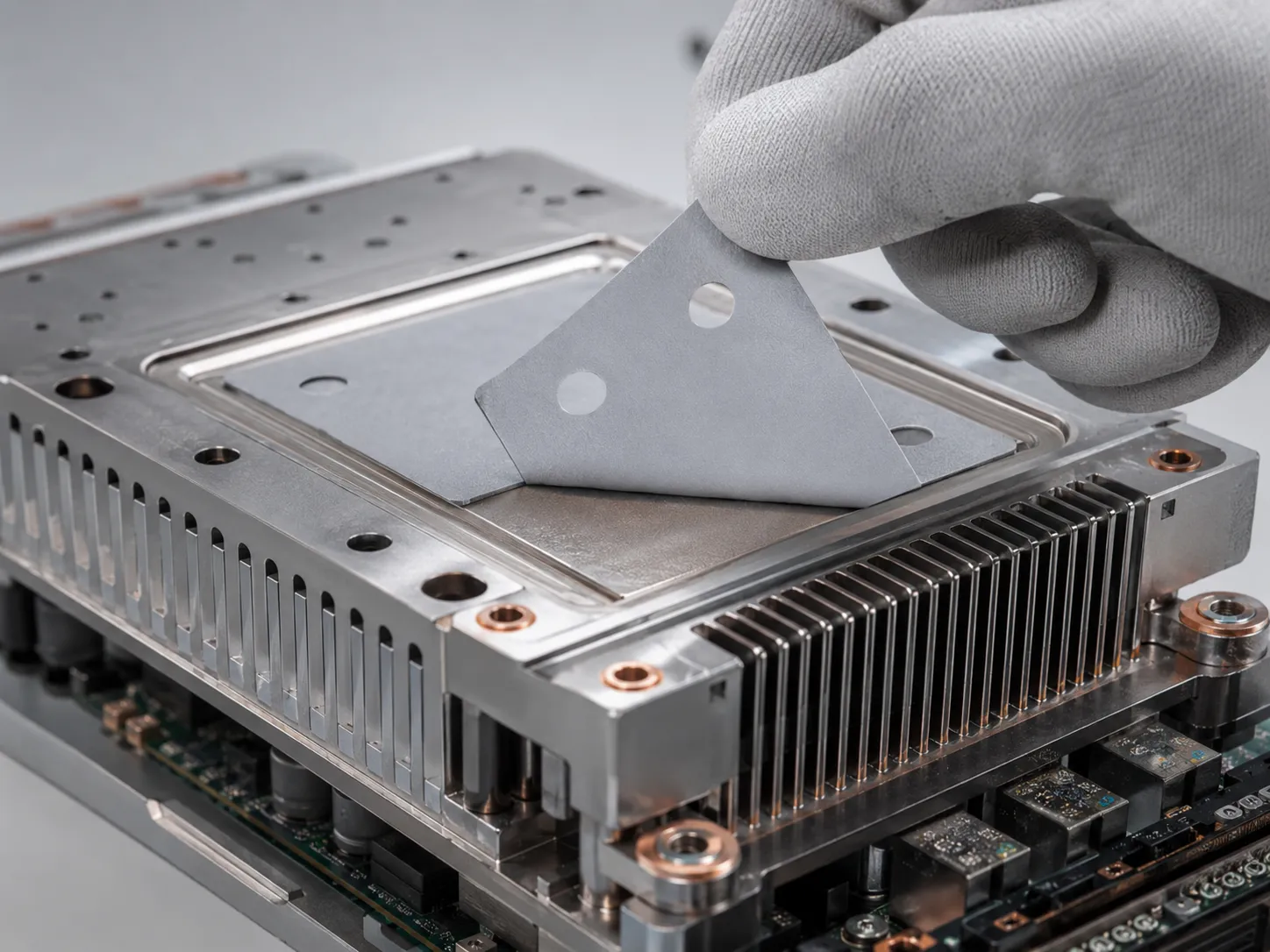
Die cut thermal interface material is used when heat must move from a component to a heat sink, cooling plate, metal frame or chassis. In AI servers, common heat sources include GPUs, CPUs, memory, power modules, voltage regulators and optical or network modules.
Key Selection Factors
Engineers should evaluate:
1.Thermal conductivity
2.Thickness and compressed thickness
3.Compression force
4.Electrical insulation requirement
5.Surface softness and conformability
6.Long-term aging and pump-out risk
7.Adhesive or non-adhesive structure
8.Release liner design for assembly
The Open Compute Project’s Cooling Environments work includes cold plates, coolant distribution units, immersion, door heat exchangers and heat reuse, showing how advanced cooling is moving deeper into server architecture. For die cut parts, this means thermal materials must fit more complex mechanical interfaces, including cold plates, module frames and serviceable assemblies.
EMI Shielding Gaskets for AI Servers and Industrial Control
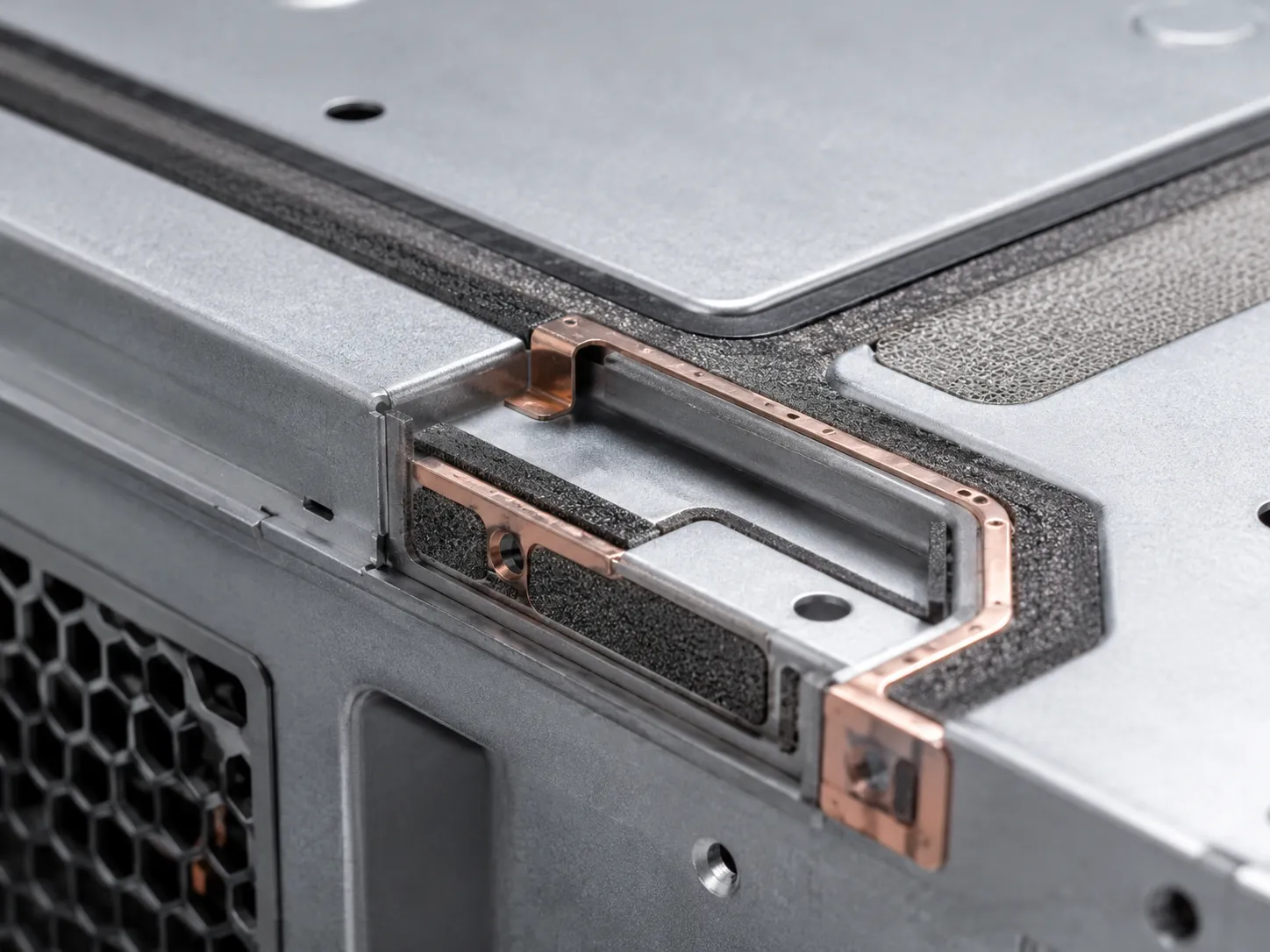
EMI shielding gaskets are used to create conductive contact between two surfaces and reduce electromagnetic leakage through seams, gaps or enclosure openings. In industrial control cabinets, they may protect PLC modules, power supplies, communication units and metal housings. In AI servers, they may be placed around connectors, module covers, chassis seams, network cards and high-speed signal areas.
A good EMI gasket is not only about conductivity. It must also maintain contact under compression, vibration, tolerance stack-up and repeated assembly.
EMI Design Question | Why It Matters |
Is the contact surface metal, coated metal or plastic? | Surface condition affects grounding reliability |
Is compression stable? | Poor compression increases contact resistance |
Is the gasket exposed to heat or vibration? | Aging may reduce shielding performance |
Is the part assembled manually or automatically? | Liner and carrier design affect efficiency |
Does the part need cushioning? | Conductive foam may be better than foil alone |
For high-speed electronics, EMI shielding should be treated as part of the mechanical design, not only the electrical design.
Conductive Fabric, Copper Foil and Conductive Foam for EMI Control
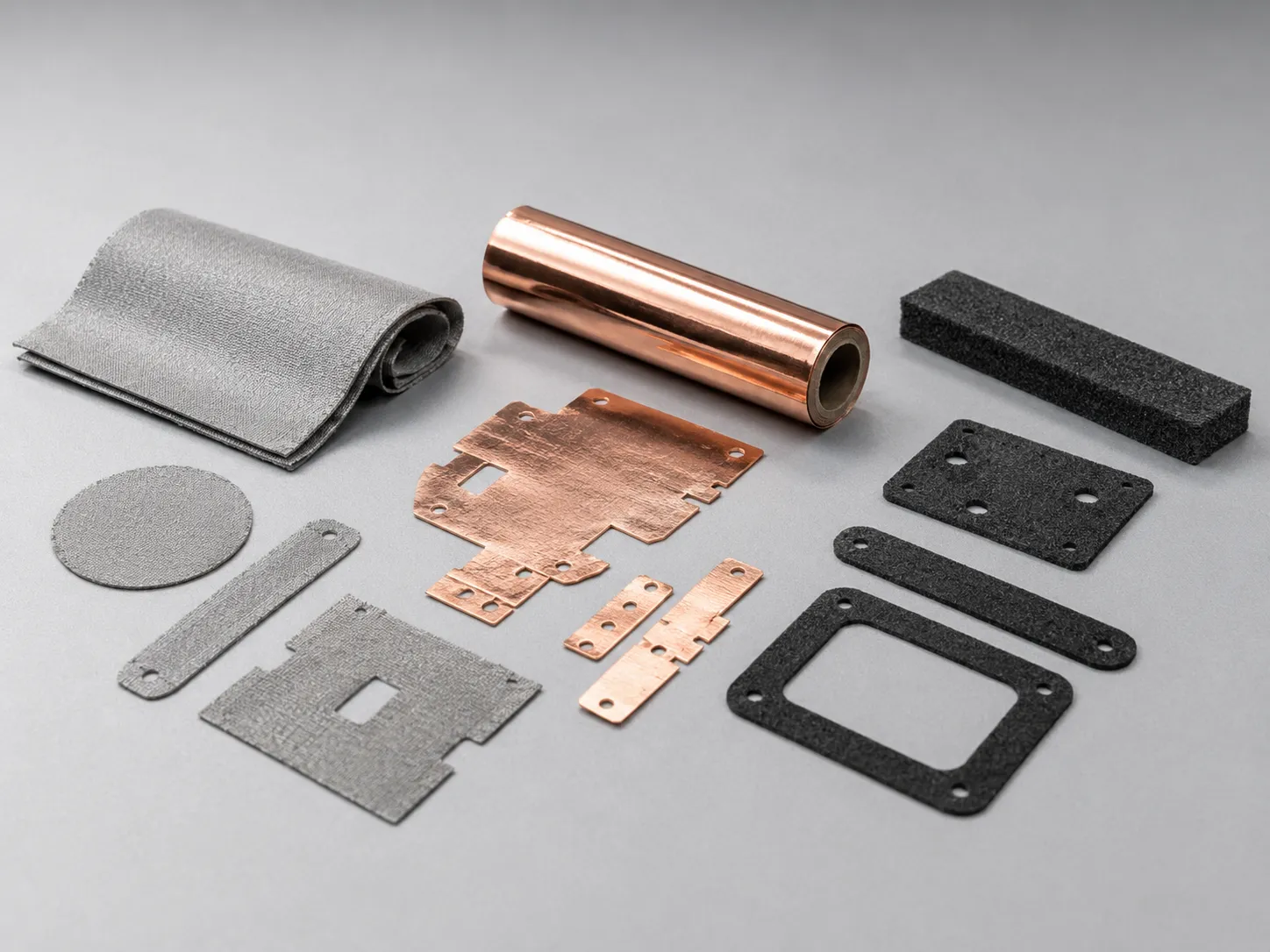
Conductive Fabric Gaskets
Conductive fabric is flexible, lightweight and suitable for wrapped foam gaskets, shielding tapes and conformable contact areas. It is useful when the enclosure has slight variation or the design needs lower closure force.
Copper Foil Die Cut Parts
Copper foil provides a thin, highly conductive grounding or shielding path. It is commonly used for PCB grounding, connector shielding, local noise control and chassis contact. However, it does not solve large gaps by itself, so it may need conductive adhesive, backing film or structural support.
Conductive Foam Pads
Conductive foam combines compression and conductivity. It is suitable for grounding pads, module-to-housing contact, shielding gaskets and vibration-prone environments. For AI server EMI shielding, conductive foam is often more forgiving than rigid foil when mechanical tolerance is difficult to control.
Material | Best Use | Limitation |
Conductive fabric | Flexible shielding and wrapped gaskets | Needs edge and abrasion control |
Copper foil | Thin grounding and local shielding | Weak gap compensation |
Conductive foam | Compression + EMI contact | Must control compression set |
Die Cut Insulation Films for Industrial Control Systems
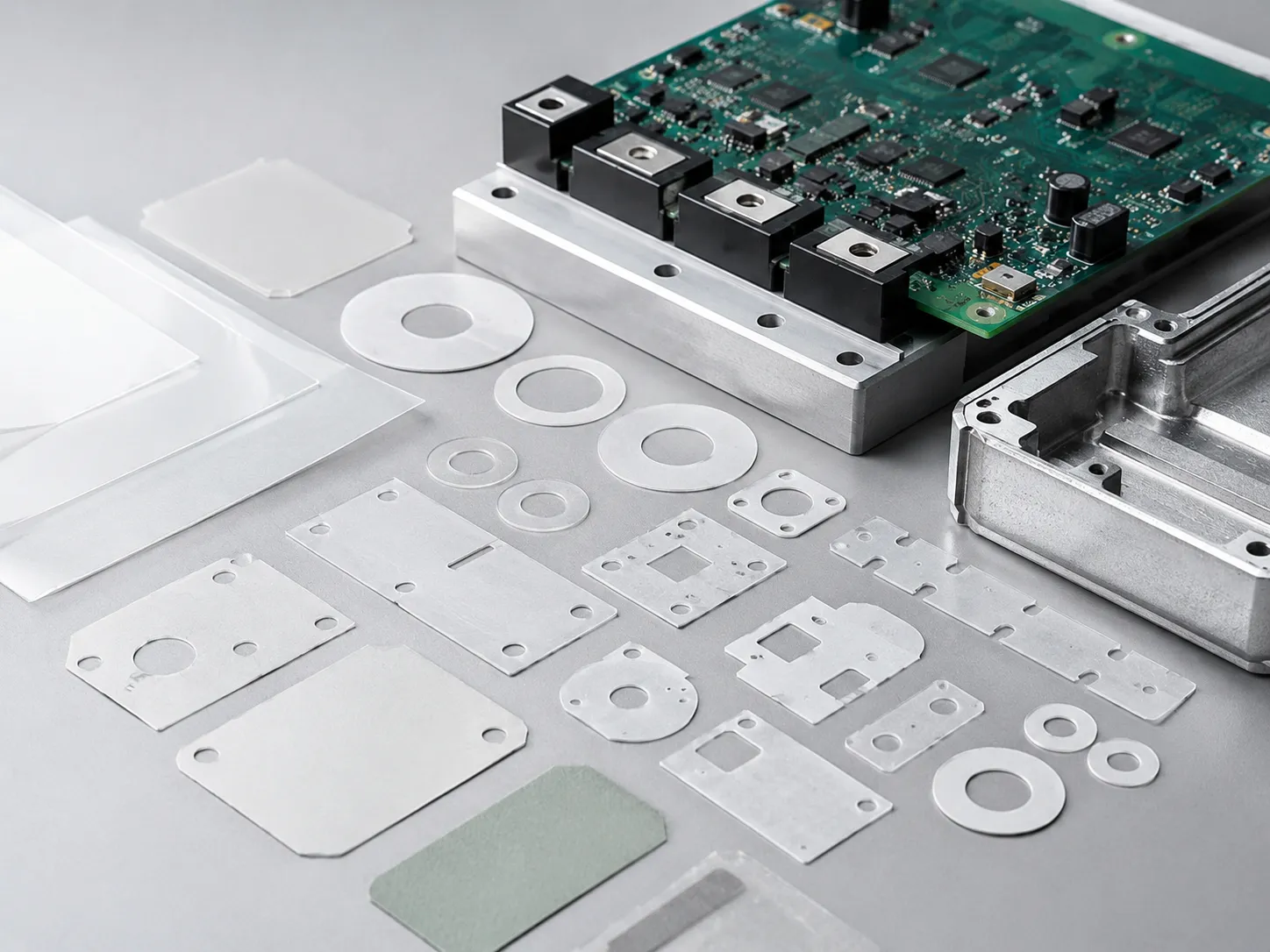
AI servers and industrial control equipment also need electrical isolation. PET, PI, PC and flame-retardant insulation films can separate conductive parts, protect PCB areas, isolate metal housings and prevent short circuits around power modules.
Insulation films are often thin, but their design is not simple. Hole position, edge clearance, adhesive overflow, folding area and installation direction all affect assembly reliability. For industrial control EMI gasket designs, engineers often need both insulation and shielding in nearby areas, which makes layer design important.
How Thermal Management and EMI Shielding Work Together?
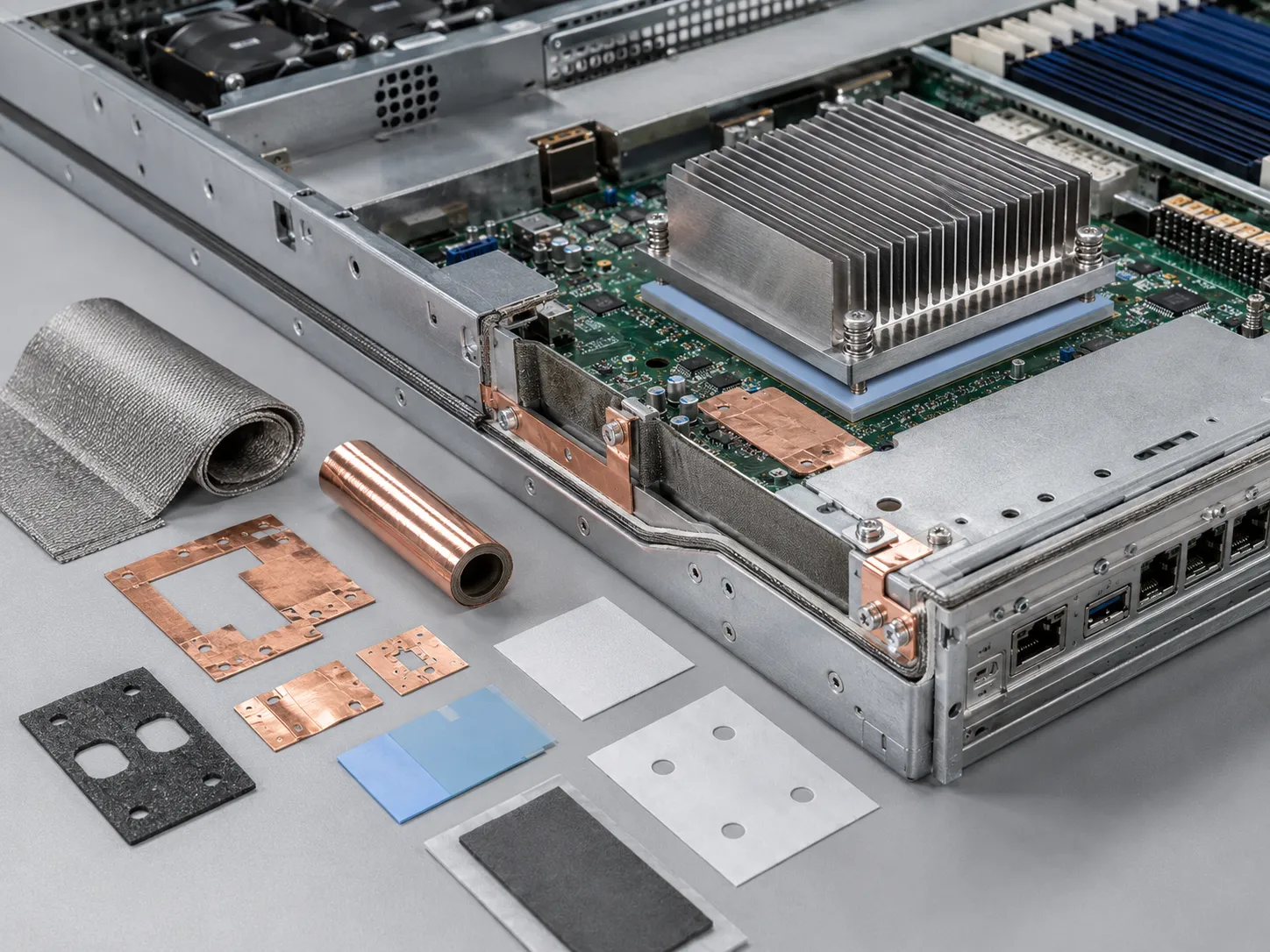
In compact electronic equipment, thermal and EMI requirements often overlap. A heat sink may also touch a grounded chassis. A power module may need both a thermal pad and an insulation layer. A shielded enclosure may need a conductive gasket next to a foam seal. A graphite heat spreader may need an insulating film to prevent unwanted electrical contact.
The wrong material combination can create new problems. A thermal material may improve heat transfer but add electrical risk. A copper foil part may improve grounding but create a short-circuit path if edge insulation is missing. A conductive foam gasket may improve EMI contact but fail if compression is too low.
A practical design logic is:
Design Need | Recommended Direction |
Heat transfer only | Thermal pad, thermal tape, graphite sheet |
Heat transfer + insulation | Thermally conductive insulation film or laminated TIM |
EMI shielding only | Copper foil, conductive fabric, conductive foam |
EMI + cushioning | Conductive foam or fabric-over-foam gasket |
Insulation near conductive parts | PET, PI or laminated insulating film |
Thermal + EMI in tight space | Multi-layer die cut structure with controlled liner design |
Design Checklist for AI Server Thermal and EMI Components
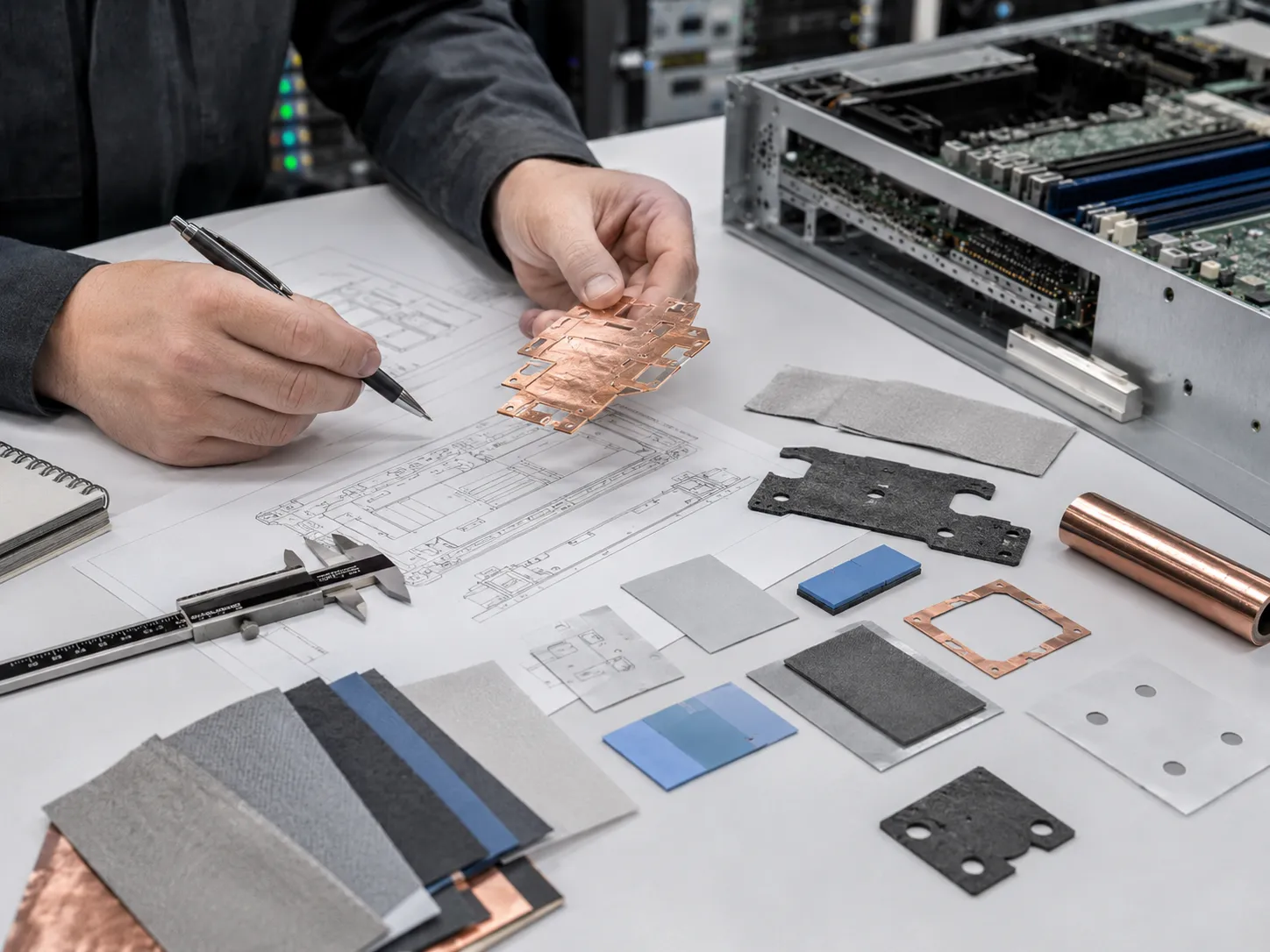
Before requesting a quote, engineers should prepare:
1.2D drawing or 3D assembly reference
2.Material function: thermal, EMI, insulation, bonding or cushioning
3.Thickness and compressed thickness
4.Thermal conductivity or surface resistance target
5.Working temperature and aging requirement
6.Contact surface material and coating
7.Compression method: screw, clip, cover pressure or module stack
8.Adhesive side and liner design
9.Quantity for prototype, pilot run and mass production
10.Inspection requirement: dimensional report, visual inspection, CCD or full inspection
For AI server and industrial control projects, the real risk is often not “Can the shape be cut?” The better question is: “Can the material stack keep the same thermal, electrical and mechanical behavior after assembly and aging?”
How Xinyusheng Supports Die Cut Thermal and EMI Components?
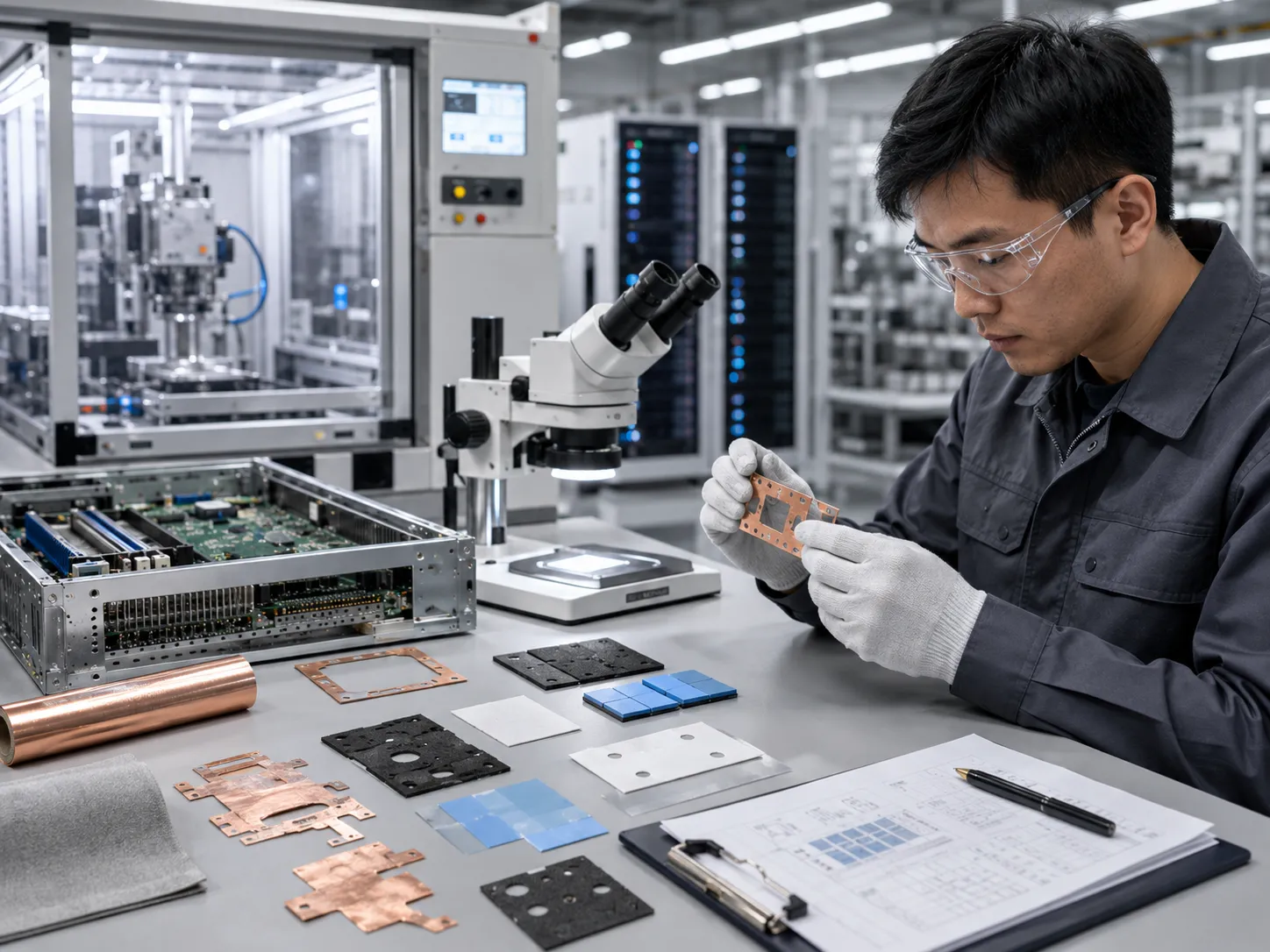
Xinyusheng provides custom precision die cutting services for electronics, EV batteries, medical devices, robotics, drones, AI servers and industrial applications, with product categories including thermal management, conductive EMI, insulation, foam, protective film and other functional series.
The current SEO plan also identifies this topic as a key application article for AI servers and industrial control, with target directions including AI server thermal interface material, AI server EMI shielding, industrial control EMI gasket, thermal interface materials, conductive fabric, copper foil, conductive foam and insulation films.
For engineering support, Xinyusheng’s internal research notes record a workflow from customer requirements and drawing review to technical communication, sampling, sample confirmation, mass production, packaging and delivery. The same research also notes full-process inspection, material testing, in-house testing, first inspection, manual inspection, machine inspection and report support.
For high-volume projects, Xinyusheng’s company materials list rotary die cutting lines, flatbed die cutting lines, CCD automatic inspection and 100% inspection capability, which are important for stable production of small thermal and EMI parts.
FAQ
What is a die cut thermal interface material?
A die cut thermal interface material is a custom-shaped thermal pad, graphite sheet, thermal tape or thermally conductive film used to transfer heat between electronic components and heat sinks, cold plates, metal frames or housings.
What EMI shielding materials are used in AI servers?
Common materials include copper foil, aluminum foil, conductive fabric, conductive foam, conductive adhesive tape and fabric-over-foam gaskets. The right choice depends on grounding path, compression, frequency range, space and assembly method.
Can one die cut component provide both thermal and EMI functions?
Yes, but it must be designed carefully. Some structures combine thermal layers, conductive layers, insulation films and adhesive liners. The material stack should be reviewed for heat transfer, electrical safety and mechanical reliability.
Why is conductive foam used in industrial control EMI gaskets?
Conductive foam provides both compression and conductivity. It helps maintain contact between uneven surfaces, making it useful for enclosure seams, grounding pads and vibration-prone equipment.
What information is needed for an AI server thermal or EMI die cutting quote?
Provide drawings, material target, thickness, tolerance, thermal or electrical requirement, contact surface, compression condition, adhesive structure, quantity, inspection standard and packaging format.
Source References
1.Xinyusheng KPI keyword table and SEO content plan: keyword selection and AI server / industrial control content direction.
2.Xinyusheng internal research notes and company capability materials: sampling, inspection, production and CCD/full-inspection support.
3.IEA: data center cooling and environmental control energy share.
4.Open Compute Project: cooling environment focus areas for advanced data center cooling.
5.Keysight: EMC definition and EMI reliability context.
Table of Contents
Related news
Company News
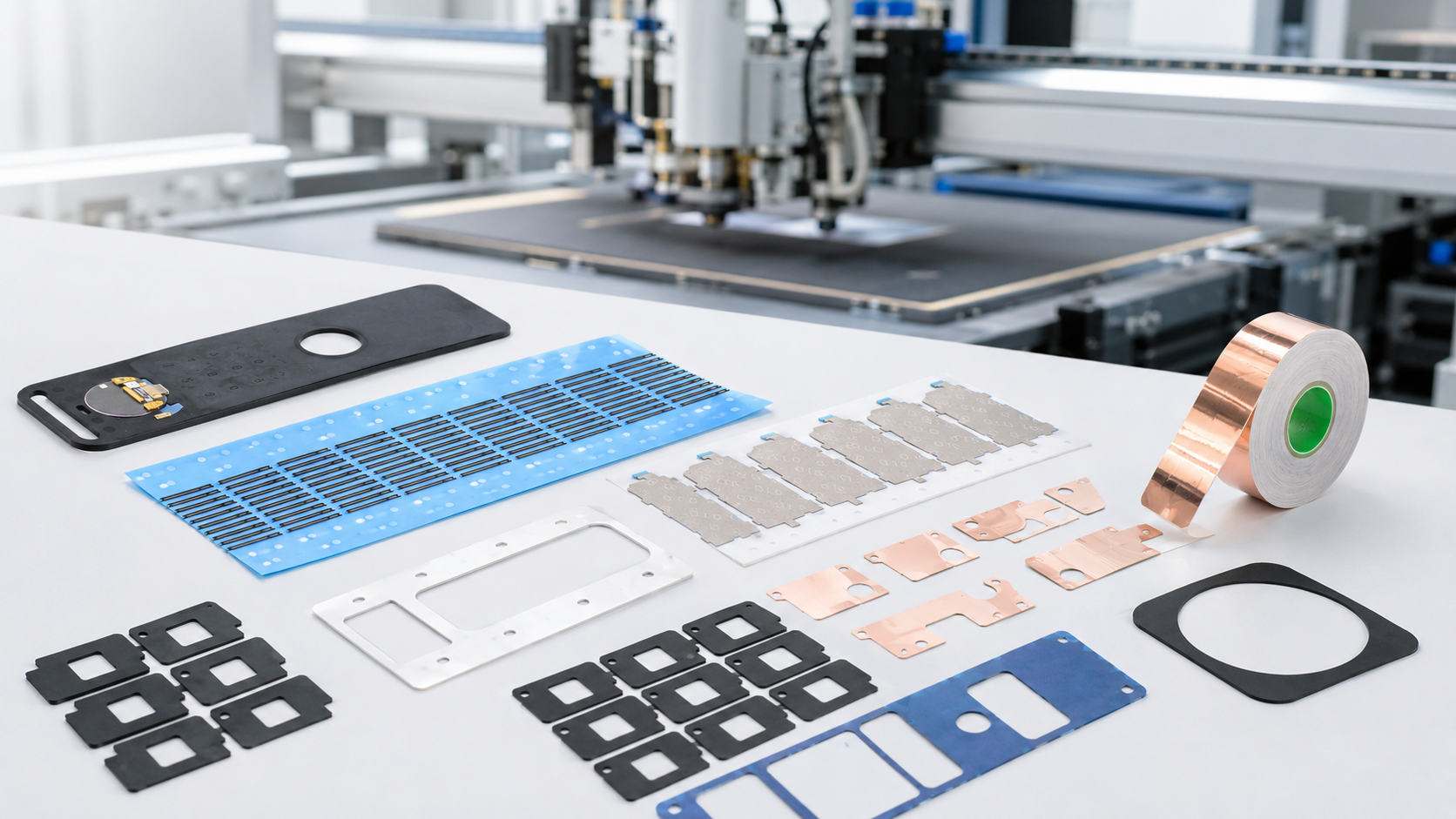
What Is Custom Precision Die Cutting? What Types of Custom Functional Components Is Xinyusheng Suitable For?
May 14,2026
Discover More
Company News
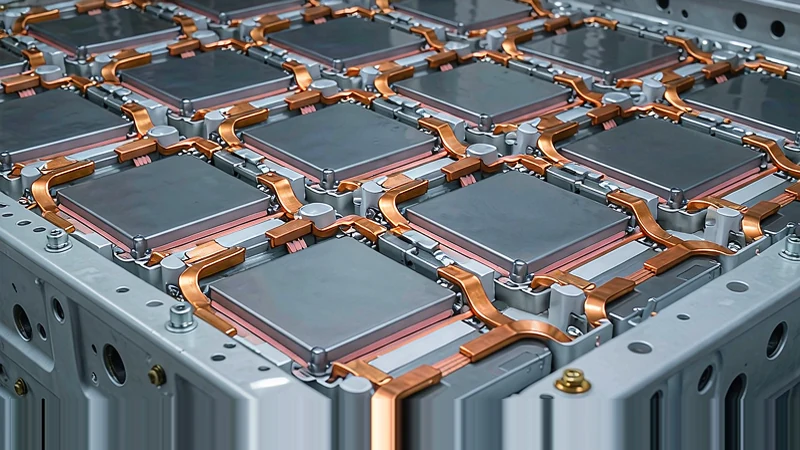
How Are Die Cut Materials Used in Automotive Electronics?
August 29,2026
Discover More
Company News
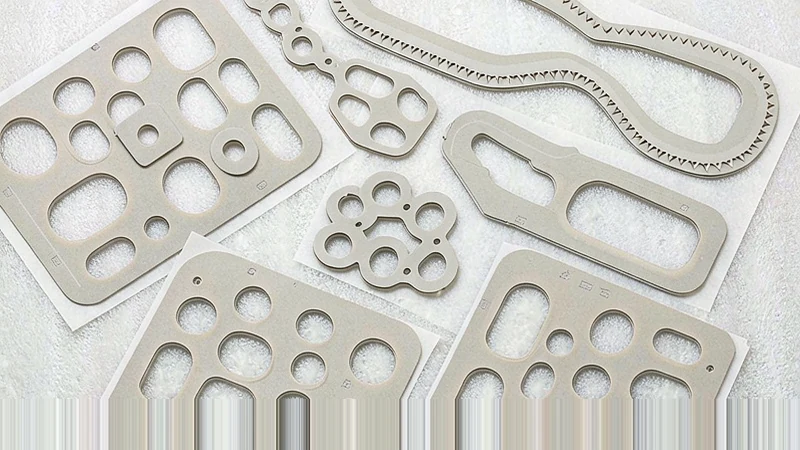
What Types of Thermal Interface Materials Can Be Die Cut?
August 29,2026
Discover More
