What is Rotary Die Cutting? Process, Benefits and Applications
Abstract
Rotary die cutting is a high-efficiency converting process used to cut flexible roll materials into precise components at continuous production speed. It is especially suitable for adhesive tapes, films, foams, insulation materials, conductive foils, mesh, protective films and multi-layer laminated parts. Compared with slower batch-based cutting methods, the rotary die cutting process is better for roll materials, high-volume orders, repeatable part geometry and projects that require cutting, laminating, slitting, waste removal and inspection in one production flow. For electronics, EV battery, medical, telecom and AI thermal management applications, it helps improve consistency, production efficiency and assembly readiness.
What is Rotary Die Cutting?
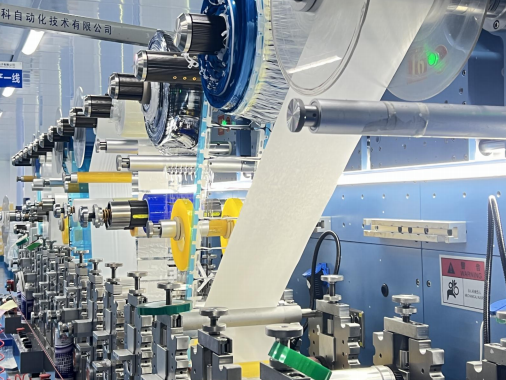
Rotary die cutting is a continuous cutting method where flexible material is fed through cylindrical tooling. The material usually comes from a roll, passes through one or more stations, and is cut into the required shape by a rotary die. Industry sources commonly describe this as a roll-to-roll process where material is fed from rolls through the die and can be delivered as finished rolls, sheets or individual parts depending on assembly needs.
In practical manufacturing, rotary die cutting is not only “cutting.” It can combine several converting steps into one controlled process. A production line may include unwinding, laminating, kiss cutting, through cutting, slitting, waste removal, liner replacement, rewinding and inspection. This is why it is widely used for precision die cut parts that need both speed and repeatability.
For overseas buyers, the key point is simple: rotary die cutting is usually the right direction when the material is roll-fed, the part design repeats, and the order volume justifies tooling and setup.
How the Rotary Die Cutting Process Works?
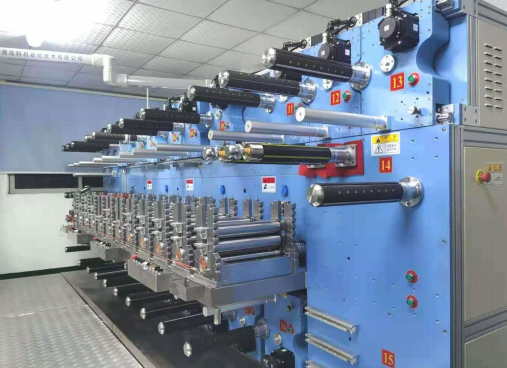
1. Material Unwinding and Web Feeding
The process begins with a roll of material, often called the web. This may be foam, adhesive tape, PET film, PI film, graphite, copper foil, conductive fabric, mesh or release liner. The web is pulled through the machine under controlled tension.
Stable tension matters. If the web stretches, curls or shifts, the finished part may have dimensional variation or registration issues. This is especially important for thin films, soft foams and multi-layer adhesive structures.
2. Laminating and Layer Building
Many die cut components are not single-layer parts. For example, a foam gasket may include foam, pressure-sensitive adhesive and release liner. An EMI shielding part may combine conductive fabric, conductive adhesive and carrier liner. A thermal component may combine graphite, insulation film and protective liner.
Rotary lines can be configured with multiple stations for laminating and material combining. JBC Technologies notes that roll-fed rotary presses can include stations for laminating, perforating, slitting, sheeting, printing and die cutting.
3. Cutting, Kiss Cutting and Waste Removal
The rotary die cuts the material as it moves through the press. Depending on the design, the die may cut fully through the material or only through selected layers. Kiss cutting is common for adhesive-backed parts because the functional material is cut while the release liner remains intact.
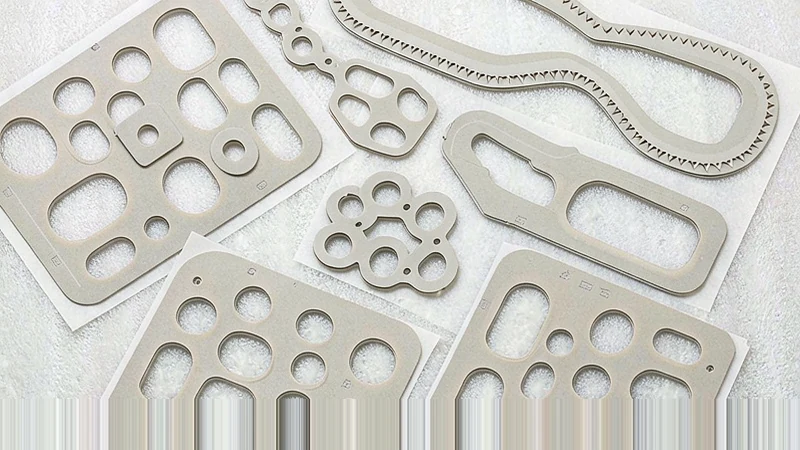
After cutting, waste material is removed from the web. This step may look simple, but it often determines whether a design is stable in mass production. Small holes, narrow frames and soft adhesive materials need careful waste removal planning.
4. Rewinding, Sheeting or Final Packaging
Finished parts can be rewound on rolls for automatic assembly, sheeted into panels, packed in trays or supplied as individual pieces. The right format depends on the customer’s assembly method. For high-volume electronics projects, roll or sheet delivery can improve downstream handling and reduce manual placement time.
Rotary Die Cutting vs Flatbed Die Cutting
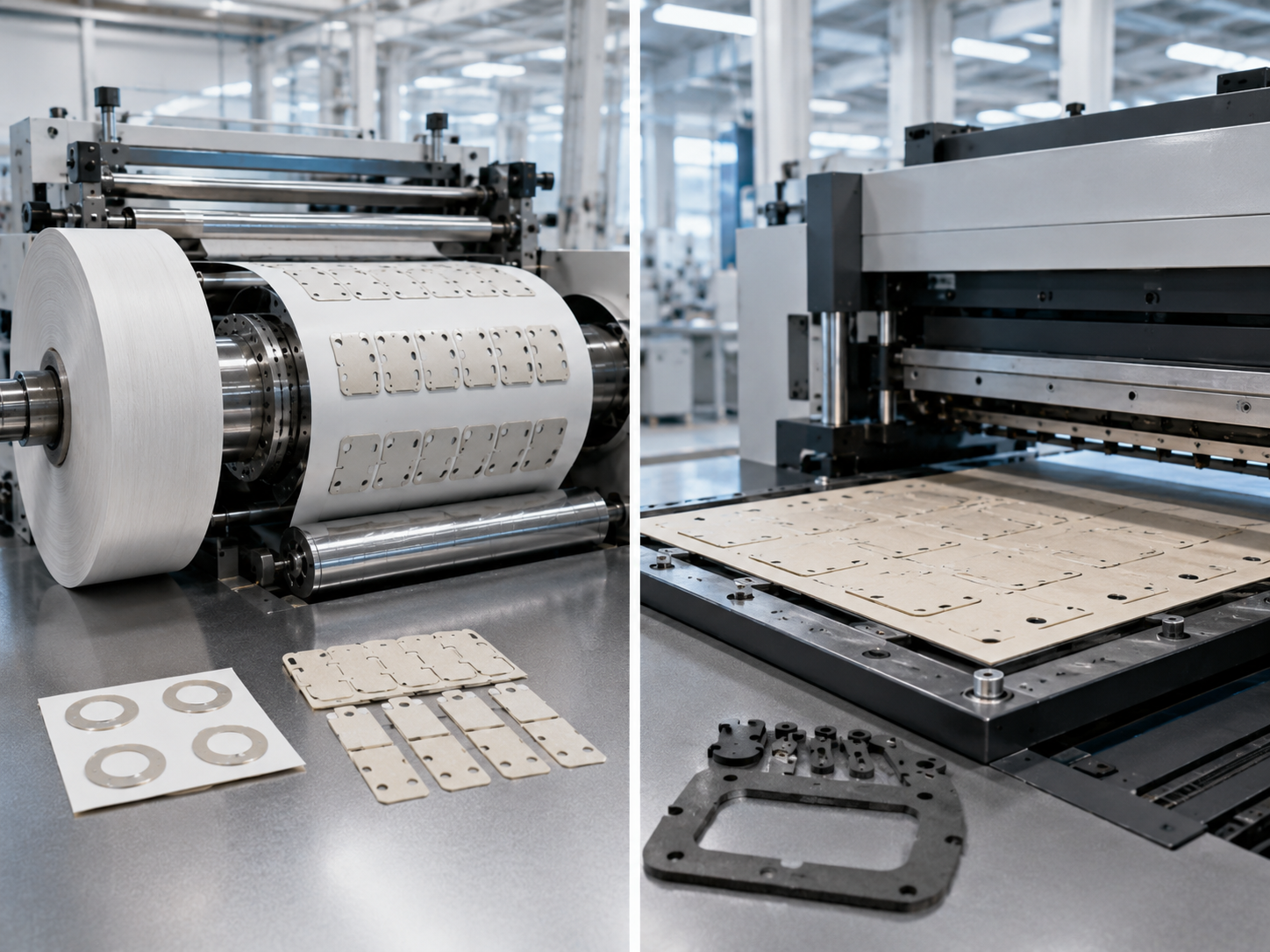
Rotary and flatbed die cutting are both useful, but they serve different production logic.
Factor | Rotary Die Cutting | Flatbed Die Cutting |
Material format | Best for roll materials | Best for sheets or thicker materials |
Production volume | Better for medium to high volume | Better for samples and short runs |
Speed | Continuous and high-speed | Batch-based and slower |
Tooling | Higher initial tooling cost | Lower tooling cost in many cases |
Multi-layer lamination | Strong for multi-station converting | Possible but less efficient |
Typical parts | Tapes, films, foams, gaskets, EMI parts | Larger sheets, thick foam, prototypes |
Flatbed cutting may be more suitable when the material is thick, available only in sheets, or the quantity is too low to justify rotary tooling. Industry guidance also notes that rotary die cutting is often more cost-effective for high-volume production, while material usually needs to be available in roll form and thin enough to feed continuously.
Benefits of High-Speed Rotary Die Cutting
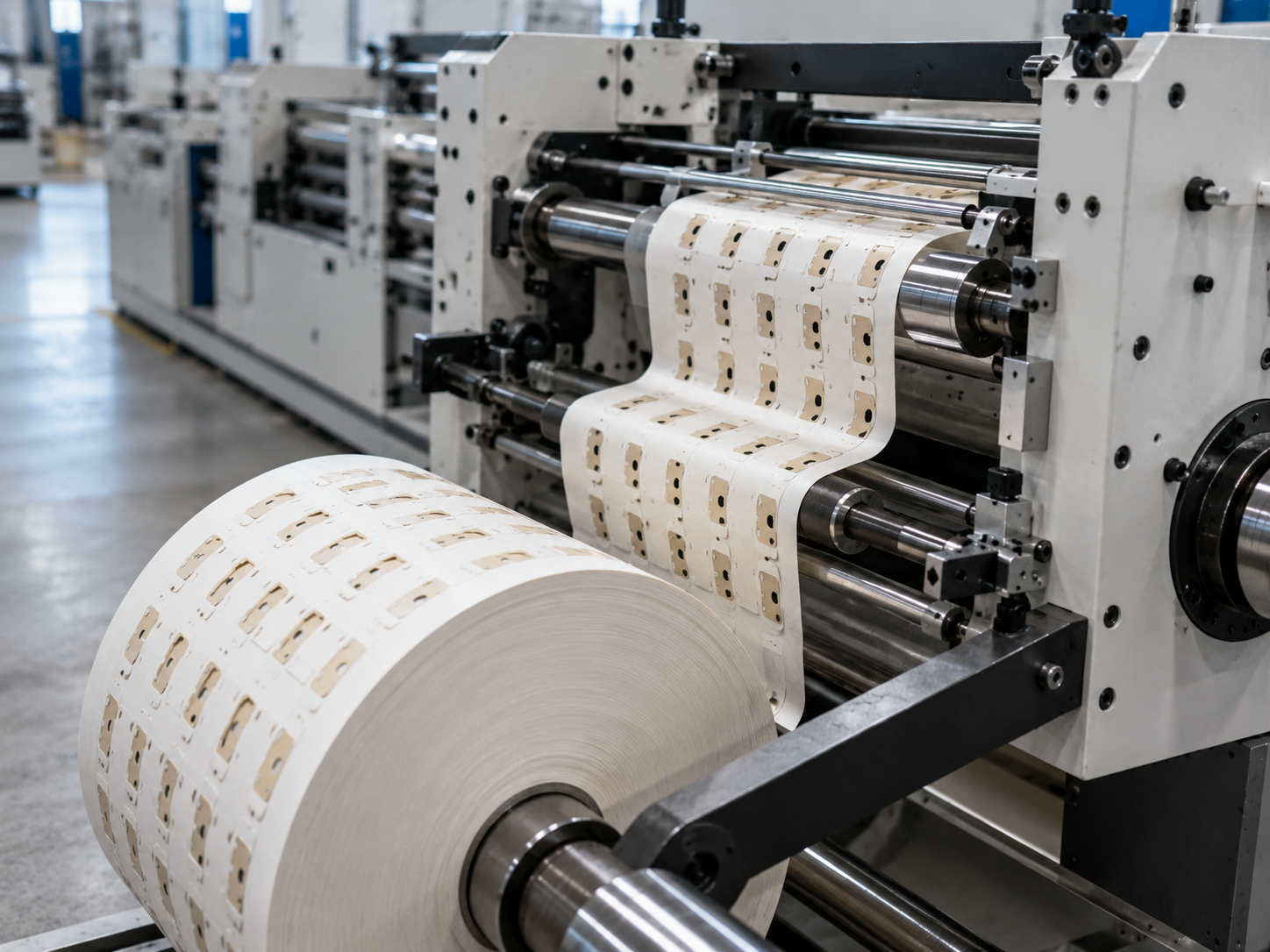
Higher Efficiency for Repeated Parts
The biggest advantage is speed. Once tooling and process settings are confirmed, rotary die cutting can produce repeated shapes continuously. This is valuable for electronic gaskets, adhesive pads, insulation films and protective parts used in large quantities.
Better Process Integration
A rotary line can combine cutting with lamination, slitting, liner replacement and waste removal. That reduces separate handling steps and improves consistency across the production batch.
Stable Output for Roll-to-Roll Assembly
Some customers do not want loose parts. They need parts delivered on rolls or carrier liners for automated placement. The rotary die cutting process can support this format better than many batch methods.
Lower Unit Cost at Volume
Rotary tooling may cost more upfront, but the per-part cost can become competitive when volume increases. The process is especially useful when the product design is stable and repeat orders are expected.
Materials Suitable for Roll-to-Roll Die Cutting
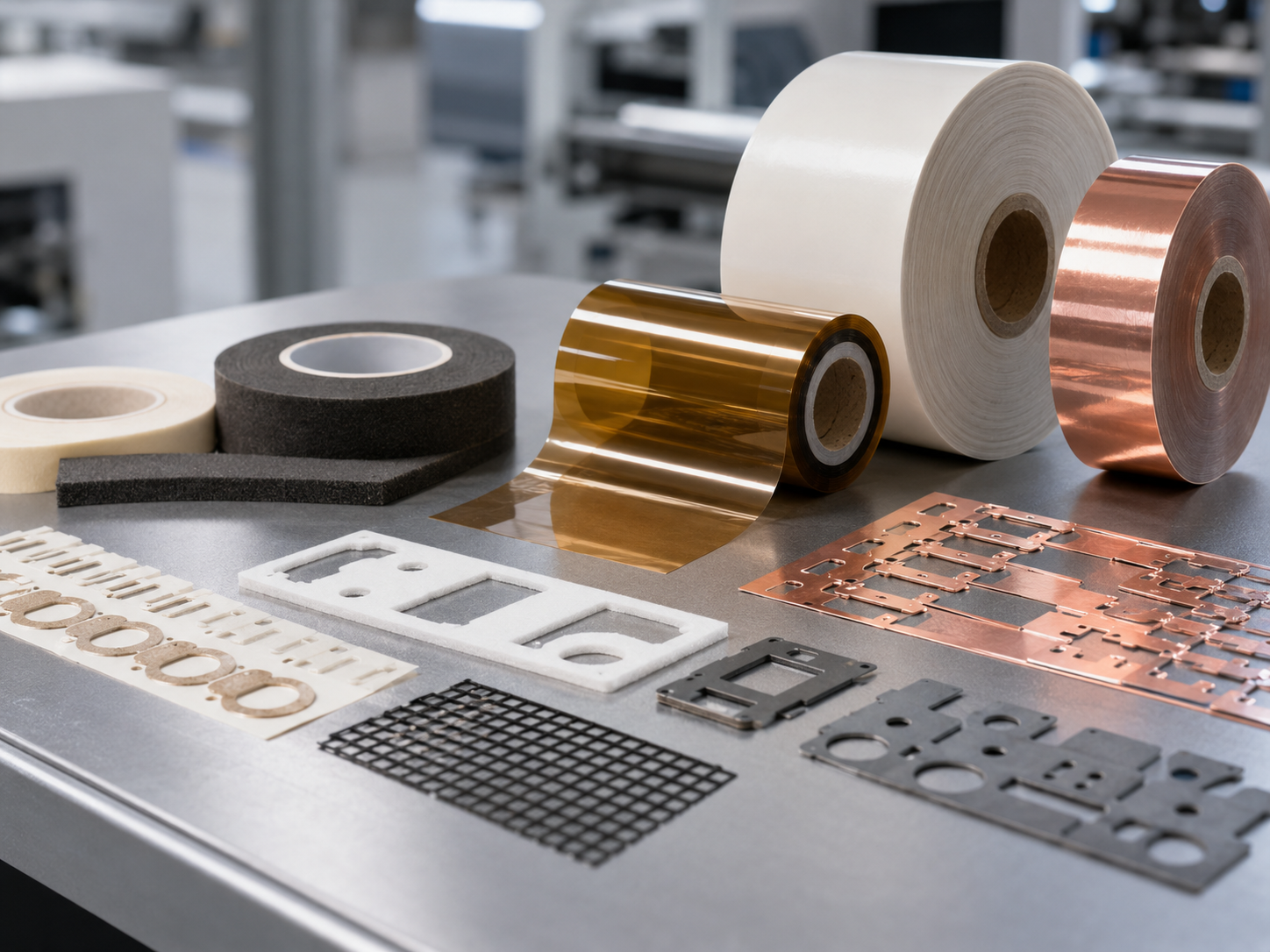
Rotary die cutting works best with flexible materials that can be fed in rolls.
Material Type | Typical Rotary Die Cut Parts | Application Value |
Double-sided tape | Bonding pads, assembly tapes | Fast assembly, stable bonding |
Foam | Gaskets, seals, cushioning pads | Sealing, dustproofing, vibration control |
PET / PI film | Insulation films, protective layers | Electrical isolation and protection |
Copper / aluminum foil | Grounding tabs, EMI shielding pieces | Conductivity and signal protection |
Conductive fabric | EMI gaskets and shielding strips | Flexible shielding |
Graphite / thermal film | Heat spreaders, thermal sheets | Thermal management |
Mesh / vent film | Dustproof and acoustic components | Protection with airflow or sound transmission |
Marian states that custom die cutting can process thin flexible materials including tapes, adhesives, foams, meshes, fabrics, thin metals, plastics, films and rubbers, and can also combine multiple layers into custom components.
Applications of Rotary Die Cut Parts
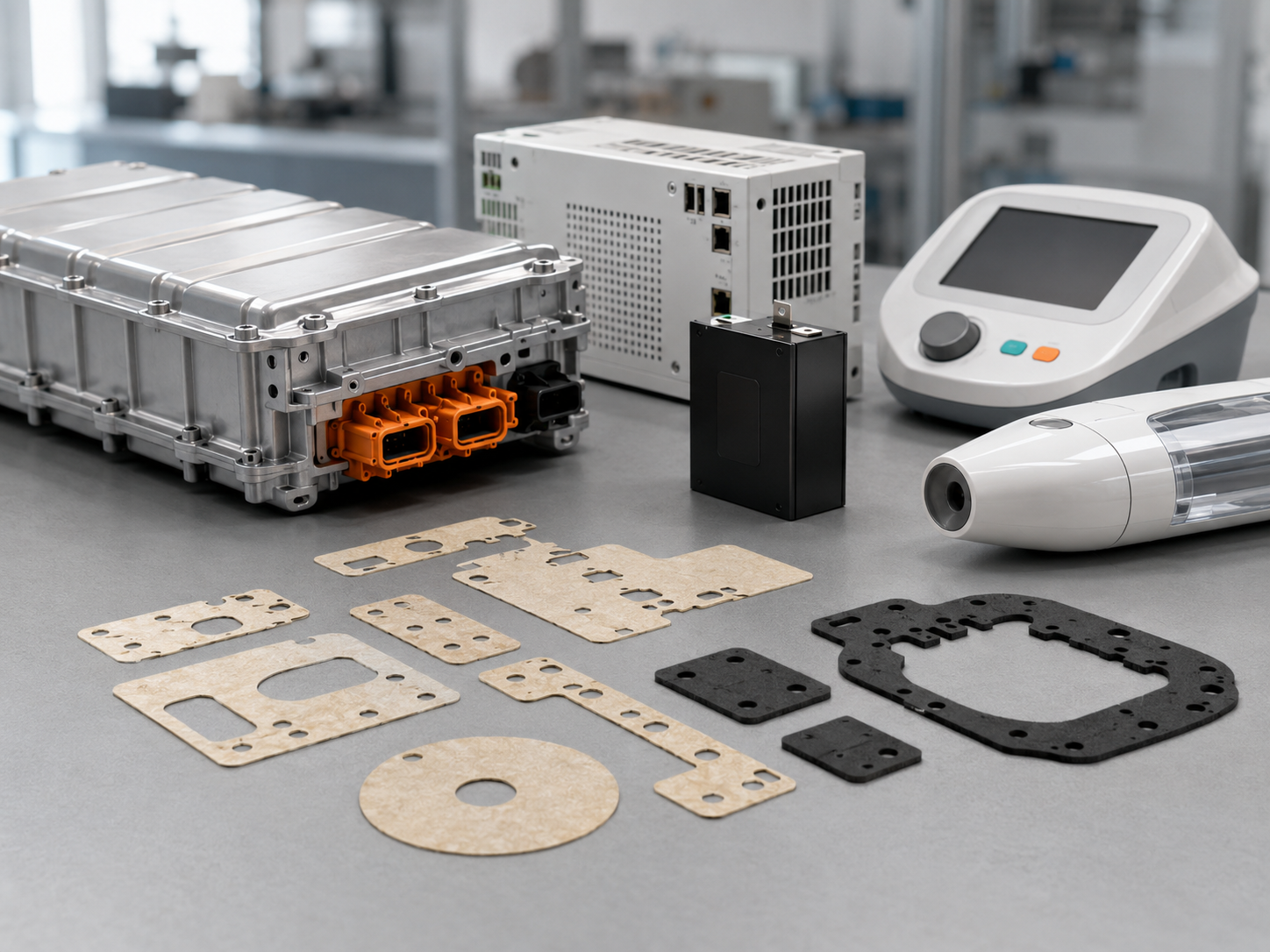
Consumer Electronics and Smart Devices
Rotary die cut parts are used in phones, cameras, tablets, smart locks, speakers, sensors and wearable devices. Common parts include foam gaskets, dustproof mesh, adhesive tapes, insulation films, light-blocking films and protective films.
EV Batteries and Energy Storage
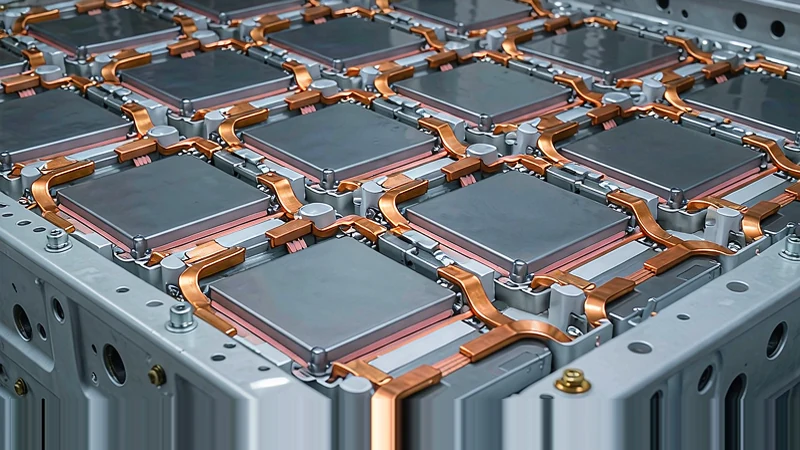
Battery packs require insulation pads, sealing gaskets, thermal interface materials, cushioning foams and protective films. For repeated battery module parts, rotary cutting can improve batch consistency and delivery efficiency.
AI Servers and Telecom Equipment
High-power electronics require thermal management and EMI shielding. Rotary die cutting can support graphite sheets, thermal tapes, copper foil, conductive foam and conductive fabric components used in compact assemblies.
Medical and Industrial Devices
Medical devices, control systems and industrial sensors often need clean, repeatable adhesive films, insulation parts, sealing pads and protective materials. Rotary production is useful when the part must stay consistent across long-term supply.
Design and RFQ Tips for Rotary Die Cutting Services
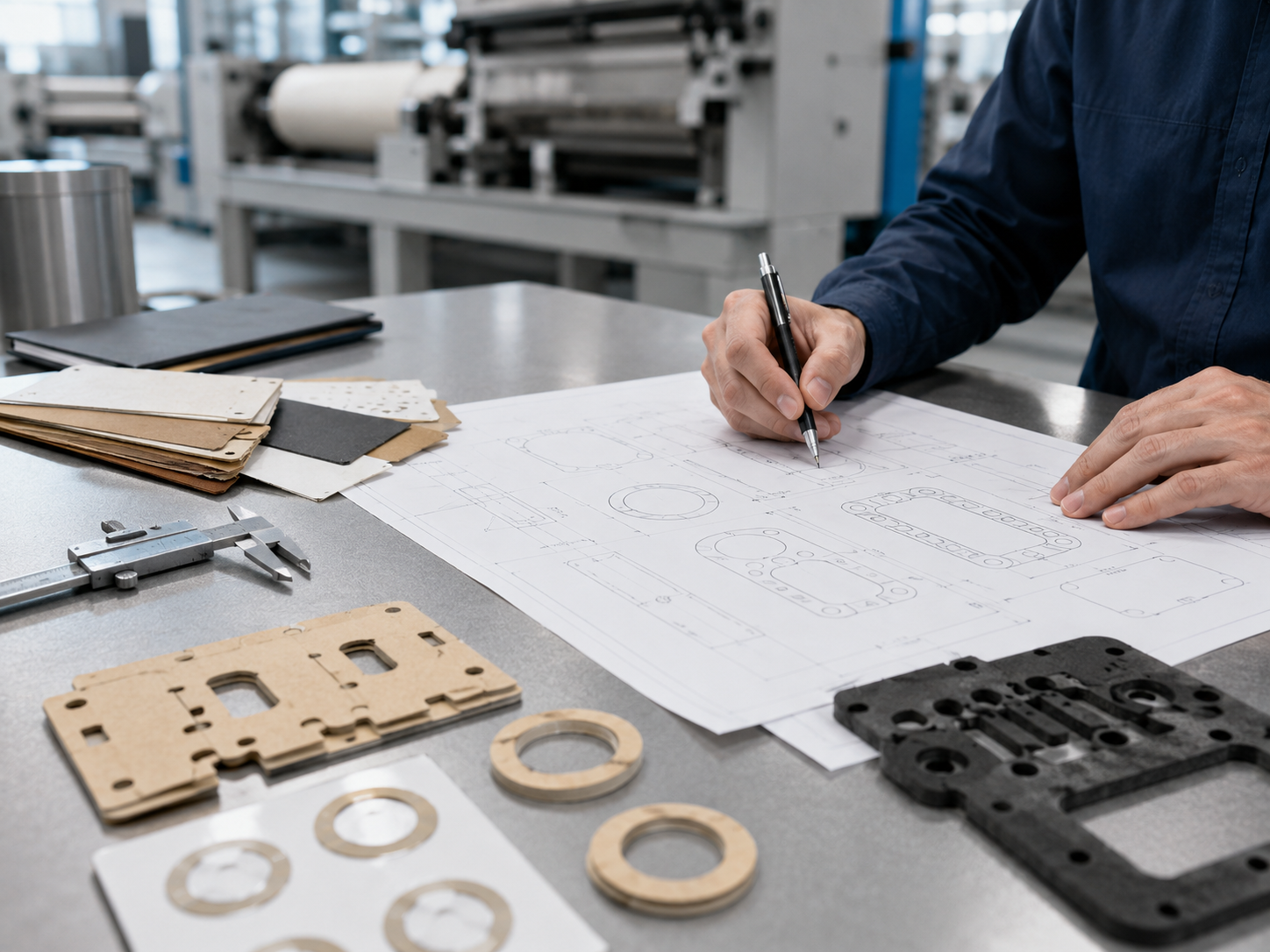
To receive a more accurate quote, buyers should provide:
1.2D drawing, DXF, DWG or PDF file
2.Material name, thickness and roll format
3.Part size, holes, edge width and tolerance
4.Adhesive side, liner type and peel direction
5.Quantity for prototype, pilot run and mass production
6.Delivery format: rolls, sheets, trays or individual parts
7.Inspection needs, such as dimensional report or CCD inspection
8.Application conditions: temperature, compression, insulation, EMI or thermal requirements
Do not only ask for a price by part size. For rotary die cutting services, the supplier needs to understand whether the material can feed smoothly, whether waste can be removed, whether layers need registration, and whether the finished parts must support automated assembly.
How Xinyusheng Supports Rotary Die Cut Components?

Xinyusheng provides custom precision die cutting and custom die cutting services for components used in electronics, EV batteries, medical devices, AI servers and industrial applications. Its official website highlights custom die cut components, engineering connection and ±0.03 mm precision capability for functional parts.
For rotary projects, Xinyusheng can support material evaluation, sample development, lamination, die cutting, inspection and mass production delivery. Its SEO plan also positions rotary and flatbed die cutting as a key comparison topic, noting that rotary cutting is suitable for roll materials, high-volume production and multi-station projects, while flatbed cutting is more suitable for small batches, large formats and sampling.
This matters because rotary die cut parts are often used inside real product assemblies, not as isolated shapes. A supplier must understand the material stack, liner structure, waste removal, tolerance, inspection method and packaging format before production.
FAQ
What is rotary die cutting used for?
Rotary die cutting is used to produce roll-fed precision parts such as adhesive tapes, foam gaskets, insulation films, copper foil pieces, thermal sheets, mesh parts, protective films and EMI shielding components.
Is rotary die cutting better than flatbed die cutting?
It depends on the project. Rotary die cutting is better for roll materials, repeated part shapes and higher volume. Flatbed die cutting is often better for prototypes, lower volume, thicker materials or sheet-based materials.
What is kiss cutting in rotary die cutting?
Kiss cutting means cutting through the top material layer while leaving the release liner intact. It is common for adhesive parts supplied on rolls or sheets.
What materials can be rotary die cut?
Common materials include foam, rubber, PET, PI, adhesive tape, copper foil, aluminum foil, conductive fabric, graphite, thermal films, mesh and protective films.
When should buyers choose rotary die cutting services?
Choose rotary die cutting when the part uses roll material, the design is stable, the quantity is medium to high, and the project needs consistent output, multi-layer lamination or automated assembly format.
Source References
1.Xinyusheng KPI keyword table: keyword difficulty and rotary die cutting keyword selection.
2.Xinyusheng official website: custom precision die cutting services and application positioning.
3.JBC Technologies: roll-fed rotary die cutting and multi-station converting functions.
4.Marian: roll-to-roll rotary die cutting description and flexible material converting.
5.American Micro Industries: rotary vs flatbed process considerations and high-volume suitability.
Table of Contents
Related news
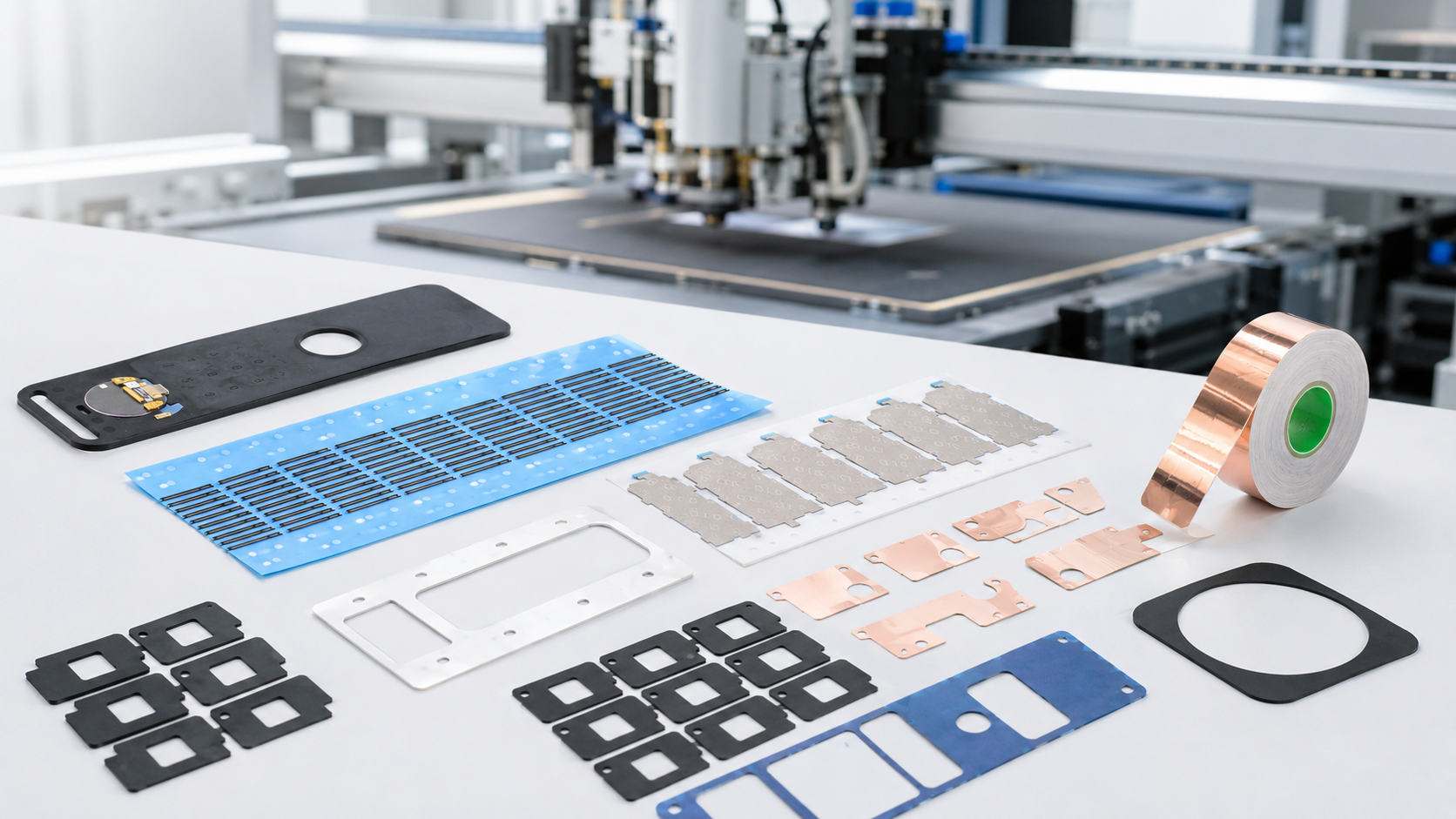
Company News
What Is Custom Precision Die Cutting? What Types of Custom Functional Components Is Xinyusheng Suitable For?
May 14,2026
Discover More
Company News
How Are Die Cut Materials Used in Automotive Electronics?
August 29,2026
Discover More
Company News
What Types of Thermal Interface Materials Can Be Die Cut?
August 29,2026
Discover More
