Conductive Foam vs Copper Foil vs Conductive Fabric for EMI Shielding
Abstract
For engineers designing AI servers, telecom modules, industrial control systems, consumer electronics or vehicle electronics, EMI shielding is no longer a secondary detail. Higher signal speed, tighter PCB layouts and compact metal-plastic enclosures make grounding paths, shielding gaps and material compression more difficult to control.
Conductive foam, copper foil and conductive fabric are three common EMI conductive materials, but they solve different problems. Conductive foam is better for compressible gap filling and grounding. Copper foil is suitable for low-resistance grounding and localized shielding. Conductive fabric works well where flexibility, lightweight structure and surface coverage matter. This article compares the three materials from structure, performance, compression, assembly and application angles, helping engineers choose more reliable EMI shielding gaskets and die cut conductive components.
Why EMI Shielding Gaskets Matter in AI Servers and Telecom Equipment?
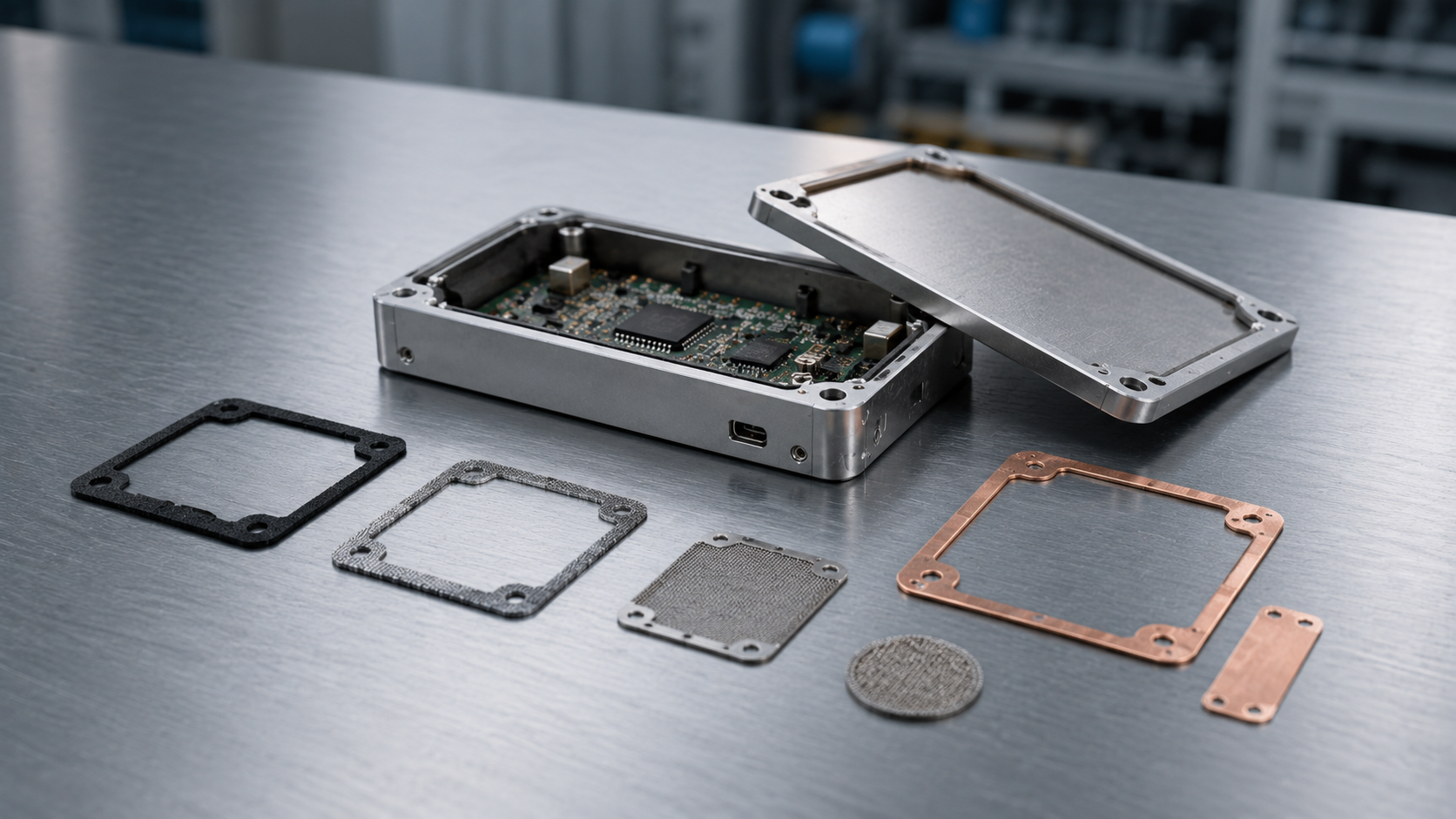
EMI shielding gaskets are used to reduce electromagnetic interference between components, enclosures, connectors and grounding surfaces. In practical product design, the goal is not simply to “block noise.” The real goal is to maintain signal integrity, control emissions, avoid unstable grounding and support long-term device reliability.
The demand for EMI shielding is increasing because electronic systems are becoming smaller, faster and more interconnected. Market research notes that EMI shielding demand is being driven by compact electronics, 5G infrastructure, EV electronics and increasingly complex electronic systems.
This is especially clear in AI servers and communication equipment. High-speed chips, power modules, dense connectors and metal chassis structures create more potential noise paths. In these applications, a small discontinuity in grounding, a poorly compressed gasket or an unsuitable adhesive can become a real design risk.
What Are EMI Shielding Gaskets?
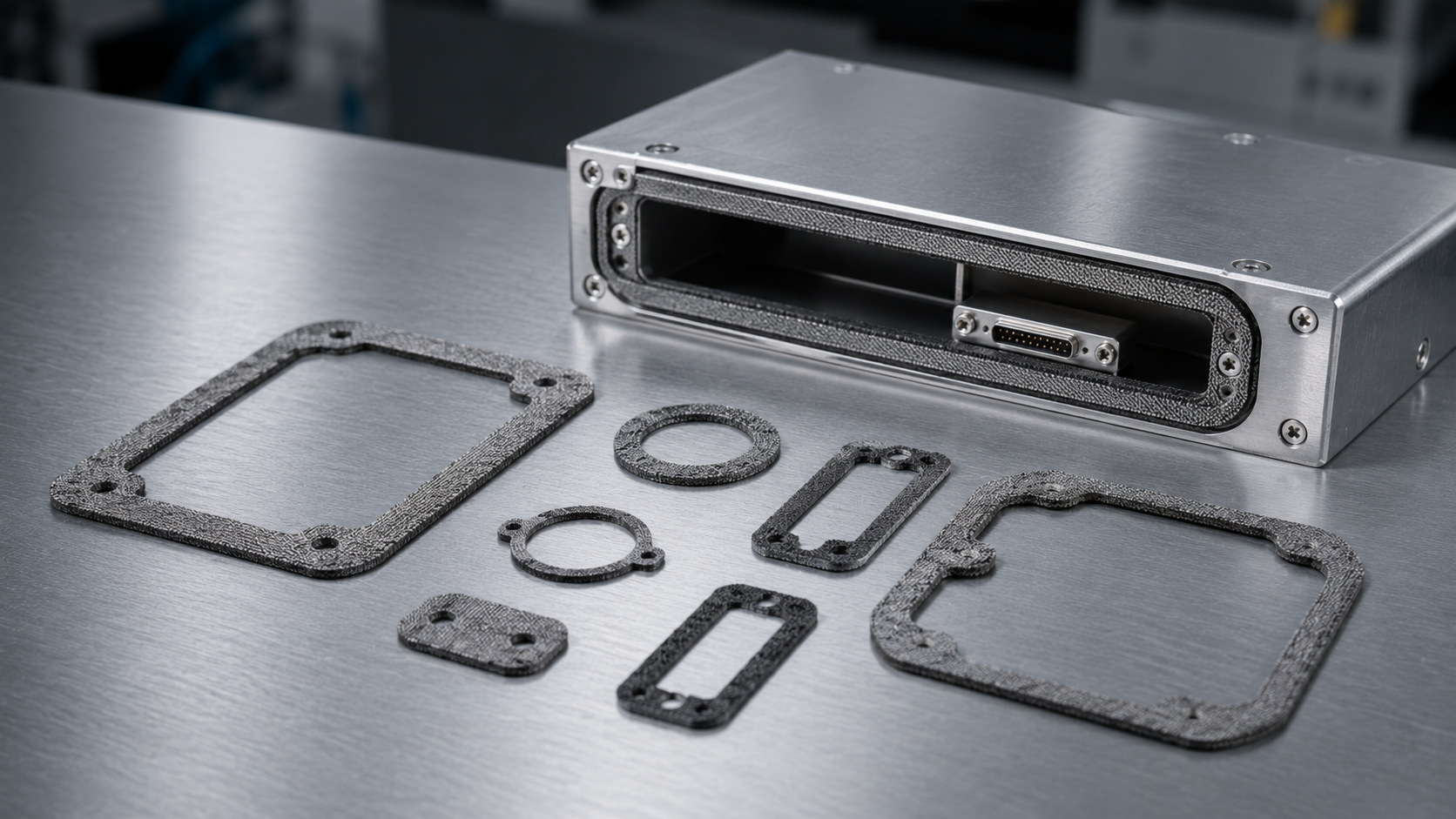
An EMI shielding gasket is a conductive component placed between two surfaces to create electrical continuity and reduce leakage through seams, gaps or contact areas. The gasket may also provide cushioning, sealing, grounding or mechanical support.
In enclosure-level design, engineers usually care about five things:
Conductivity and contact resistance
Shielding effectiveness across the target frequency range
Compression force and compression recovery
Thickness, tolerance and installation space
Compatibility with metal, plastic, coating, adhesive and environmental conditions
The European Commission explains that EMC aims to keep electromagnetic side effects under reasonable control and ensure equipment does not generate or suffer from electromagnetic disturbance. For engineers, material selection is one of the practical ways to make that happen inside the product structure.
Conductive Foam Die Cut Materials for Compressible EMI Shielding
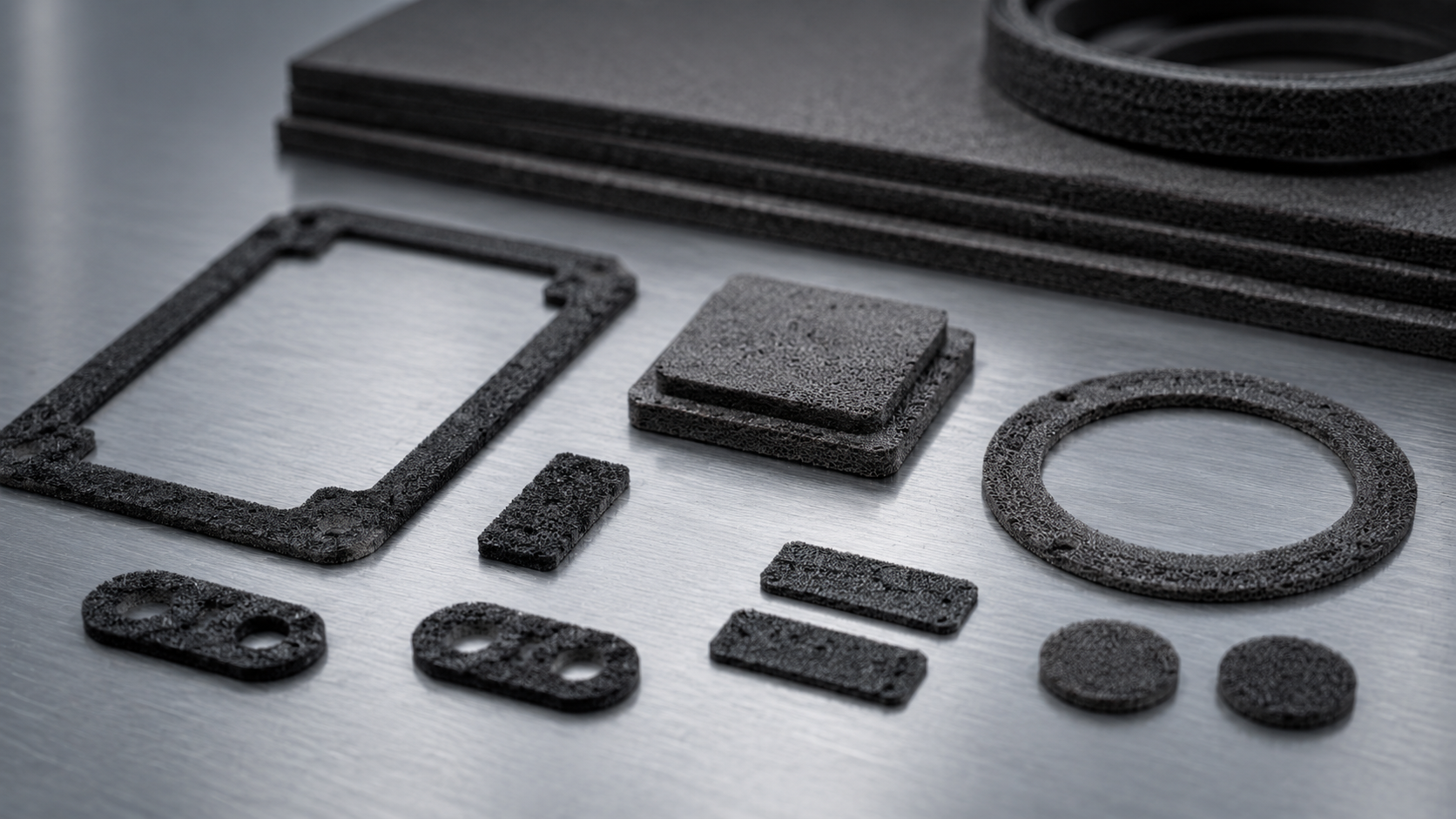
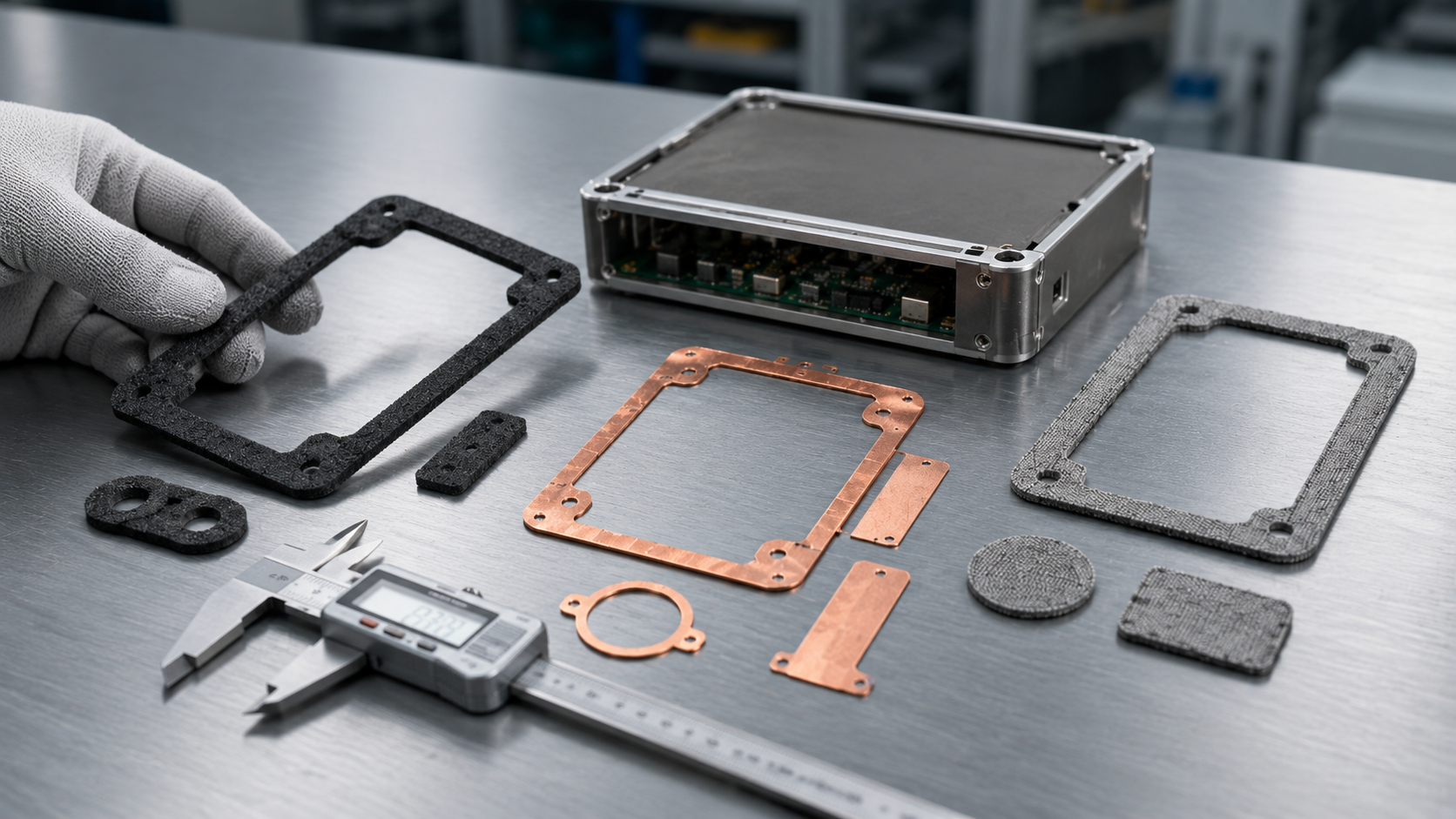
Conductive foam is often used when a product needs both electrical contact and mechanical compression. It is usually made from foam combined with conductive layers, metal plating, conductive fabric, conductive adhesive or other conductive structures.
The main value of conductive foam die cut parts is gap filling. In real assemblies, surfaces are rarely perfectly flat. Screws, clips, plastic deformation, tolerance stack-up and housing variation can all create uneven contact. Conductive foam helps absorb these differences while maintaining a conductive path.
Best Uses for Conductive Foam
Conductive foam is a strong choice for:
EMI shielding gaskets between enclosure seams
Grounding pads between PCB and housing
Cushioning and conductive contact points
AI server modules and communication devices
Robotics, drones and industrial control electronics
Applications needing conductive + damping or conductive + sealing functions
Conductive foam is not always the lowest-resistance material compared with copper foil, but it is often more forgiving in mechanical assemblies. If the design has a gap, vibration or repeated compression, conductive foam is usually safer than a rigid foil-only solution.
Copper Foil Die Cutting for Low-Resistance Grounding
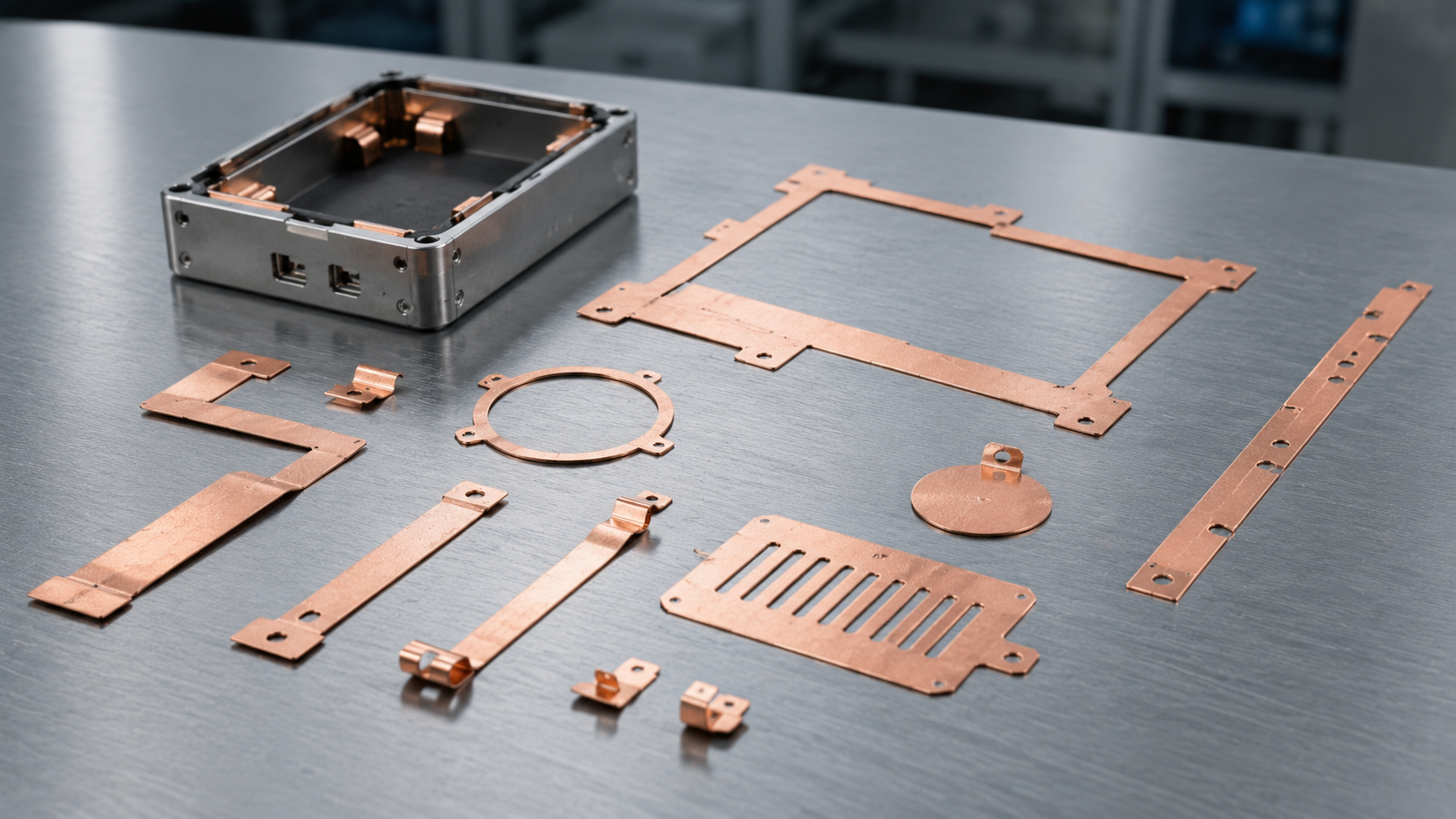
Copper foil is used when the design needs a highly conductive, thin and stable grounding or shielding path. It can be die cut into grounding tabs, shielding strips, connector pads, camera module parts, antenna shielding pieces or local conductive paths.
Compared with conductive foam, copper foil is less compressible. Its strength is conductivity, thinness and dimensional stability. For high-speed electronic products, copper foil is often used where the engineer wants a direct conductive bridge or a defined shielding layer.
Best Uses for Copper Foil
Copper foil die cutting is suitable for:
PCB grounding and housing contact
Camera module EMI shielding
Connector grounding tabs
Flexible circuit shielding areas
Localized shielding around sensitive components
Thin spaces where foam is too thick
However, copper foil has design limitations. It does not solve large tolerance gaps by itself. It may also require conductive adhesive, insulation backing, PET support film or a release liner structure depending on assembly needs. If the surface is uneven or the closure force is unstable, copper foil may lose reliable contact unless the structure is carefully designed.
Conductive Fabric Gasket Materials for Flexible EMI Protection
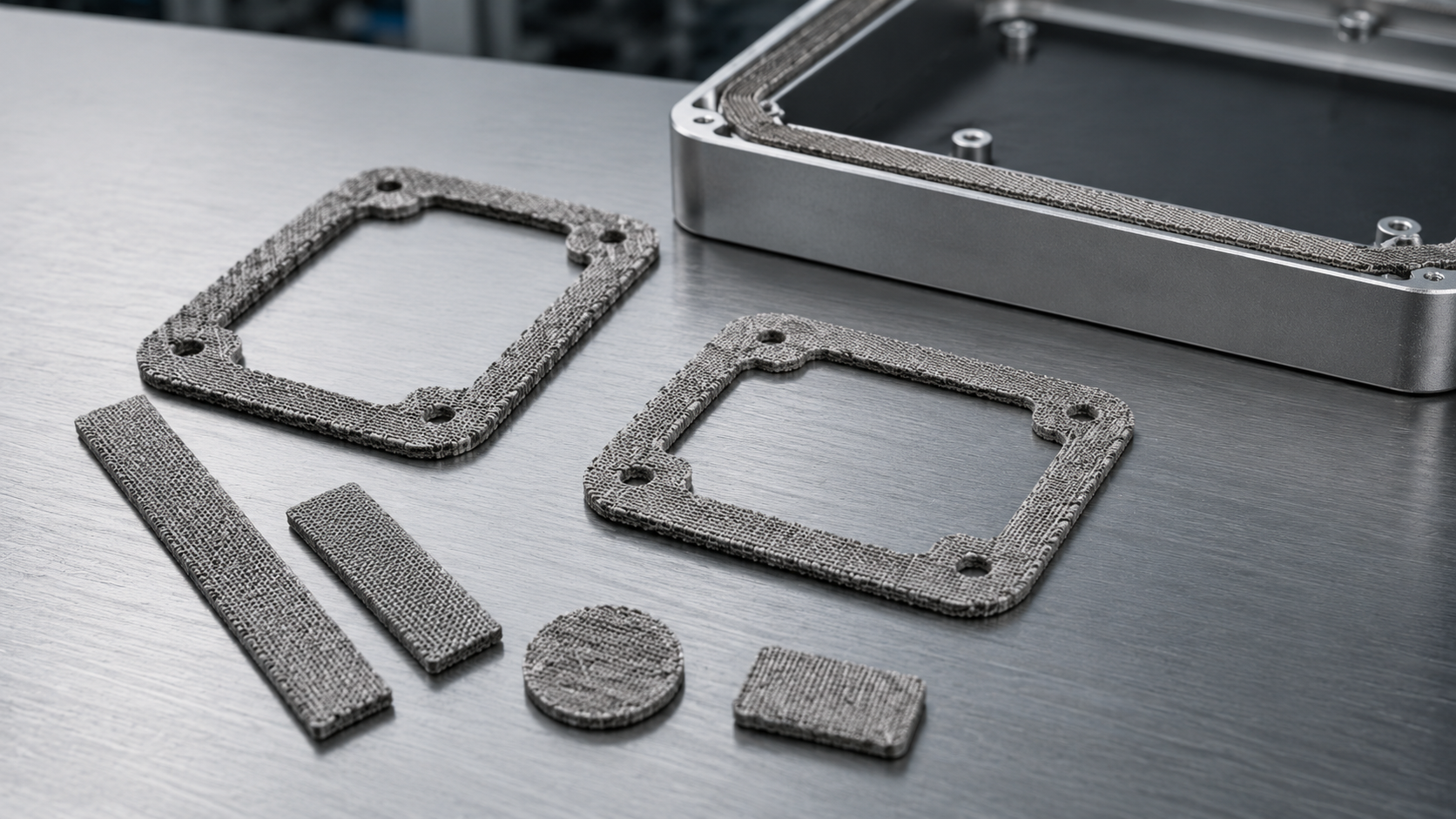
Conductive fabric is a flexible shielding material, often made from textile substrates plated or coated with metals such as nickel, copper or silver. It may be supplied as a fabric tape, wrapped over foam, laminated with adhesive or die cut into custom gasket shapes.
Conductive fabric gasket materials are useful when the design needs flexibility, conformability and lightweight shielding. Industry resources often refer to fabric-over-foam gaskets as a common EMI gasket format because the conductive fabric provides the shielding surface while the foam core provides compression.
Best Uses for Conductive Fabric
Conductive fabric is suitable for:
Fabric-over-foam EMI gaskets
Lightweight electronic housings
Large-area shielding with low weight
Wearables, portable electronics and drones
Telecom equipment and indoor modules
Applications needing low closure force
The main advantage is balance. Conductive fabric is more flexible than metal foil and lighter than many molded conductive elastomers. But it should be evaluated for abrasion, compression set, edge fraying, adhesive compatibility and long-term environmental exposure.
Conductive Foam vs Copper Foil vs Conductive Fabric: Material Comparison
Selection Factor | Conductive Foam | Copper Foil | Conductive Fabric |
Main role | Compression + conductivity | Grounding + shielding | Flexible shielding + surface contact |
Best structure | Gap, seam, pad, gasket | Tab, strip, patch, shield layer | Fabric gasket, wrapped foam, shielding tape |
Compression ability | High | Low | Medium to high when laminated with foam |
Conductivity | Good | Very high | Good, depends on plating |
Gap filling | Strong | Weak | Good if used with foam |
Flexibility | Medium | Medium, may crease | High |
Space requirement | Medium to thick | Very thin | Thin to medium |
Typical risks | Compression set, plating wear, adhesive mismatch | Edge burrs, oxidation, poor contact on uneven surfaces | Fraying, abrasion, coating durability |
Best applications | Enclosure seams, grounding pads, AI server and telecom modules | PCB grounding, camera modules, connector shielding | Lightweight gaskets, portable electronics, telecom shielding |
The simplest way to think about it is this: conductive foam solves the gap, copper foil solves the path, and conductive fabric solves flexible coverage.
How to Choose EMI Conductive Die Cutting Materials?
1. Start with the Interference Path
Do not start by asking which material is “best.” Start by asking where the interference travels. Is it escaping through a housing seam? Is it coupling through a cable or connector? Is the issue poor grounding between PCB and enclosure? Each path points to a different material.
For seams and gaps, conductive foam or fabric-over-foam is usually more practical. For grounding tabs and low-profile contact points, copper foil is often preferred.
2. Check Compression and Contact Area
Many EMI failures are mechanical, not electrical. A material may test well in a flat lab setup but fail after assembly because the closure force is too low or the surface is uneven.
Ask these questions:
What is the actual compressed thickness?
Is compression stable after aging or vibration?
Is the contact area large enough?
Will the part be reopened or serviced?
Is the gasket compressed by screws, clips or enclosure pressure?
If the answer is uncertain, prototype before locking the material.
3. Match Material to Assembly Method
A die cut conductive component may be supplied in sheet, roll, tray or release liner format. For automated assembly, liner design, pull tab direction, adhesive side and waste removal are just as important as material conductivity.
For example, a copper foil tab may need a finger-lift liner. A conductive foam gasket may need stable kiss cutting and clean waste removal. A conductive fabric part may need edge control to reduce loose fibers.
Xinyusheng Conductive EMI Die Cutting Support?
Xinyusheng’s Conductive EMI Series covers conductive foam, conductive fabric, copper/aluminum foils and EMI tapes. The company positions these products for high conductivity, low resistivity, signal transmission stability and multi-industry signal protection, with applications including consumer electronics, drones, robotics, AI servers, new energy vehicles, industrial control and telecom equipment.
For custom projects, Xinyusheng can support material selection, engineering review, prototyping, lamination, die cutting, inspection and delivery. Internal project research also records a service flow from customer requirements and drawing review to technical communication, sampling, sample confirmation, mass production, packaging and delivery. It also notes full-process inspection, in-house testing, manual and machine inspection, and report support.
This matters because EMI components are rarely simple “flat parts.” A reliable supplier needs to understand the device structure, contact surface, compression condition, grounding purpose, adhesive requirement and inspection standard before production.
FAQ About EMI Shielding Material Selection
What is the best material for EMI shielding?
There is no single best material. Conductive foam is better for compressible gaps, copper foil is better for low-resistance grounding, and conductive fabric is better for flexible or lightweight shielding. The best choice depends on frequency, structure, compression, contact area and assembly method.
Is copper foil better than conductive foam for EMI shielding?
Copper foil usually provides higher conductivity and thinner grounding paths. Conductive foam is better when the design has uneven surfaces, gaps or vibration. If reliable compression is needed, conductive foam may outperform copper foil in real assembly even if copper has better conductivity.
When should engineers use conductive fabric gaskets?
Conductive fabric gaskets are useful when the design needs lightweight shielding, flexibility, low closure force or fabric-over-foam construction. They are common in telecom devices, portable electronics, medical equipment, drones and compact enclosures.
Can conductive foam also provide cushioning?
Yes. Conductive foam can provide EMI shielding, grounding and cushioning at the same time. This makes it useful for compact electronics where one die cut component must absorb tolerance variation and maintain electrical contact.
What information is needed for an EMI conductive die cutting quote?
Engineers should provide drawings, material target, thickness, tolerance, application, grounding or shielding purpose, compression condition, adhesive requirement, quantity and inspection standard. If the material is not confirmed, describe the interference problem and installation structure first.
Source References
1.Xinyusheng Conductive EMI Series: conductive foam, conductive fabric, copper/aluminum foils, EMI tapes and application fields.
2.European Commission EMC Directive: EMC purpose, disturbance reduction and equipment immunity.
3.MarketsandMarkets EMI shielding market trends: 5G, EV, electronics miniaturization and market growth drivers.
4.Modus Advanced conductive fabric gasket guide: fabric-over-foam structure and selection considerations.
Table of Contents
Related news
Company News
What Is Custom Precision Die Cutting? What Types of Custom Functional Components Is Xinyusheng Suitable For?
May 14,2026
Discover More
Company News
How Are Die Cut Materials Used in Automotive Electronics?
August 29,2026
Discover More
Company News
What Types of Thermal Interface Materials Can Be Die Cut?
August 29,2026
Discover More
