Rotary vs Flatbed Die Cutting: Which Process Is Right for Your Project?
Quick Answer
Choose rotary die cutting for roll-fed, high-volume, multi-layer parts; choose flatbed die cutting for prototypes, thicker materials, larger sheet parts, or flexible low-volume production.
Key Takeaways
·Rotary die cutting services are usually better for high-volume, roll-to-roll, repeatable production.
·Flatbed die cutting services are often better for prototypes, lower volumes, large-format parts, and thicker materials.
·The right process depends on material format, part size, quantity, tolerance, tooling cost, and delivery schedule.
·For precision die cutting, engineering review is important before choosing rotary or flatbed.
·Xinyusheng supports both flatbed and rotary processes for custom functional die cut components.
Summary
When buyers compare rotary vs flatbed die cutting, the question is not which process is universally better. The right answer depends on the project. Rotary die cutting is efficient for continuous roll materials and high-volume production, while flatbed die cutting provides flexibility for samples, small batches, thicker materials, and larger sheet parts. This guide explains how to choose the right die cutting manufacturing process based on material, volume, tolerance, cost, and application.
Rotary vs Flatbed Die Cutting: Basic Difference
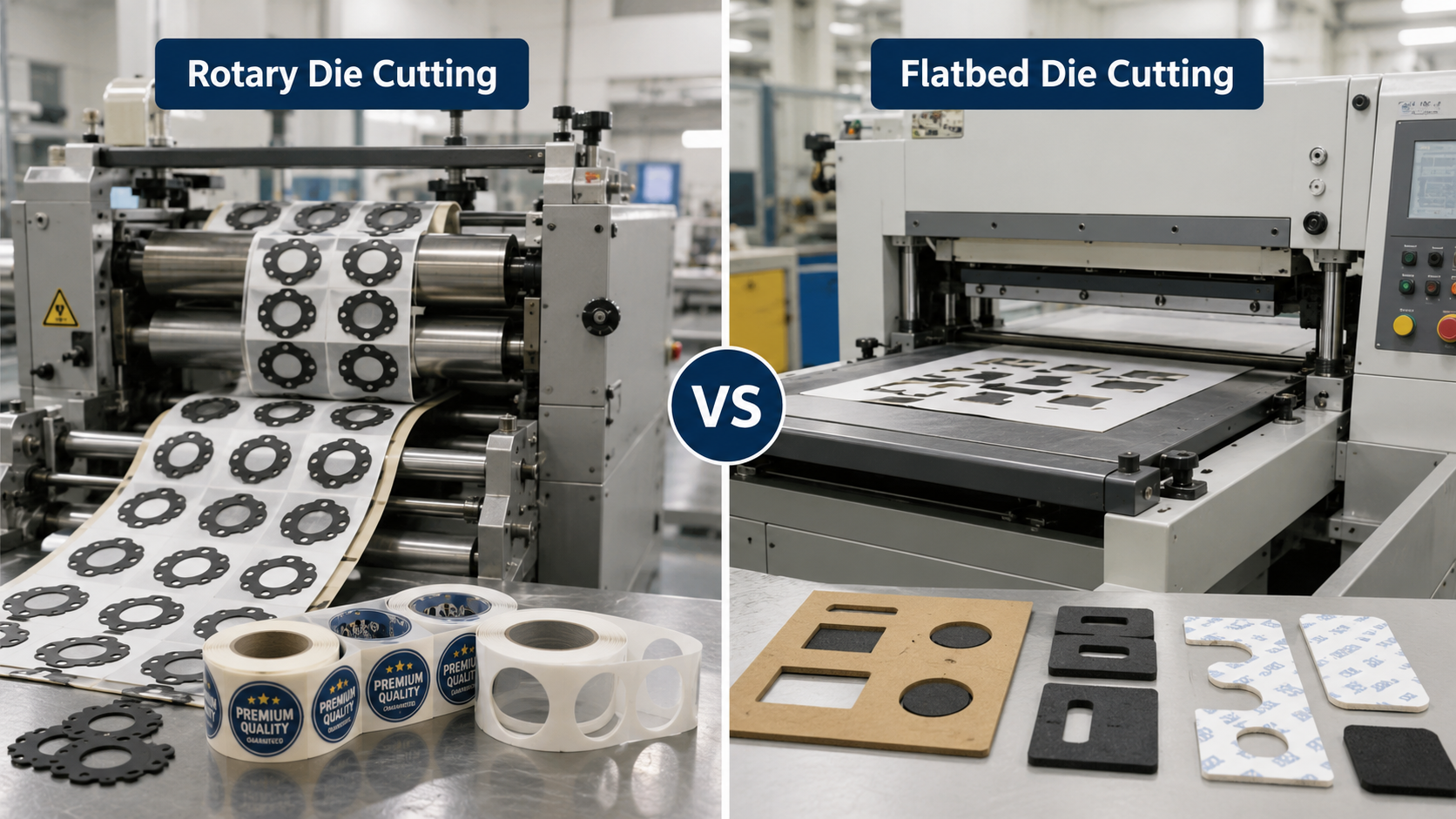
Rotary vs flatbed die cutting is one of the most common process questions in custom die cut component sourcing.
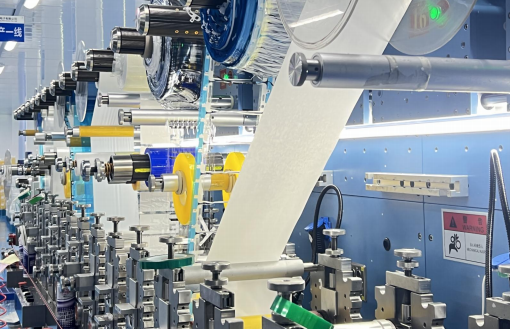
Rotary die cutting uses a cylindrical die that rotates continuously while material passes through the machine. It is commonly used for roll materials, high-speed production, kiss cutting, lamination, and multi-layer converting.
Flatbed die cutting uses a flat cutting die and a press motion to cut the material. It is commonly used for sheet materials, prototypes, lower-volume production, larger parts, and materials that are thicker or less suitable for continuous rotary processing.
In simple terms:
Process | Best For |
Rotary die cutting | Roll materials, high volume, fast speed, repeatable parts |
Flatbed die cutting | Samples, small batches, thicker materials, large-format parts |
Both methods can support precision die cutting, but the best choice depends on the project structure.
Why the Process Choice Matters for Die Cut Components
The selected process affects tooling cost, production speed, part consistency, material waste, lead time, and scalability. For functional die cut components used in electronics, EV batteries, medical devices, AI equipment, smart home devices, and industrial control systems, choosing the wrong process can increase cost or delay production.
For example, a high-volume adhesive tape part supplied on liner may be better suited for rotary die cutting. A large insulation pad or early-stage foam gasket sample may be better suited for flatbed die cutting.
When to Choose Rotary Die Cutting Services?
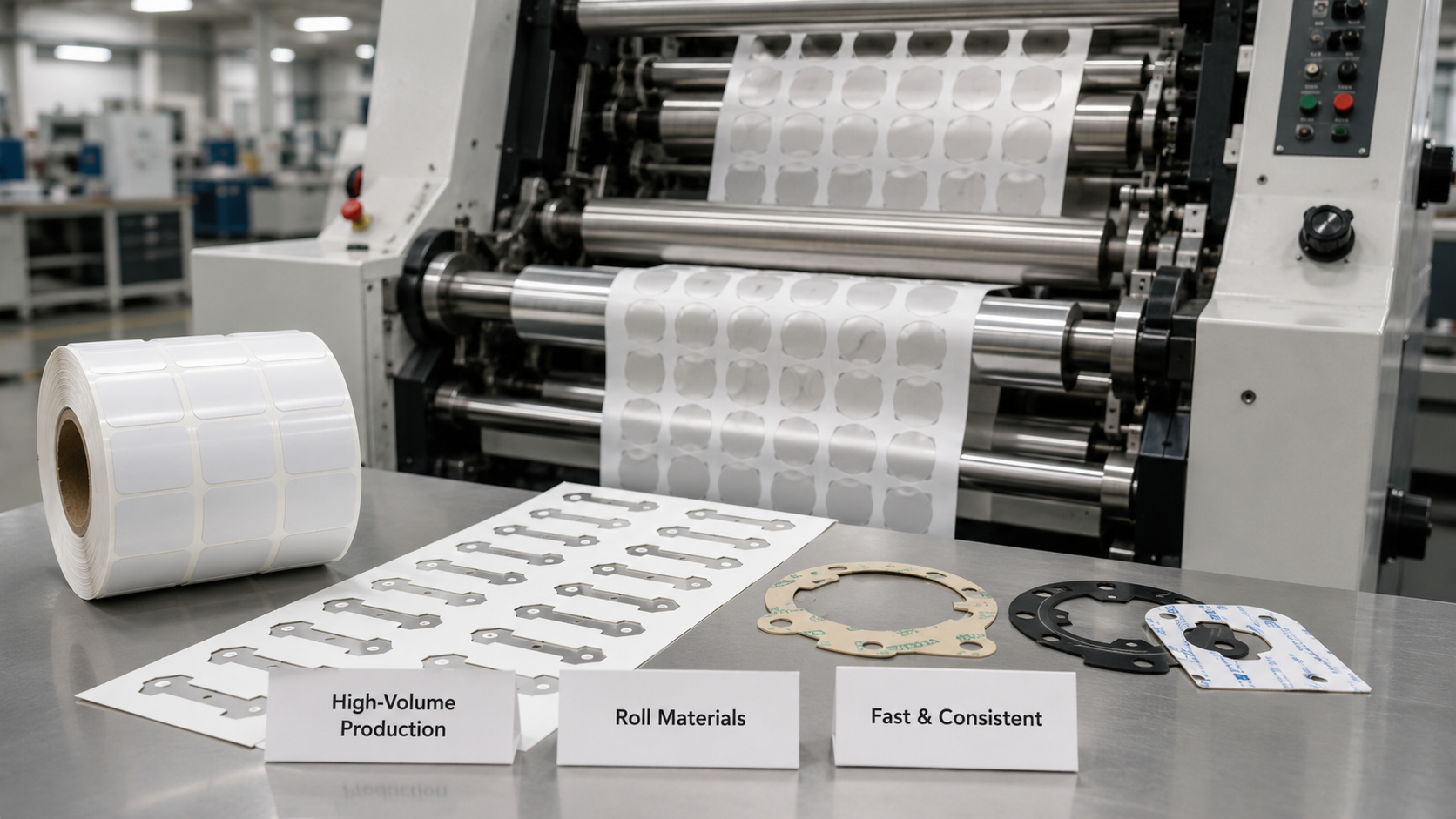
Rotary die cutting services are usually the preferred choice when the project requires high efficiency, stable repeatability, and continuous production.
Rotary cutting is especially suitable for roll-fed materials such as adhesive tape, protective film, PET, PI, foam tape, conductive fabric, graphite sheet, copper foil, aluminum foil, insulation film, and multilayer laminated materials.
Rotary Die Cutting for High-Volume Production
Choose rotary die cutting when the part will be produced in large quantities. Because the material moves continuously through the machine, rotary die cutting can support faster output and more stable production for repeat orders.
This is useful for:
·Die cut adhesive tape
·Protective films
·Insulation films
·Conductive foil parts
·EMI shielding parts
·Thermal interface materials
·Foam tapes supplied on liner
·Multi-layer roll-to-roll components
For projects that require monthly mass production, rotary die cutting can reduce unit cost after tooling is confirmed.
Rotary Die Cutting for Multi-Layer Converting
Rotary equipment can combine several operations in one continuous process, such as lamination, slitting, kiss cutting, waste removal, liner replacement, and final cutting. This makes it suitable for complex custom die cutting services where the part includes adhesive, liner, tab, foam, film, foil, or mesh.
Typical applications include electronic assembly tapes, battery insulation parts, thermal management films, EMI conductive parts, and smart device sealing components.
When to Choose Flatbed Die Cutting Services?
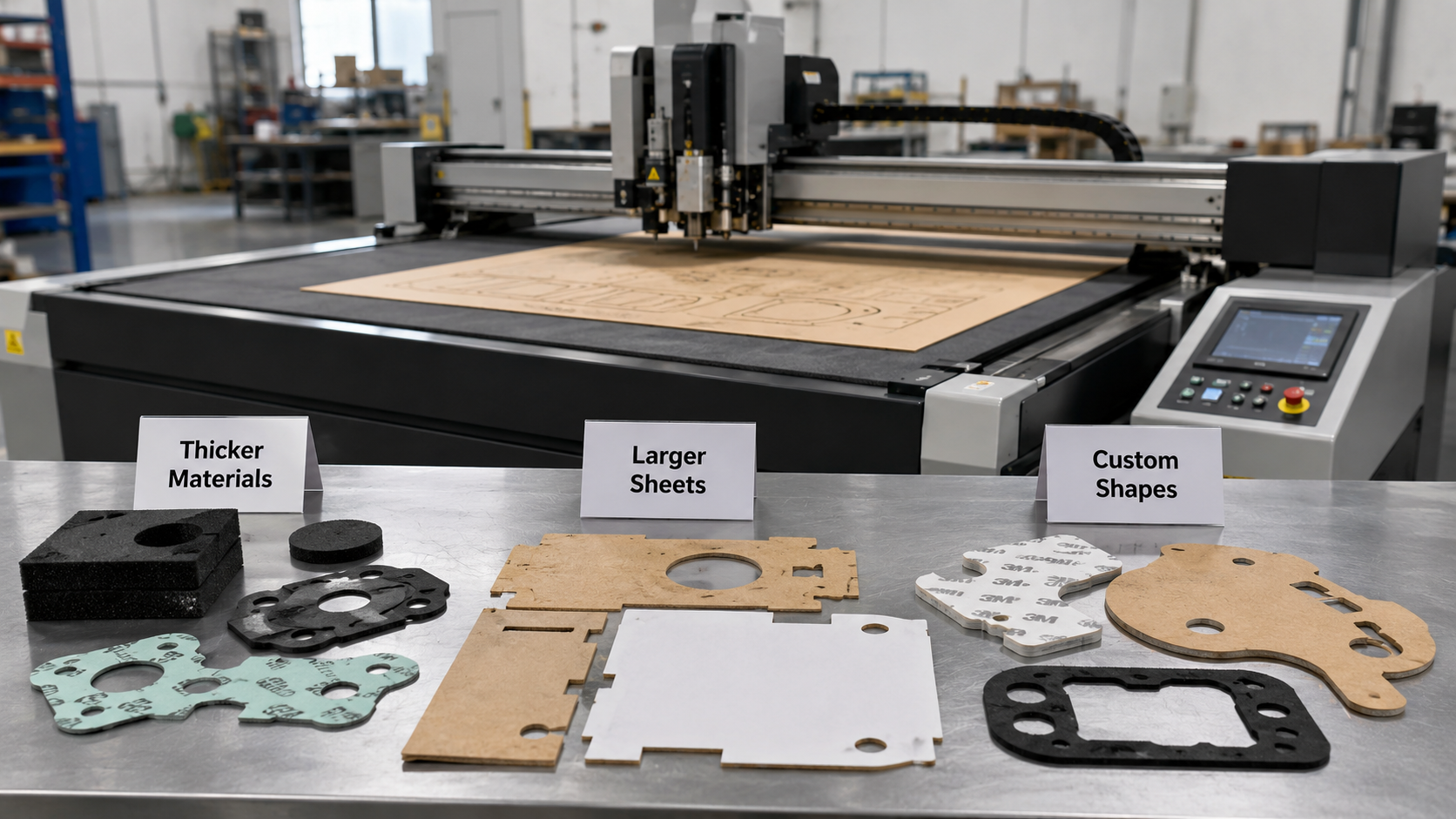
Flatbed die cutting services are often better for projects that require flexibility, lower initial cost, material adaptability, or larger cutting areas.
Flatbed die cutting is widely used for early-stage product development, sample validation, small-to-medium production runs, and custom parts where material format or part size is not suitable for rotary cutting.
Flatbed Die Cutting for Prototypes and Small Batches
If the project is still in the design stage, flatbed die cutting can be a practical choice. It allows buyers and engineers to test shape, fit, material, thickness, adhesive performance, and assembly method before committing to high-volume tooling.
This is useful for:
·Prototype foam gaskets
·Smart lock foam and adhesive parts
·Large insulation sheets
·Waterproof sealing pads
·Cushioning foam parts
·Medical device pads
·EV battery sample parts
·Printed PC/PET panels
Flatbed Die Cutting for Larger or Thicker Materials
Flatbed die cutting can be more suitable for thicker materials, sheet materials, and larger-format parts. If the part is not roll-fed or requires a wider working area, flatbed processing may be easier to control.
This is especially relevant for die cut foam, silicone pads, rubber-like materials, insulation pads, large protective films, and structural adhesive components.
Rotary vs Flatbed Die Cutting Comparison Table
Factor | Rotary Die Cutting | Flatbed Die Cutting |
Material format | Best for roll materials | Best for sheet or roll materials |
Production volume | High-volume production | Prototype, small to medium volume |
Speed | Faster continuous production | Slower but flexible |
Tooling cost | Higher initial tooling cost | Usually lower tooling cost |
Unit cost | Lower for mass production | Better for short runs |
Part size | Best for smaller repeatable parts | Better for large-format parts |
Material thickness | Better for thin to medium materials | Better for thicker or rigid materials |
Multi-layer parts | Strong for roll-to-roll converting | Good for flexible sample structures |
Best applications | Adhesive tape, films, foils, EMI parts | Foam, gasket, insulation, sample parts |
Typical decision | Scale production | Validate design or handle special formats |
Simple Decision Flow
Use this process selection logic:
1.Is the material roll-fed and the volume high?
Choose rotary die cutting services.
2.Is the project in prototype or low-volume stage?
Choose flatbed die cutting services.
3.Is the part large, thick, or sheet-based?
Flatbed may be more suitable.
4.Does the part require continuous lamination, kiss cutting, and waste removal?
Rotary may be more efficient.
5.Are you unsure?
Send the drawing, material, thickness, quantity, and application for engineering review.
How Material and Quantity Affect Process Selection?
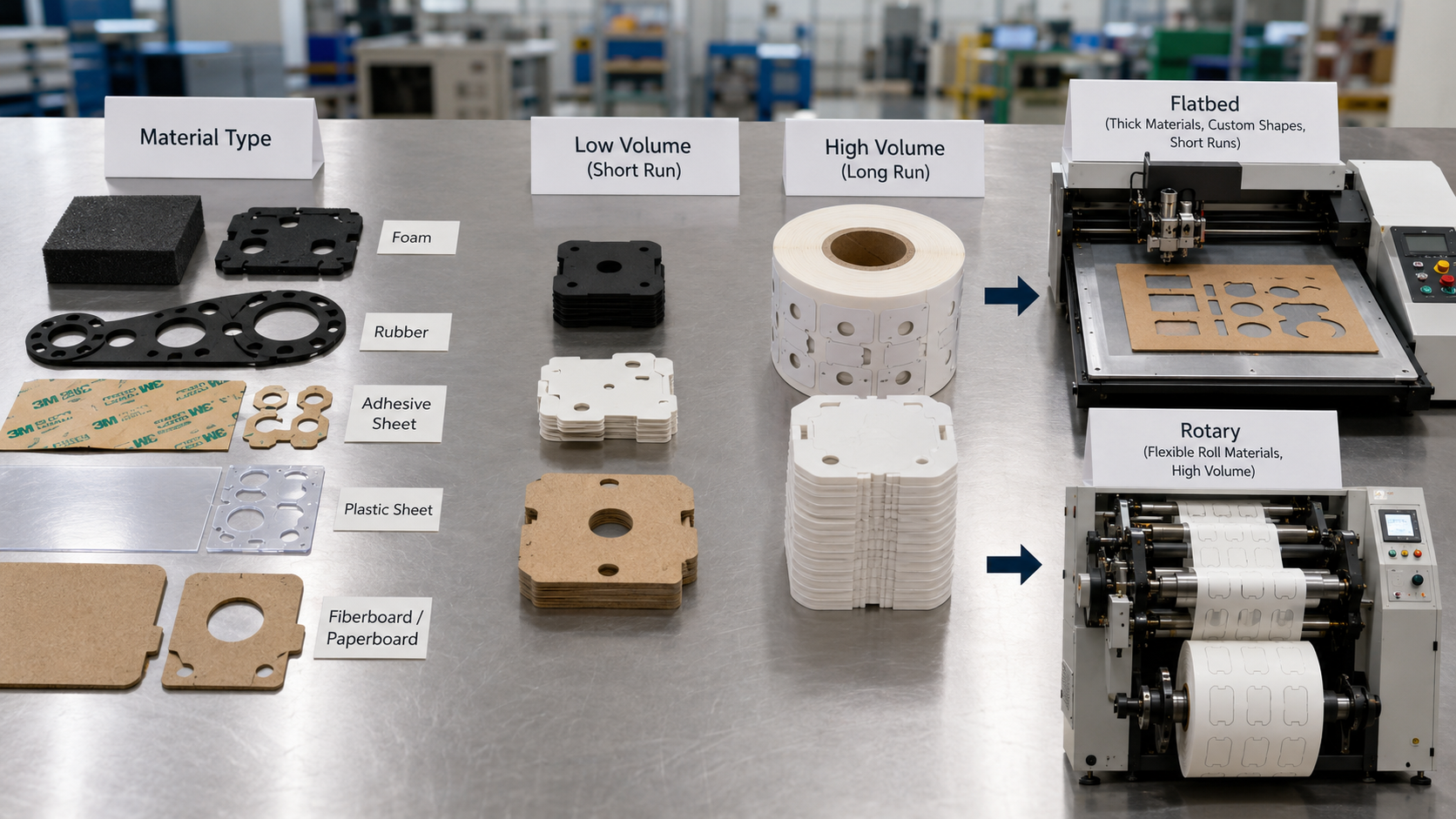
The same part shape can require different processes depending on material and production volume.
Materials Better Suited for Rotary Die Cutting
Rotary die cutting is commonly selected for thin, flexible, and roll-based materials. Examples include:
·PET and PI films
·Double-sided adhesive tapes
·Protective films
·Copper foil and aluminum foil
·Conductive fabric
·Graphite sheets
·Foam tapes
·EMI shielding materials
·Thermal interface films
For high-volume electronics and EV battery projects, rotary die cutting can support repeatable output and efficient roll-to-roll delivery.
Materials Better Suited for Flatbed Die Cutting
Flatbed die cutting is often selected for materials that are thicker, larger, sheet-based, or still under development. Examples include:
·Foam gaskets
·Silicone or rubber-like pads
·Large insulation sheets
·Thick cushioning materials
·Printed PC/PET panels
·Prototype adhesive structures
·Large waterproof sealing components
Flatbed is also useful when a buyer needs design flexibility before finalizing the production method.
How Xinyusheng Supports Both Rotary and Flatbed Die Cutting?
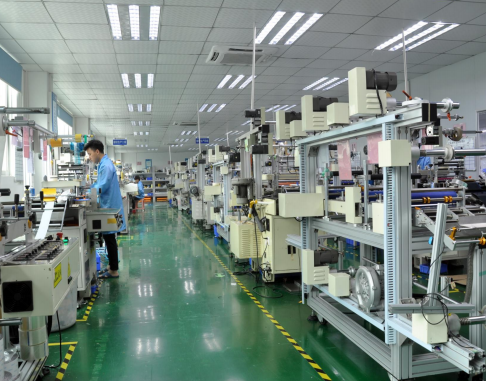
Xinyusheng provides custom die cutting services for precision functional components, including waterproof parts, thermal management parts, adhesive tape parts, foam parts, insulation parts, conductive EMI parts, mesh parts, protective films, and printed products.
For overseas OEM projects, the process normally starts with drawings, samples, material requirements, tolerance needs, application conditions, and estimated quantity. Xinyusheng’s engineering team can then evaluate whether rotary die cutting or flatbed die cutting is more suitable.
Production Capability for Precision Die Cutting
Xinyusheng’s production capability includes flatbed die cutting lines, rotary die cutting lines, automatic CCD inspection, semi-automatic inspection, lamination, waste removal, sample making, and mass production support.
For projects requiring process selection, the key question is not only “Which machine can cut this shape?” but also:
·Which process gives better yield?
·Which process controls tolerance more consistently?
·Which process reduces material waste?
·Which process supports the required delivery format?
·Which process is more cost-effective from sample to mass production?
From Sample Review to Mass Production
A practical project flow is:
RFQ → Drawing review → Material review → Process recommendation → Sample making → Sample approval → Tooling confirmation → Mass production → Inspection → Packaging and delivery
This approach helps buyers avoid choosing the process too early without considering material behavior, tolerance, quantity, and final assembly conditions.
FAQ About Rotary vs Flatbed Die Cutting
What is the main difference between rotary and flatbed die cutting?
Rotary die cutting uses a cylindrical rotating die and is suitable for continuous roll-fed production. Flatbed die cutting uses a flat die and press motion, making it suitable for prototypes, sheet materials, thicker materials, and lower-volume production.
Which process is better for high-volume die cut components?
For most roll-fed materials and repeatable parts, rotary die cutting services are better for high-volume production because they support faster and more continuous processing.
Which process is better for prototypes?
Flatbed die cutting services are often better for prototypes because they provide more flexibility for material changes, design changes, small batches, and sample testing.
Is rotary die cutting always cheaper?
No. Rotary die cutting may reduce unit cost in mass production, but the initial tooling cost can be higher. For small quantities, flatbed die cutting may be more cost-effective.
Can both methods support precision die cutting?
Yes. Both methods can support precision die cutting, but the final accuracy depends on material thickness, softness, adhesive behavior, tooling design, machine stability, and inspection standards.
What information should I provide before choosing a process?
Send a 2D drawing, CAD file if available, material type, thickness, adhesive structure, tolerance, quantity, application, packaging method, and sample requirements.
Conclusion: Which Die Cutting Process Is Right for Your Project?
There is no single best process for every project. Rotary die cutting is ideal for roll materials, high-volume orders, multi-layer converting, kiss cutting, and repeatable precision parts. Flatbed die cutting is ideal for prototypes, small batches, larger parts, thicker materials, and projects that need flexibility.
For OEM buyers sourcing die cut components, the best choice should be based on material, quantity, tolerance, part size, tooling budget, and assembly method.
If you are not sure whether your project requires rotary die cutting services or flatbed die cutting services, send your drawing, material requirements, and estimated quantity. Xinyusheng’s engineering team can review the structure and recommend the most suitable die cutting manufacturing process for sampling and mass production.
Table of Contents
Related news
Company News
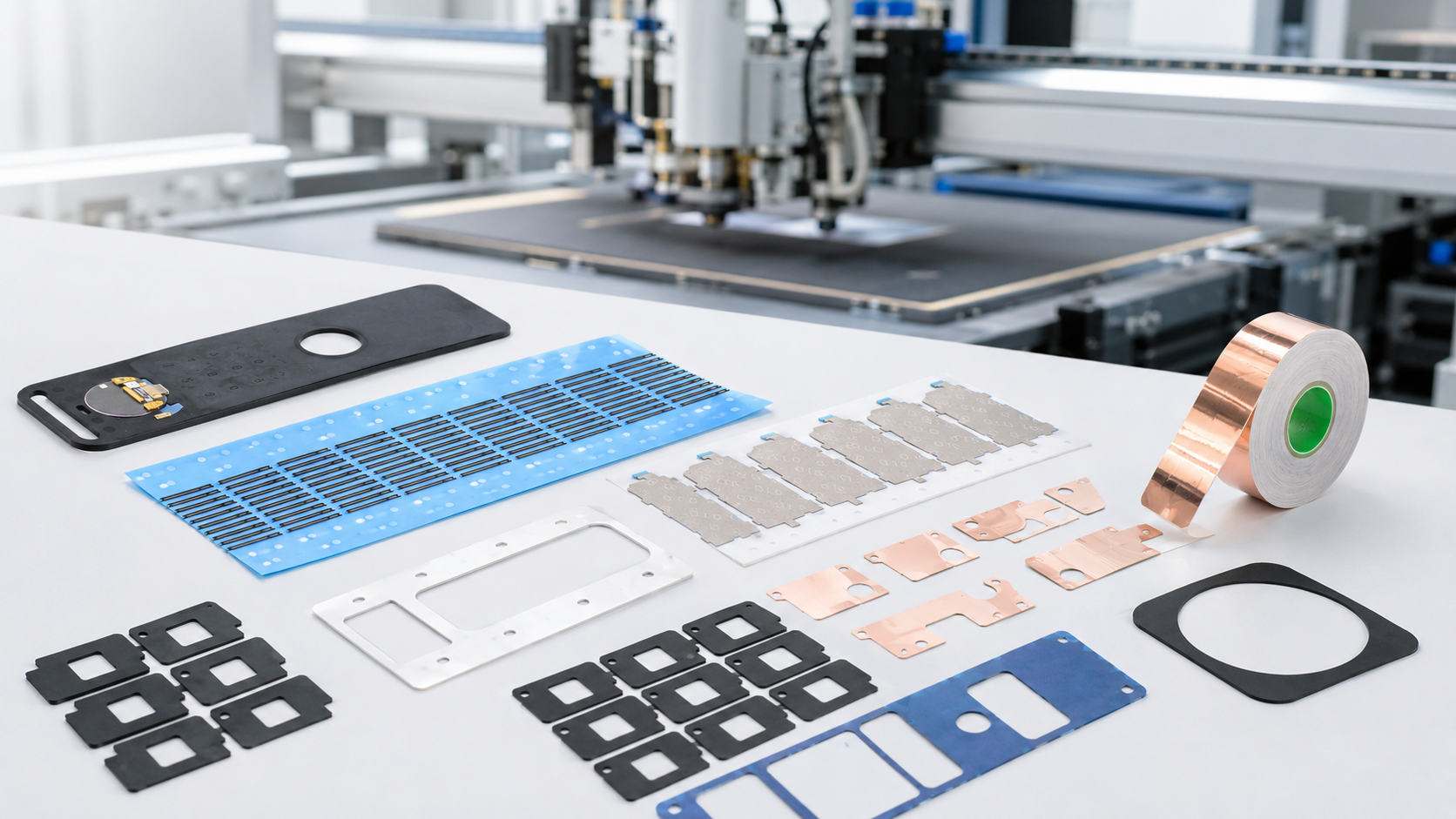
What Is Custom Precision Die Cutting? What Types of Custom Functional Components Is Xinyusheng Suitable For?
May 14,2026
Discover More
Company News
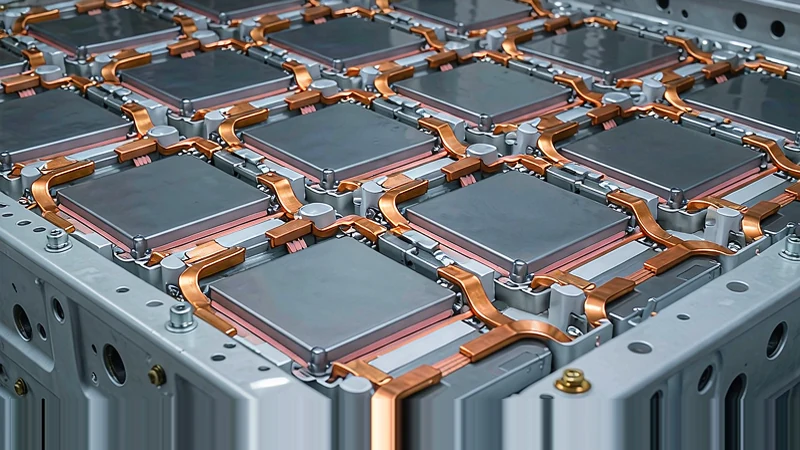
How Are Die Cut Materials Used in Automotive Electronics?
August 29,2026
Discover More
Company News
What Types of Thermal Interface Materials Can Be Die Cut?
August 29,2026
Discover More
